Description
API 7K Rotary Hose Manufacturer for Oil & Gas Drilling Rigs
SGPE manufactures and supplies API 7K Rotary Hose for high-pressure drilling mud circulation on land rigs, offshore rigs, jack-up rigs, platform rigs, Top Drive systems and conventional Kelly-drive drilling rigs.
Installed between the standpipe and the moving swivel or Top Drive, the hose carries drilling fluid into the drill string while allowing the traveling equipment to move vertically inside the mast or derrick.
Depending on rig design and procurement terminology, the same service may also be specified as an API 7K Rotary Drilling Hose, Rotary Drill Hose, Kelly Hose, Kelly Rotary Hose, Kelly Drilling Hose, Top Drive Rotary Hose, High Pressure Mud Hose or Drilling Rig Rotary Hose.
The product name alone does not define the correct assembly. Hose ID, rated working pressure, API grade, FSL, drilling fluid, operating temperature, overall length, minimum bending radius and both end connections must suit the actual drilling system.
SGPE supports Grade C 4,000 psi, Grade D 5,000 psi and Grade E 7,500 psi configurations. Common hose IDs range from 2 in. to 6 in., depending on the selected pressure grade. Project requirements can also include FSL 1 or FSL 2, custom hose lengths, Hammer Union, hub or flange ends, different End A and End B connections, safety restraints and additional abrasion protection.
Supply can cover new drilling rigs, Top Drive upgrades, rig refurbishment, offshore maintenance, contractor spare programs and direct hose replacement. Typical requirements include 5000 PSI Rotary Hose, 5000 PSI Kelly Hose, 7500 PSI Rotary Hose, Grade E Rotary Drilling Hose, custom Top Drive Hose and replacement API 7K Rotary Hose assemblies.
Quick RFQ
For faster technical confirmation and pricing, send the hose ID, working pressure or API grade, FSL, overall length, End A and End B connections, drilling-fluid type, operating temperature and required quantity.
Email: info@sgpe.com
Tel / WhatsApp: +86 186-1599-5239
API 7K Rotary Hose Technical Parameters
The following specifications provide a practical reference for drilling contractors, rig manufacturers, EPC buyers, oilfield operators, service companies and drilling-equipment distributors.
| Technical Item | SGPE / Project Reference |
|---|---|
| Product | API 7K Rotary Hose |
| Product Type | High-Pressure Rotary Drilling Hose Assembly |
| Alternative Names | Rotary Drilling Hose, Kelly Hose, Top Drive Hose, Rotary Mud Hose, Oilfield Rotary Hose |
| Applicable Standard | API Spec 7K, 6th Edition; applicable project edition and errata to be confirmed |
| Main Function | Flexible high-pressure drilling mud connection between standpipe and swivel or Top Drive |
| Main Installation | Standpipe-to-Swivel / Standpipe-to-Top Drive |
| Inside Diameter | 2″, 2-1/2″, 3″, 3-1/2″, 4″, 5″, 6″, depending on API grade |
| API Grades | Grade C, Grade D, Grade E |
| Rated Working Pressure | 4,000 psi, 5,000 psi, 7,500 psi |
| Factory Hydrostatic Test | 1.5 × rated working pressure |
| Hydrostatic Hold Time | Minimum 15 minutes |
| Test Medium | Water |
| Minimum Burst Design Reference | 2.5 × rated working pressure |
| Flexible Specification Level | FSL 1 or FSL 2 |
| Temperature Categories | Range I, Range II, Range III |
| Main Media | Water-based mud, compatible oil-based mud and approved drilling fluids |
| Construction | Reinforced multi-layer flexible hose assembly |
| Reinforcement | High-strength steel wire and/or cable according to approved design |
| Outer Cover | Oil-, mud-, weather- and abrasion-resistant |
| Hose Length | Project-specific |
| Minimum Bending Radius | According to hose ID, pressure grade and approved design |
| End Connections | Hammer Union, hub, flange or project-specific oilfield connector |
| Safety Restraint | Chain, cable or project-specified arrangement |
| Typical Rig Types | Land, offshore, jack-up, platform, Top Drive and Kelly-drive rigs |
| Inspection | Dimensional, visual, connection and pressure verification |
| Documentation | Data Sheet, Pressure Test Report, COC and project-required documents |
| Third-Party Inspection | Available according to purchase-order requirement |
The final SGPE data sheet and approved purchase specification govern the supplied hose assembly.
API 7K Grade C, D and E Rotary Hose Pressure Ratings
Working pressure is one of the first parameters to confirm when selecting an API 7K Rotary Drilling Hose.
| API Grade | Rated Working Pressure | Hydrostatic Test Pressure | Minimum Burst Design Reference | Design Ratio |
| Grade C | 27.6 MPa / 4,000 psi | 41.4 MPa / 6,000 psi | 69.0 MPa / 10,000 psi | 2.50 |
| Grade D | 34.5 MPa / 5,000 psi | 51.7 MPa / 7,500 psi | 86.3 MPa / 12,500 psi | 2.50 |
| Grade E | 51.7 MPa / 7,500 psi | 77.6 MPa / 11,250 psi | 129.3 MPa / 18,750 psi | 2.50 |
Grade C 4,000 PSI Rotary Hose
A Grade C Rotary Hose provides a 4,000 psi rated working pressure for drilling mud systems operating within this pressure class.
RFQs may describe this configuration as a 4000 PSI Rotary Hose, 4000 PSI Rotary Drilling Hose or Grade C Kelly Hose.
Grade D 5,000 PSI Rotary Hose
The API 7K Grade D Rotary Hose is widely used on land rigs, Top Drive rigs, conventional Kelly-drive rigs, offshore drilling units and jack-up rigs.
Its 5,000 psi working pressure also makes it a common choice for refurbishment and maintenance replacement. Typical requirements include 5000 PSI Rotary Hose, 5000 PSI Rotary Drilling Hose, 5000 PSI Kelly Hose, Grade D Kelly Hose and 5K Top Drive Hose.
Grade E 7,500 PSI Rotary Hose
A Grade E Rotary Hose provides a 7,500 psi rated working pressure for more demanding drilling mud circulation systems.
Deep-well drilling, offshore programs, high-duty Top Drive systems and higher-pressure rig upgrades may require this class. Common specifications include 7500 PSI Rotary Hose, 7500 PSI Kelly Hose, API 7K Grade E Hose, Grade E Rotary Drilling Hose and 7.5K Top Drive Hose.
API 7K Rotary Hose Sizes, Pressure Classes and Minimum Bending Radius
API 7K Rotary Hose Sizes from 2 in. to 3-1/2 in.
For 2 in. to 3-1/2 in. API 7K Rotary Hose, hose ID, pressure grade and minimum bending radius should be selected together. Smaller bore hoses are commonly used where drilling-fluid flow, rig connection size and installation space favor a more compact hose assembly.
| Hose ID | API Grade | Working Pressure | Test Pressure | Minimum Burst Design Reference | Operational MBR |
|---|---|---|---|---|---|
| 2″ / 50.8 mm | C | 4,000 psi | 6,000 psi | 10,000 psi | 0.9 m / 36 in. |
| 2″ / 50.8 mm | D | 5,000 psi | 7,500 psi | 12,500 psi | 0.9 m / 36 in. |
| 2-1/2″ / 63.5 mm | C | 4,000 psi | 6,000 psi | 10,000 psi | 0.9 m / 36 in. |
| 2-1/2″ / 63.5 mm | D | 5,000 psi | 7,500 psi | 12,500 psi | 0.9 m / 36 in. |
| 2-1/2″ / 63.5 mm | E | 7,500 psi | 11,250 psi | 18,750 psi | 1.2 m / 48 in. |
| 3″ / 76.2 mm | C | 4,000 psi | 6,000 psi | 10,000 psi | 1.2 m / 48 in. |
| 3″ / 76.2 mm | D | 5,000 psi | 7,500 psi | 12,500 psi | 1.2 m / 48 in. |
| 3″ / 76.2 mm | E | 7,500 psi | 11,250 psi | 18,750 psi | 1.2 m / 48 in. |
| 3-1/2″ / 88.9 mm | C | 4,000 psi | 6,000 psi | 10,000 psi | 1.4 m / 54 in. |
| 3-1/2″ / 88.9 mm | D | 5,000 psi | 7,500 psi | 12,500 psi | 1.4 m / 54 in. |
| 3-1/2″ / 88.9 mm | E | 7,500 psi | 11,250 psi | 18,750 psi | 1.4 m / 54 in. |
MBR = Minimum Bending Radius measured to the hose centerline.
Typical requirements include 3″ 5000 PSI Rotary Hose and 3-1/2″ 5000 PSI Kelly Hose. Grade E does not apply to the 2 in. configuration in this range, so hose size and API grade should always be confirmed together.
API 7K Rotary Hose Sizes from 4 in. to 6 in.
Larger 4 in. to 6 in. Rotary Drilling Hose configurations are commonly selected for higher-flow drilling mud systems, Top Drive rigs, offshore drilling and deep-well applications. In these sizes, bore diameter, API grade, pressure rating and MBR remain closely linked to rig geometry and mud circulation requirements.
| Hose ID | API Grade | Working Pressure | Test Pressure | Minimum Burst Design Reference | Operational MBR |
| 4″ / 101.6 mm | C | 4,000 psi | 6,000 psi | 10,000 psi | 1.4 m / 54 in. |
| 4″ / 101.6 mm | D | 5,000 psi | 7,500 psi | 12,500 psi | 1.4 m / 54 in. |
| 4″ / 101.6 mm | E | 7,500 psi | 11,250 psi | 18,750 psi | 1.5 m / 60 in. |
| 5″ / 127.0 mm | C | 4,000 psi | 6,000 psi | 10,000 psi | 1.5 m / 60 in. |
| 5″ / 127.0 mm | D | 5,000 psi | 7,500 psi | 12,500 psi | 1.5 m / 60 in. |
| 5″ / 127.0 mm | E | 7,500 psi | 11,250 psi | 18,750 psi | 1.8 m / 72 in. |
| 6″ / 152.4 mm | D | 5,000 psi | 7,500 psi | 12,500 psi | 1.8 m / 72 in. |
| 6″ / 152.4 mm | E | 7,500 psi | 11,250 psi | 18,750 psi | 1.8 m / 72 in. |
Typical specifications include 4″ 5000 PSI Rotary Hose, 4″ Grade D Top Drive Hose, 4″ 7500 PSI Rotary Hose, 5″ Grade E Rotary Drilling Hose and 6″ 5000 PSI High Pressure Mud Hose.
For new rigs, hose ID should be checked against mud flow and available space. For replacement assemblies, overall length, MBR and both end connections must also match the existing installation.
API 7K Temperature Range and FSL Selection
Temperature and Flexible Specification Level become particularly important in offshore, deep-well and high-duty drilling systems.
Temperature Ranges
| Temperature Category | Minimum Temperature | Maximum Temperature | Fahrenheit Range |
| Range I | -20°C | +82°C | -4°F to +180°F |
| Range II | -20°C | +100°C | -4°F to +212°F |
| Range III | -20°C | +121°C | -4°F to +250°F |
The required temperature category depends on both drilling-fluid and ambient conditions. Desert rigs, offshore installations, cold-region projects and deep wells should therefore be evaluated from expected operating conditions rather than from a standard catalog configuration.
Applications below -20°C / -4°F require additional technical review.
FSL 1 vs FSL 2 Rotary Hose
| FSL | Typical Service Basis | Application Consideration |
| FSL 1 | Normal rotary, vibrator and jumper hose service | Standard rotary-hose operating conditions |
| FSL 2 | More demanding rotary, vibrator and jumper hose service | Higher-frequency pressure-pulsation duty |
An FSL 1 Rotary Hose suits normal drilling mud circulation under the applicable design requirements.
An FSL 2 Rotary Hose is intended for more demanding pressure-pulsation conditions. Offshore drilling, deep wells, high-duty mud pumps and demanding Top Drive systems may call for this level.
Project specifications may therefore call for an API 7K FSL 2 Rotary Hose, FSL2 Rotary Drilling Hose, FSL 2 Kelly Hose, FSL2 Top Drive Hose or Grade E FSL2 Rotary Hose.
The drilling system and purchase specification should determine the required FSL. A higher designation does not automatically make the hose the right choice for every application.
Rotary Hose Length, MBR and Rig Travel
Correct hose length is critical because the assembly moves continuously with the swivel or Top Drive.
| Hose Assembly Condition | API Reference Requirement |
| Unpressurized hose up to 6 m / 20 ft | Finished length tolerance ±65 mm / ±2-1/2 in. |
| Pressurized hose up to 6 m / 20 ft | Length change not more than 65 mm / 2-1/2 in. + 0.01L |
| Unpressurized hose over 6 m / 20 ft | Finished length tolerance within ±1% |
| Pressurized hose over 6 m / 20 ft | Length change within ±2% |
| Rotary hose installation | Length should avoid over-bending, high axial load and compression |
L = nominal hose assembly length.
A hose that is too short can experience excessive axial loading when the Top Drive or swivel reaches the upper travel position. An excessively long hose may sag, contact mast or derrick steelwork and form an unsuitable bend.
For a replacement hose, provide the existing overall length together with the standpipe position, connection locations, Top Drive or swivel travel and installation photographs whenever possible.
Where an API 7K Rotary Hose Works on a Drilling Rig
The rotary hose forms the flexible pressure-containing connection between the fixed standpipe and the moving rotary equipment.
A typical drilling-fluid circulation path is:
Mud Tank → Mud Pump → High-Pressure Discharge Line → Standpipe → API 7K Rotary Hose → Swivel / Top Drive → Drill String → Drill Bit
The drilling mud then returns through the annulus to the solids-control and mud-treatment system.
This position explains why a Drilling Rig Rotary Hose cannot be selected from pressure rating alone.
Mud flow and hose ID influence circulation performance, while API grade and FSL define the pressure duty. At the same time, standpipe height, Top Drive or swivel travel, hose length, MBR, connection orientation and derrick clearance determine how the hose moves during drilling.
The assembly also faces repeated bending, pressure pulsation, rig vibration, drilling mud, oil contamination, outdoor exposure and mechanical abrasion.
For replacement work, installation photographs can reveal routing, interference or clearance conditions that may not be visible on the old hose nameplate.
API 7K Rotary Hose Applications
| Application | Hose Function | Main Selection Focus |
| Land Drilling Rig | Standpipe-to-swivel or Top Drive connection | Pressure, length and connections |
| Top Drive Rig | Follows vertical Top Drive movement | Length, MBR, FSL and flow |
| Kelly-Drive Rig | Connects standpipe with swivel | Kelly Hose dimensions and ends |
| Offshore Rig | Flexible high-pressure mud line | FSL, traceability and protection |
| Jack-Up Rig | Rotary drilling mud connection | Travel, space and offshore environment |
| Platform Rig | Flexible standpipe-to-rotary connection | Routing, connection and inspection |
| Deep-Well Drilling | Higher-pressure mud circulation | Grade D/E, FSL and temperature |
| Rig Refurbishment | Replaces aging hose assembly | Replacement matching |
| Rig Upgrade | Supports Top Drive conversion or higher pressure | Layout, pressure and connection conversion |
| Contractor Spare | Standby replacement assembly | Interchangeability and documentation |
API 7K Rotary Hose for Top Drive Systems
A Top Drive Rotary Hose follows the vertical movement of the Top Drive while maintaining drilling mud flow into the drill string.
Hose length and MBR are therefore as important as pressure rating. The specification should account for Top Drive travel, standpipe elevation, hose ID, mud flow, API grade, FSL, temperature and both mating connections.
For a Replacement Top Drive Hose, the existing nameplate, overall length, connection photographs and rig drawing can help confirm the new configuration before production.
API 7K Kelly Hose for Conventional Drilling Rigs
A Kelly Hose connects the standpipe with the swivel above the Kelly and follows the swivel during vertical movement.
Typical requirements include API 7K Kelly Hose, Kelly Rotary Hose, Kelly Drilling Hose, 5000 PSI Kelly Hose, 7500 PSI Kelly Hose and Replacement Kelly Hose.
A request stating only “Kelly Hose” is not sufficient for accurate manufacture. Hose ID, API grade, FSL, temperature, overall length and End A / End B connections should also be confirmed.
Offshore and Deep-Well Rotary Hose
Offshore, jack-up and deep-well drilling projects often place greater emphasis on FSL, pressure-test documentation, traceability and external protection.
Higher-pressure systems may require a Grade D 5000 PSI Rotary Hose or Grade E 7500 PSI Rotary Hose, together with FSL 2, elevated-temperature capability or a hose construction compatible with the specified drilling fluid.
These conditions should be considered as one complete specification rather than as separate options.
API 7K Rotary Hose Construction and Mud Compatibility
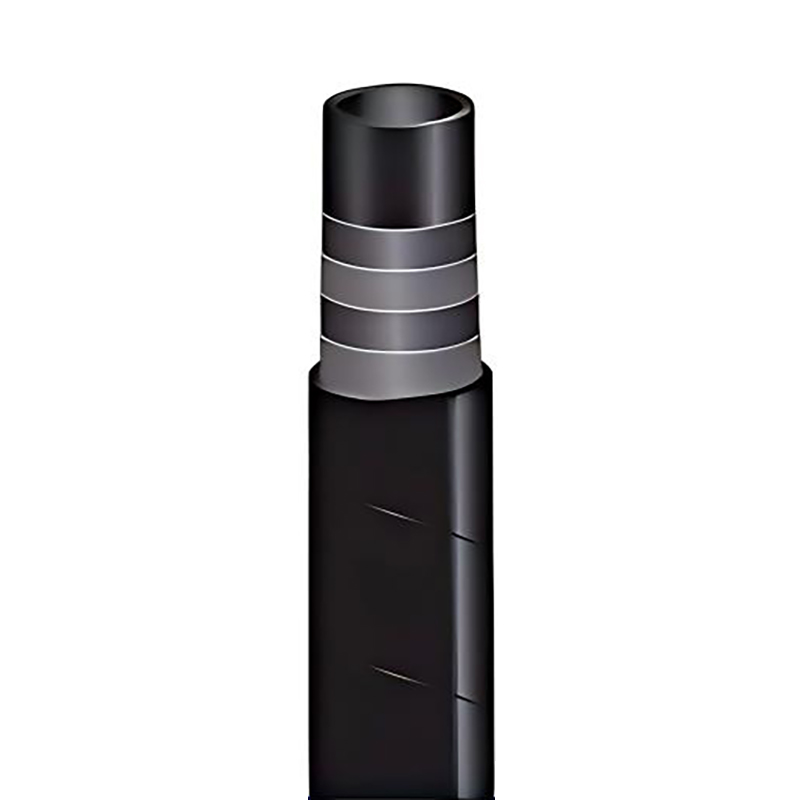
A high-pressure rotary drilling hose uses a reinforced multi-layer construction that combines pressure capacity with the flexibility needed for repeated rig movement.
Inner Tube
The inner tube is in direct contact with the drilling fluid, so material selection needs to account for mud type, temperature, oil content, additives and abrasive solids.
A Rotary Hose for Oil-Based Mud may require different material considerations from a hose used primarily with water-based drilling fluid.
Reinforcement
The reinforcement carries the internal pressure load. Depending on the qualified hose design, high-strength steel wire, cable or another approved reinforcement arrangement may be used.
The required structure varies with hose ID, pressure grade, FSL, temperature and dynamic bending conditions.
Outer Cover and External Protection
The outer cover helps protect the hose from drilling mud, oil, hydraulic fluid, water, UV exposure, weather and abrasion.
Where the hose moves close to mast or derrick structures, additional abrasion protection or an armored configuration may be appropriate.
For fluid-compatibility review, provide the drilling-fluid type, operating temperature, density, expected flow rate and any unusual chemical or abrasive conditions.
API 7K Rotary Hose End Connections
Correct end connections are essential. A hose can have the right bore, working pressure and length but still be unusable if the mating connections do not fit the rig.
Common configurations include Hammer Union ends, male or female union subs, hubs, flanges, transition subs and project-specific oilfield connectors.
| Connection Requirement | Selection Point |
| End A | Standpipe side |
| End B | Swivel / Top Drive side |
| Nominal Size | Match mating rig connection |
| Pressure Rating | Match hose and mud-system rating |
| Orientation | Male / female as applicable |
| Sealing | Match union, hub or flange configuration |
| Material | Review according to service requirement |
| Drawing | Recommended for custom and replacement projects |
End A and End B should be identified separately because the two sides may use different connection types.
Connection design requires additional attention as working pressure increases. For a Grade E 7500 PSI Rotary Hose, the final end arrangement should be confirmed before production.
Where a drilling rig uses a Fig. 1502 Hammer Union or another specified union configuration, provide the union figure, nominal size, pressure rating and male/female orientation rather than specifying only the hose ID.
Typical requirements include 5000 PSI Rotary Hose with Hammer Union, Kelly Hose with Hammer Union, Rotary Hose with Flanged Ends, Rotary Hose with Hub Connection and Custom Rotary Hose Assemblies.
Hydrostatic Testing, Inspection and Traceability
The completed hose assembly requires hydrostatic pressure verification according to the approved specification.
| API Grade | Working Pressure | Hydrostatic Test Pressure | Minimum Hold Time | Test Medium |
| Grade C | 4,000 psi | 6,000 psi | 15 minutes | Water |
| Grade D | 5,000 psi | 7,500 psi | 15 minutes | Water |
| Grade E | 7,500 psi | 11,250 psi | 15 minutes | Water |
Inspection can also cover hose dimensions, overall length, coupling areas, connection dimensions, End A / End B orientation, outer-cover condition and product marking.
Product identification can show manufacturing information, rated working pressure, test pressure, temperature range, FSL and project-required traceability details.
| Identification Item | Reference |
| Safety-Clamp Marking Zone | 150-460 mm / 6-18 in. from inboard end of coupling |
| Manufacturing Identification | Month and year |
| Pressure Marking | Rated working pressure and test pressure |
| Temperature | Working temperature range |
| FSL | FSL identification |
| Lay Line | Longitudinal contrasting line |
| Grade Rings, if used | Grade C = 3; Grade D = 4; Grade E = 5 |
Depending on the purchase scope, the documentation package can include a Product Data Sheet, Technical Specification, Hydrostatic Pressure Test Report, Certificate of Conformity, inspection records, identification records and relevant material documents for metallic components where required. Buyer-appointed or third-party inspection can also be coordinated when specified in the purchase order.
API 7K Rotary Hose vs Kelly Hose, Vibrator Hose and API 16C Hose
Understanding the installation point helps prevent incorrect hose selection.
| Hose Type | Typical Installation | Main Function | Standard |
| API 7K Rotary Hose | Standpipe to swivel / Top Drive | Flexible mud connection for moving drilling equipment | API Spec 7K |
| Kelly Hose | Standpipe to swivel on Kelly-drive rig | Rotary drilling mud connection | API Spec 7K |
| Top Drive Rotary Hose | Standpipe to Top Drive | Rotary mud connection for Top Drive | API Spec 7K |
| API 7K Vibrator Hose | Mud-pump discharge to rigid mud piping | Carries mud and accommodates pump vibration | API Spec 7K |
| API 7K Mud Jumper Hose | Between high-pressure mud piping sections | Flexible drilling mud connection | API Spec 7K where applicable |
| API 16C Choke & Kill Hose | BOP / choke / kill system | Carries well-control fluids | API Spec 16C |
A Rotary Hose moves with the swivel or Top Drive, while a Vibrator Hose normally remains near the mud-pump discharge and accommodates pump vibration. An API 16C Choke & Kill Hose belongs to the BOP and well-control system.
These hoses operate in different parts of the drilling system and should not be treated as interchangeable.
How to Select the Correct API 7K Rotary Hose
Confirm the Actual Application
Begin by confirming where the hose will operate. An API 7K Rotary Hose normally connects the standpipe with a swivel or Top Drive, while vibrator and jumper hoses serve different positions in the drilling mud circulation system.
Match Hose ID to Mud Flow
The hose bore affects both drilling-fluid flow and pressure loss. Common rotary hose IDs range from 2 in. to 6 in., depending on API grade, so the selected bore should suit the required circulation rate as well as the rig connection size.
Select the Correct API Grade and Working Pressure
The pressure class must match the drilling mud system. Grade C provides a 4,000 psi rated working pressure, Grade D provides 5,000 psi and Grade E provides 7,500 psi.
Confirm FSL and Operating Temperature
FSL 1 or FSL 2 should be selected according to the drilling duty and pressure-pulsation conditions. The specification should also identify both drilling-fluid temperature and expected ambient temperature so the correct temperature category can be reviewed.
Check Drilling-Fluid Compatibility
The RFQ should identify whether the system uses water-based mud, compatible oil-based mud or another approved drilling fluid. Mud density, additives, abrasive solids and operating temperature can influence hose material selection.
Determine Overall Length and Minimum Bending Radius
The hose must accommodate the full travel of the swivel or Top Drive without excessive tension, compression or over-bending. Standpipe position, connection elevation, maximum travel and available derrick clearance all influence the required overall length.
Confirm End A and End B Separately
Both mating connections should be specified independently because the standpipe side and swivel or Top Drive side may use different connection types. The RFQ should identify nominal size, pressure rating, connection type and male/female orientation where applicable.
Define Inspection and Documentation Requirements
Any safety restraint, abrasion protection, third-party inspection, hydrostatic pressure-test record or project-specific documentation should be identified before quotation so these requirements can be included in the supply scope.
API 7K Rotary Hose Price and RFQ Information
An API 7K Rotary Hose price depends on the complete hose assembly rather than working pressure alone.
| Quotation Factor | Effect on Supply |
| Hose ID | Changes hose construction and material requirement |
| API Grade | Grade C, D and E use different pressure designs |
| FSL | Defines the required specification level |
| Overall Length | Changes material and assembly scope |
| Temperature Range | May require different material selection |
| Drilling Fluid | Affects inner-tube compatibility |
| End Connections | Hammer Union, hub, flange and custom ends differ |
| External Protection | Abrasion protection adds supply scope |
| Safety Restraint | Depends on rig and operator requirements |
| Quantity | Affects production and commercial planning |
| TPI / Documentation | Adds inspection and document scope |
| Delivery Requirement | Required delivery date affects production planning |
For an accurate API 7K Rotary Hose quote, the RFQ should identify the application, rig type, hose ID, API grade or rated working pressure, FSL, temperature range, overall length, End A and End B connections, drilling-fluid type, mud density, flow rate, operating environment, quantity and required documentation.
A typical requirement might specify a 4″ Grade D, 5,000 psi FSL 2 Rotary Hose for an onshore Top Drive rig, Range II temperature service, 18 m overall length, project-specific End A and End B connections, water-based mud and the required hydrostatic test documentation.
For replacement orders, also include the old hose nameplate, an overall photograph and clear close-up photographs of both end connections.
Replacement API 7K Rotary Hose and Kelly Hose
Replacement orders often require more technical checking than new-rig projects because the original drawing or purchase specification may no longer be available.
Much of the required information can usually be recovered from the existing hose. The most useful references are the nameplate, hose ID, pressure grade, FSL, temperature marking, overall length, connection dimensions, rig model and installation photographs.
This information supports Replacement API 7K Rotary Hose, Replacement Kelly Hose, Replacement Top Drive Hose, 5000 PSI Kelly Hose Replacement and 7500 PSI Rotary Hose Replacement projects.
A replacement must do more than match working pressure. The new hose must also fit the mating equipment, follow the available rig travel and maintain the required bending radius after installation.
If the original nameplate is damaged or incomplete, clear photographs of the complete hose and accurate measurements of both connections can still provide useful information for matching.
API 7K Rotary Hose Installation and Routine Inspection
Correct installation helps reduce unnecessary mechanical stress throughout the hose service life.
The hose should be installed without twisting and allowed to form a natural curve between the standpipe and the swivel or Top Drive. It must maintain the required MBR throughout the complete traveling range and should not form a sharp bend next to the coupling.
Routing should minimize unnecessary contact with sharp steel edges, mast or derrick structures, Top Drive components and other moving equipment.
During service, the outer cover should be checked for cuts, severe abrasion, exposed reinforcement, bulges, crushing, deformation and kinking. End connections should also be inspected for leakage, corrosion or abnormal movement.
Heat damage, chemical attack, unsuitable routing and repeated operation below the required bending radius can affect hose integrity. A seriously damaged or leaking hose should be evaluated according to the drilling contractor’s approved maintenance and safety procedures.
Why Choose SGPE for API 7K Rotary Hose?
SGPE focuses on oilfield drilling equipment and project-specific supply rather than treating every rotary hose as a standard catalog item.
For a new installation, hose selection can be reviewed around ID, working pressure, API grade, FSL, temperature, drilling fluid, flow rate, overall length, MBR and end connections. For replacement work, existing nameplates, photographs and connection dimensions can be used to define the new assembly before production.
Project-specific supply can cover custom hose lengths, Grade C, D or E pressure configurations, FSL 1 or FSL 2, Hammer Union, hub or flange ends, different End A and End B connections, safety restraints, abrasion protection, hydrostatic pressure testing, third-party inspection coordination and the required technical documentation.
These details matter at the rig site. A 4″ 5000 PSI Rotary Hose may have the correct bore and pressure but the wrong connection. A 5000 PSI Kelly Hose may fit the mating equipment yet still be too short for the available swivel travel.
Likewise, a 7500 PSI Grade E Rotary Hose must match FSL, temperature, MBR, drilling-fluid compatibility and end-connection requirements in addition to its working pressure.
SGPE supports drilling contractors, oil and gas operators, rig manufacturers, offshore drilling companies, EPC contractors, oilfield service companies, rig-maintenance teams and drilling-equipment distributors.
Related Oilfield Drilling Equipment from SGPE
An API 7K Rotary Hose works within the wider drilling mud circulation and rotary equipment system, so related procurement may include several other drilling components.
An API 7K Vibrator Hose is normally used near the mud-pump discharge to provide a flexible high-pressure connection while accommodating pump vibration. An API 7K Mud Jumper Hose can provide a flexible connection between suitable high-pressure mud piping sections where applicable.
Drilling Mud Pumps supply the high-pressure drilling fluid that moves through the circulation system, while API 8C Rotary Swivels form part of conventional Kelly-drive drilling arrangements. Top Drive projects may also require Top Drive Systems and Spare Parts, while Hammer Unions and other High-Pressure Oilfield Connections are commonly used throughout drilling-fluid piping systems.
For BOP and well-control service, the correct product is an API 16C Choke & Kill Hose, which serves a different function from an API 7K Rotary Hose and should not be treated as interchangeable.
These related products can support new-rig packages, refurbishment programs and multi-item drilling-equipment procurement.
Frequently Asked Questions About API 7K Rotary Hoses
1. What is an API 7K Rotary Hose and where does it work on a drilling rig?
An API 7K Rotary Hose is a flexible high-pressure hose that carries drilling mud from the fixed standpipe to the moving swivel or Top Drive. It allows drilling fluid to enter the drill string while the traveling equipment moves vertically during drilling.
The same product may also appear as a Rotary Drilling Hose, Kelly Hose, Kelly Rotary Hose, Top Drive Rotary Hose or Drilling Rig Rotary Hose. On a conventional Kelly-drive rig, the hose connects the standpipe to the swivel. On a Top Drive rig, it connects the standpipe to the Top Drive mud inlet.
Because the hose moves continuously during operation, buyers should consider working pressure, overall length, minimum bending radius, FSL, end connections and available mast or derrick clearance together.
2. Is an API 7K Rotary Hose the same as a Kelly Hose or Top Drive Rotary Hose?
A Rotary Hose, Kelly Hose and Top Drive Rotary Hose perform the same basic function: they transfer high-pressure drilling mud from the standpipe to moving rotary equipment. The terminology mainly reflects the drilling-rig configuration.
A Kelly Hose normally serves a conventional Kelly-drive rig and connects the standpipe to the swivel above the Kelly. A Top Drive Rotary Hose performs the same function on a Top Drive drilling system.
For new-rig or replacement procurement, do not rely on the product name alone. Confirm the hose ID, API grade, working pressure, FSL, temperature range, overall length, MBR and End A / End B connections against the actual drilling rig.
3. What pressure ratings are available for API 7K Rotary Hose?
Common API 7K rotary hose pressure classes include Grade C at 4,000 psi, Grade D at 5,000 psi and Grade E at 7,500 psi rated working pressure.
Drilling contractors commonly use a Grade D 5000 PSI Rotary Hose on land rigs, offshore rigs, jack-up rigs, Top Drive systems and conventional Kelly-drive rigs. Deep wells, higher-pressure mud systems and more demanding drilling programs may require a Grade E 7500 PSI Rotary Hose.
Choose the pressure grade according to the actual drilling mud system rather than simply selecting the highest available rating. Also review FSL, temperature, hose size, end connections and rig geometry as part of the complete hose specification.
4. What sizes of API 7K Rotary Hose are available?
Common API 7K Rotary Hose sizes include 2″, 2-1/2″, 3″, 3-1/2″, 4″, 5″ and 6″ inside diameters, depending on API grade and hose design.
Typical project requirements include a 3″ 5000 PSI Rotary Hose, 3-1/2″ Grade D Kelly Hose, 4″ 5000 PSI Top Drive Hose, 4″ 7500 PSI Rotary Hose or 5″ Grade E Rotary Drilling Hose.
The hose ID influences drilling-fluid flow and pressure loss, so select the bore together with mud flow rate, working pressure and rig connection size. Since every pressure grade does not cover every diameter, always confirm hose size and API grade together.
5. What is the difference between FSL 1 and FSL 2 Rotary Hose?
FSL means Flexible Specification Level and defines the service requirements for the flexible hose assembly.
An FSL 1 Rotary Hose suits normal rotary, vibrator and jumper hose service under the applicable design requirements. An FSL 2 Rotary Hose suits more demanding duty where the drilling system produces higher-frequency pressure pulsations.
Offshore drilling, deep-well programs, high-duty mud-pump systems and demanding Top Drive applications may specify an API 7K FSL 2 Rotary Hose, FSL2 Kelly Hose or FSL2 Top Drive Hose.
However, a higher FSL does not automatically make the hose a better choice for every rig. The drilling conditions and purchase specification should define the correct FSL.
6. What temperature ranges are available for API 7K Rotary Hose?
Typical API 7K rotary hose temperature categories include Range I from -20°C to +82°C, Range II from -20°C to +100°C and Range III from -20°C to +121°C.
Choose the temperature range according to both drilling-fluid temperature and ambient conditions. Desert land rigs may face high external temperatures, while offshore or cold-region drilling projects may operate under very different environmental conditions.
Deep-well drilling and high-temperature mud circulation can also increase the thermal load on the hose. For service below -20°C / -4°F or outside the standard temperature ranges, send the operating conditions to SGPE for separate technical review.
7. Can API 7K Rotary Hose handle oil-based drilling mud?
Yes. SGPE can supply a compatible API 7K Rotary Hose for oil-based mud when the hose materials match the specified drilling fluid.
Material selection depends on more than whether the mud uses a water-based or oil-based system. Oil content, additives, operating temperature, mud density, abrasive solids and other chemical conditions can all affect inner-tube compatibility and hose service performance.
For oil-based mud, synthetic-based mud or drilling fluids with unusual additives, provide the available fluid information during the RFQ stage. SGPE can then review the hose construction against the intended drilling conditions.
8. What end connections are available for API 7K Rotary Hose?
SGPE can supply API 7K Rotary Hose assemblies with different oilfield end connections to match the drilling rig interface. Common options include Hammer Union ends, hub connections, flanged ends, male or female union subs, transition subs and other project-specific connectors.
Specify End A and End B separately because the standpipe side and the swivel or Top Drive side may use different connection types.
If the rig uses a Fig. 1502 Hammer Union or another specified union configuration, include the union figure, nominal size, pressure rating and male/female orientation in the RFQ. These details are especially important for 5000 PSI Rotary Hose with Hammer Union, Kelly Hose with Hammer Union and custom Top Drive Rotary Hose assemblies.
9. How do I determine the correct API 7K Rotary Hose length and minimum bending radius?
The correct hose length depends on the standpipe position, swivel or Top Drive travel, connection elevations, minimum bending radius and available mast or derrick clearance.
A hose that is too short can experience excessive tension or axial loading when the traveling equipment reaches its upper position. A hose that is too long can sag, contact rig structures or form a bend tighter than the permitted MBR.
For a Replacement API 7K Rotary Hose, Replacement Kelly Hose or Replacement Top Drive Hose, provide the existing overall length, installation photographs, connection locations and available rig drawings. The new hose should follow the full operating travel without excessive tension, compression or over-bending.
10. What is the difference between an API 7K Rotary Hose, Vibrator Hose and API 16C Choke & Kill Hose?
These hoses work in different parts of the drilling system, so they do not serve as direct substitutes for one another.
An API 7K Rotary Hose connects the standpipe to the moving swivel or Top Drive. An API 7K Vibrator Hose normally connects the mud-pump discharge to rigid high-pressure mud piping while absorbing pump vibration.
An API 16C Choke & Kill Hose works within the BOP, choke manifold or kill system and carries well-control fluids rather than normal rotary drilling mud circulation.
Therefore, always confirm the installation point before deciding whether the project requires a Rotary Hose, Kelly Hose, Vibrator Hose, Mud Jumper Hose or API 16C Choke & Kill Hose.
11. How does SGPE pressure test an API 7K Rotary Hose before shipment?
SGPE can hydrostatically test the completed API 7K rotary hose assembly according to the approved project specification.
Typical hydrostatic test pressures include 6,000 psi for Grade C, 7,500 psi for Grade D and 11,250 psi for Grade E. The test normally uses water as the test medium with a minimum 15-minute hold under the applicable approved requirement.
Inspection can also cover overall dimensions, end-connection configuration, coupling areas, outer-cover condition, product identification and connection orientation.
When the purchase scope requires documentation, SGPE can provide the Hydrostatic Pressure Test Report, Product Data Sheet, Certificate of Conformity and relevant inspection records.
12. What information should I send to get an API 7K Rotary Hose price and quotation?
For an accurate API 7K Rotary Hose price and quotation, send the hose ID, API grade or rated working pressure, FSL, temperature range, overall length, End A and End B connections, drilling-fluid type, expected flow rate, quantity and required documentation.
For example, an RFQ may specify a 4″ Grade D 5000 PSI FSL 2 Rotary Hose for an onshore Top Drive rig, Range II temperature service, custom overall length and project-specific End A / End B connections.
For replacement projects, also send the existing hose nameplate, an overall photograph and clear close-up photographs of both ends. These details help SGPE identify whether you need a Replacement Rotary Hose, Replacement Kelly Hose or Replacement Top Drive Hose and reduce the risk of connection, length or MBR mismatch.
Request an API 7K Rotary Hose Quote from SGPE
Looking for an API 7K Rotary Hose Manufacturer for your drilling project? SGPE supplies Grade C 4,000 psi, Grade D 5,000 psi and Grade E 7,500 psi Rotary Hose, including Kelly Hose, Top Drive Rotary Hose, FSL 1 / FSL 2 configurations, Hammer Union, flanged ends and custom hose assemblies.
Our rotary hoses are suitable for land rigs, offshore rigs, jack-up rigs, Top Drive systems, rig refurbishment and replacement projects.
For accurate technical matching, please provide the hose ID, working pressure or API grade, FSL, temperature range, overall length, End A and End B connections, drilling-fluid type and quantity.
Email: info@sgpe.com
Tel / WhatsApp: +86 186-1599-5239