Description
Casing Power Tong for Oilfield Drilling, Casing Running & Workover Operations
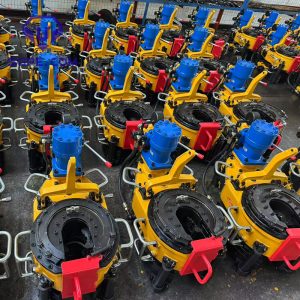
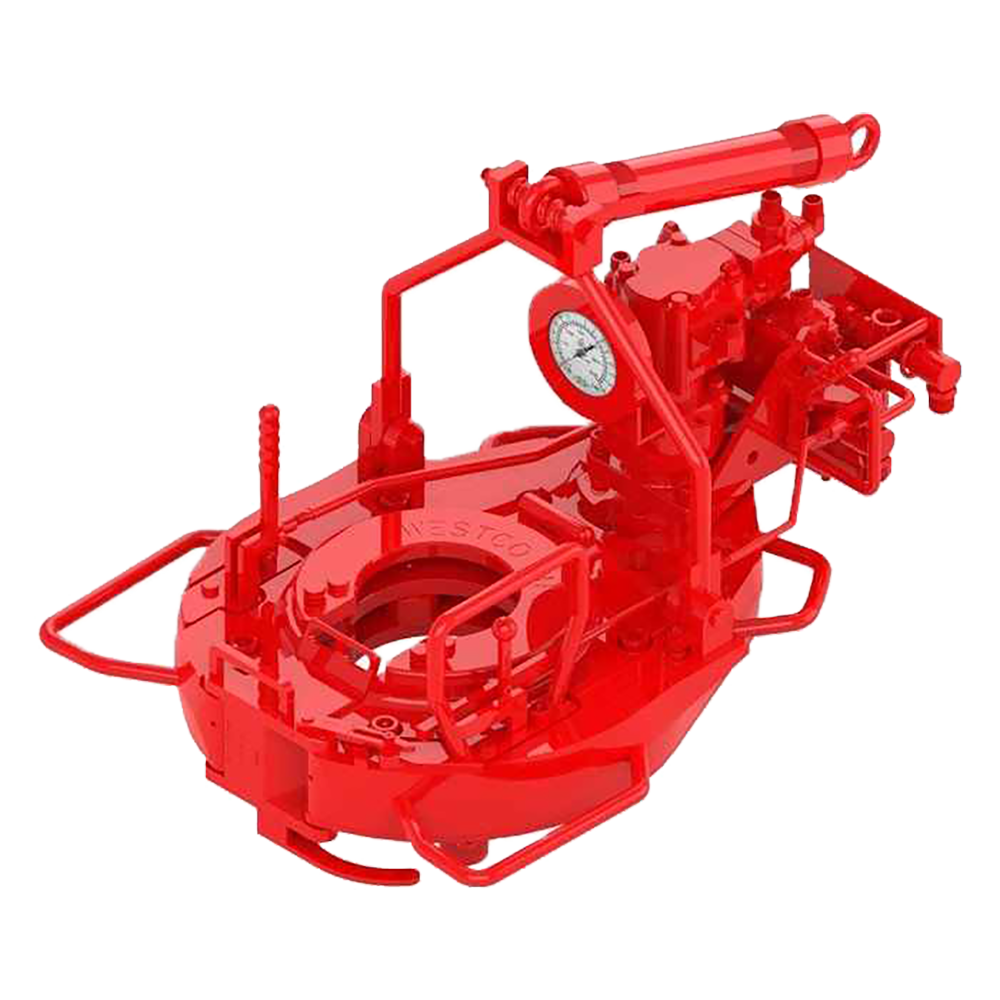
SGPE Casing Power Tong provides controlled hydraulic torque for casing makeup and breakout during drilling, casing running, workover and well servicing.
The tong grips the casing OD and rotates the connection at controlled speed and torque. Crews gain better control during tubular running while reducing repetitive manual tong handling around the rig floor and well center.
Our TQ Series Hydraulic Casing Power Tong range covers tubular sizes from approximately 4 to 20 in, with maximum torque ratings from 16 to 105 kN·m. Available models support conventional casing strings, high-torque connections, large-diameter surface casing, offshore casing running, workover and casing recovery.
A complete casing-running system can include the main hydraulic power tong, hydraulic backup tong, interchangeable jaw sets, dies and inserts, suspension equipment, hydraulic hoses, HPU and digital torque monitoring.
SGPE selects each system around the actual casing program. Pipe OD is only the first step. Coupling OD, connection type, makeup torque, breakout torque, hydraulic capacity, rig-floor space and operating environment all influence the final configuration.
Contact Us for a Quote
Email: info@sgpe.com
Tel / WhatsApp: +86 186-1599-5239
Casing Power Tong at a Glance
| Parameter | SGPE TQ Series |
|---|---|
| Product Type | Hydraulic Casing Power Tong |
| Main Function | Casing makeup and breakout |
| Tubular Range | Approx. 4 to 20 in |
| Maximum Torque | 16 to 105 kN·m |
| Hydraulic Pressure | Approx. 16.6 to 20 MPa |
| Working Flow | Approx. 100 to 200 L/min |
| Rotation | Forward / Reverse |
| Speed | High / Low or multi-speed |
| Tong Head | Open-head configuration |
| Gripping System | Replaceable jaws and dies |
| Hydraulic Backup Tong | Available |
| Torque Indication | Hydraulic / Digital |
| Torque-Turn Monitoring | Optional |
| Hydraulic Power Unit | Electric or diesel options |
| Applications | Drilling / Casing Running / Workover / Well Servicing |
| Rig Types | Land / Offshore / Jack-Up / Workover |
| Largest Listed Size | 20 in |
| Highest Listed Torque | 105 kN·m |
| Spare Parts | Jaws, dies, inserts, motors, cylinders, gears, seals and controls |
| Documentation | Datasheet / GA / O&M / FAT / ITP / MDR as required |
Note: Final specifications follow the approved model datasheet, selected jaw configuration and project requirements.
What Is a Casing Power Tong?
A Casing Power Tong is a hydraulic tubular-running tool used to make up and break out threaded casing connections.
Oilfield RFQs may also refer to this equipment as a Hydraulic Casing Tong, Hydraulic Power Tong, Casing Running Tong, Casing Makeup Tong, Casing Breakout Tong or TQ Casing Tong.
The tong grips the casing body with replaceable jaws and dies. A hydraulic motor drives the transmission and rotary head.
During initial makeup, the operator uses higher speed to spin the joint. As the connection approaches final makeup, the operator reduces speed and applies the specified torque.
For breakout, the motor reverses direction and releases the connection.
Crews use hydraulic casing tongs for surface, intermediate and production casing. The same equipment can also support casing pulling, casing recovery, replacement, well re-entry and workover.
How a Hydraulic Casing Tong Works
The tong receives pressure and flow from the rig hydraulic system or a dedicated hydraulic power unit.
The hydraulic motor converts oil pressure and flow into rotary motion. The gearbox then provides the speed and torque required at each stage of the connection.
High gear reduces spinning time during initial thread engagement. Low gear provides more torque and finer control near final makeup.
During casing running, the crew aligns the upper joint and positions the open-head tong around the casing. The selected jaw set grips the tubular while the hydraulic backup tong holds the lower casing or coupling.
The main tong then rotates the upper joint. As torque rises, the operator reduces speed and completes the connection according to the approved running procedure.
Where the project requires detailed makeup records, a digital torque or torque-turn system can track torque, turns, RPM and connection behavior throughout the operation.
Key Features
Open-Head Design
The open-head configuration allows the crew to move the tong directly onto or away from an existing casing string.
This makes positioning around the well center easier and avoids passing the full tubular through a closed tong body. Technicians also gain better access to the jaw carrier for inspection, cleaning and die replacement.
High-Speed Spinning and Controlled Final Torque
Casing running needs both speed and torque.
Higher speed shortens the initial spinning stage. Lower speed provides greater torque and better control as the connection approaches final makeup.
The operator can therefore run casing efficiently without losing control during the most critical part of the connection.
Forward and Reverse Rotation
The hydraulic drive supports both makeup and breakout.
One tong can handle new casing installation as well as casing pulling, recovery, workover and replacement.
Interchangeable Jaw Sets
Different jaw sets allow one main tong to cover several tubular diameters within its operating range.
This gives drilling contractors more flexibility when one well program includes several casing strings.
Replaceable Dies and Inserts
Tong dies transfer gripping force from the jaw carrier to the casing body.
Replaceable gripping components simplify maintenance and allow the tong to use different jaw and insert configurations for different tubulars.
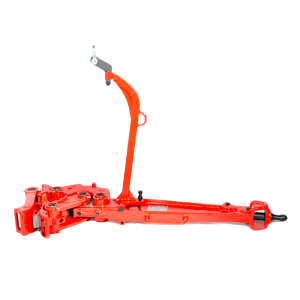
Hydraulic Backup Tong
A Casing Power Tong with Hydraulic Backup Tong creates a stable reaction point during makeup and breakout.
The main tong rotates the upper joint while the backup grips the lower casing or coupling. This arrangement reduces manual backup-tong handling and provides a more stable setup for torque measurement.
Torque Monitoring
A standard system can use a hydraulic torque gauge.
Projects that need more detailed records can use digital torque or torque-turn monitoring. Depending on the selected package, the system can record torque, turns, RPM, peak torque, shoulder behavior, makeup curves, joint history and job data.
TQ Series Casing Power Tong Models
| Model | Applicable Pipe Range | Max. Torque | Hydraulic Pressure | Working Flow | Low Speed | High Speed |
|---|---|---|---|---|---|---|
| TQ178/16Y | 4–7 in / 101.6–177.8 mm | 16 kN·m / 12,000 ft-lb | 18 MPa | 100–160 L/min | 12–19.5 rpm | 77–123 rpm |
| TQ219/25Y | 4-1/2–8-5/8 in / 114.3–219.1 mm | 25 kN·m / 18,400 ft-lb | 20 MPa | 110–170 L/min | 9–11 rpm | 50–60 rpm |
| TQ340/35Y | 4–13-3/8 in / 101.6–339.7 mm | 35 kN·m / 25,800 ft-lb | 20 MPa | 110–170 L/min | 4–14 rpm | 50–90 rpm |
| TQ340/85Y | 4-1/2–13-3/8 in / 114.3–339.7 mm | 85 kN·m / 62,700 ft-lb | 17.2 MPa | 110–170 L/min | 3.2–5 rpm | 30–45 rpm |
| TQ356/55Y | 4-1/2–14 in / 114.3–355.6 mm | 55 kN·m / 40,560 ft-lb | 20 MPa | 110–170 L/min | 4–6 rpm | 28–45 rpm |
| TQ356/105Y | 4-1/2–14 in / 114.3–355.6 mm | 105 kN·m / 77,450 ft-lb | 17.2 MPa | 140–200 L/min | 2.7–4 rpm | 14.5–21 rpm |
| TQ406/75Y | 8-5/8–16 in / 219.1–406.4 mm | 75 kN·m / 55,300 ft-lb | 16.6 MPa | 110–170 L/min | 3.3–6.2 rpm | 20.5–45 rpm |
| TQ508/70Y | 9-5/8–20 in / 244.5–508 mm | 70 kN·m / 51,600 ft-lb | 20 MPa | 110–170 L/min | 4.6–7.3 rpm | 30.5–48 rpm |
Actual speed can vary with hydraulic flow, pressure, applied load and system settings.
Dimensions, Weight and Backup Tong Selection
| Main Tong | Approx. Dimensions | Approx. Weight | Recommended Backup Tong |
|---|---|---|---|
| TQ178/16Y | 1,480 × 760 × 820 mm | 630 kg | TB194/16Y |
| TQ219/25Y | 1,460 × 840 × 1,080 mm | 720 kg | TB245/25Y |
| TQ340/35Y | 1,580 × 900 × 860 mm | 760 kg | TB365/35Y |
| TQ340/85Y | 1,995 × 1,150 × 680 mm | 1,700 kg | TB365/85Y |
| TQ356/55Y | 1,770 × 960 × 780 mm | 1,100 kg | TB381/55Y |
| TQ356/105Y | 1,950 × 1,210 × 860 mm | 1,800 kg | Project-specific |
| TQ406/75Y | 1,950 × 1,290 × 1,200 mm | 1,700 kg | TB432/75Y |
| TQ508/70Y | 2,080 × 1,280 × 760 mm | 1,550 kg | TB559/70Y |
Oversized couplings, unusual gripping positions or high breakout torque may require another backup-tong configuration.
How to Choose the Correct TQ Casing Tong
| Operating Requirement | Suggested Starting Model |
|---|---|
| Small casing and workover tubulars | TQ178/16Y |
| Casing up to 8-5/8 in | TQ219/25Y |
| General casing up to 13-3/8 in | TQ340/35Y |
| High-torque casing up to 13-3/8 in | TQ340/85Y |
| General casing up to 14 in | TQ356/55Y |
| High-torque or selected premium connections up to 14 in | TQ356/105Y |
| Large casing from 8-5/8 to 16 in | TQ406/75Y |
| Large surface casing up to 20 in | TQ508/70Y |
This table provides a starting point, not a final recommendation.
Two casing strings with the same OD can still need different tongs because coupling size, connection design and torque requirements may differ.
Before confirming a model, SGPE reviews casing grade, connection type, maximum coupling OD, makeup torque, expected breakout torque, hydraulic capacity and rig-floor clearance.
Selected TQ Casing Tong Models
TQ340/35Y Casing Power Tong for 13-3/8 Inch Casing
The TQ340/35Y Casing Power Tong covers tubular sizes from approximately 4 to 13-3/8 in and provides up to 35 kN·m maximum torque.
It operates at up to 20 MPa hydraulic pressure and requires approximately 110–170 L/min flow. The low-speed range is 4–14 rpm, while high speed reaches approximately 50–90 rpm.
Approximate weight is 760 kg, and the recommended hydraulic backup tong is TB365/35Y.
This model suits many conventional surface, intermediate and production casing programs when the required torque remains within its rating.
TQ340/85Y High-Torque 13-3/8 Inch Casing Tong
The TQ340/85Y also covers casing up to 13-3/8 in, but maximum torque increases to 85 kN·m.
It suits casing programs with higher makeup torque, demanding breakout requirements or selected premium connections.
Because its operating speed differs from the TQ340/35Y, buyers should consider both torque and required running speed rather than choose by OD alone.
TQ356/105Y High-Torque Casing Power Tong
The TQ356/105Y provides the highest listed torque in this TQ range.
It covers approximately 4-1/2 to 14 in tubulars and delivers up to 105 kN·m maximum torque.
The unit operates at approximately 17.2 MPa and requires 140–200 L/min hydraulic flow. It suits demanding casing programs where a lower-torque model does not provide enough operating margin.
TQ508/70Y 20 Inch Casing Power Tong
The TQ508/70Y covers tubular sizes from approximately 9-5/8 to 20 in and provides up to 70 kN·m maximum torque.
It suits large surface casing, large intermediate casing and other large-bore casing-running applications.
Approximate dimensions are 2,080 × 1,280 × 760 mm, while approximate weight is 1,550 kg. The recommended backup tong is TB559/70Y.
For 20 in casing, SGPE also reviews rig-floor clearance, suspension capacity and maximum coupling OD before confirming the final package.
Oilfield Applications
Land Drilling and Well Construction
A hydraulic casing tong supports surface, intermediate and production casing during exploration and development drilling.
The equipment can work on vertical, directional and horizontal wells as long as the jaw range and torque capacity match the casing program.
When the rig hydraulic system provides enough pressure and flow, the tong can use the existing supply. Otherwise, SGPE can match it with a dedicated HPU.
Offshore and Jack-Up Rigs
Offshore casing running adds space, corrosion protection and logistics constraints.
SGPE can configure equipment for fixed offshore platforms and jack-up rigs with project-specific coating, suitable hydraulic fittings, hose lengths, hydraulic backup tong and torque monitoring.
If electrical accessories or an electric HPU form part of the package, customers should state any hazardous-area requirements during the RFQ stage.
Workover and Well Servicing
A Hydraulic Casing Tong for Workover needs reliable makeup and breakout capability.
Typical jobs include casing pulling, recovery, damaged casing replacement, well repair, well re-entry and rehabilitation.
Breakout torque becomes particularly important because an existing connection may require more torque to release than it needed during original makeup.
Casing Running Service Companies
Casing-running contractors often move equipment between rigs and well programs.
A package with several jaw sets, hydraulic backup tong, spare dies, HPU and digital torque monitoring can allow one service fleet to cover several casing sizes without replacing the complete system for every job.
Casing Makeup, Breakout and Connection Types
A Casing Makeup Tong spins and torques the threaded connection during casing installation.
A Casing Breakout Tong performs the reverse operation during workover, casing recovery or intervention.
SGPE can evaluate configurations for API STC, LTC, BTC and API 8-Round connections, together with selected flush-joint, semi-premium and premium connections.
Connection type matters because two casing strings with the same OD can require very different running speed and torque.
The connection manufacturer should therefore provide the final running procedure, torque limits and acceptance criteria.
Premium Casing Connections and Torque-Turn Monitoring
Premium casing connections often require tighter control over torque, speed and connection behavior.
For these projects, provide the connection manufacturer and designation, casing OD, coupling OD, grade and wall thickness.
The technical review should also include minimum, recommended and maximum makeup torque, expected breakout torque, maximum RPM and torque-turn acceptance limits.
SGPE can then review tong capacity, jaw configuration and digital monitoring against the approved running procedure.
| Function | Purpose |
|---|---|
| Real-Time Torque | Displays current makeup torque |
| Turn Counting | Records connection rotation |
| RPM Monitoring | Tracks makeup speed |
| Shoulder Detection | Identifies shoulder behavior |
| Delta Torque | Compares shoulder and final torque |
| Torque-Turn Curve | Shows connection response |
| Min / Max Limits | Defines the acceptance window |
| Alarm | Warns of abnormal makeup |
| Joint Number | Creates connection history |
| Job Information | Records well and project data |
| Data Export | Supports reporting |
| Pass / Reject | Supports immediate evaluation |
Torque-turn monitoring creates a traceable makeup record. However, it does not replace proper thread inspection, alignment, thread compound or the connection manufacturer’s approved running procedure.
Complete Casing Running Equipment Package
Customers can order the main tong alone or request a complete Casing Running Equipment package.
| Equipment | Typical Supply / Function |
|---|---|
| Main TQ Casing Power Tong | Main rotary tong |
| Hydraulic Backup Tong | Reaction torque control |
| Main Tong Jaw Sets | According to casing program |
| Backup Jaw Sets | According to casing / coupling |
| Tong Dies / Inserts | According to jaw configuration |
| Suspension System | Supports tong weight |
| Hydraulic Lift Cylinder | Optional height adjustment |
| Hydraulic Power Unit | Optional independent power source |
| Pressure / Return Hoses | Hydraulic connection package |
| Hydraulic Torque Gauge | Basic torque indication |
| Digital Torque Monitor | Optional |
| Torque-Turn System | Optional connection recording |
| Remote Control | Optional |
| Spare Parts Kit | Optional |
| Technical Datasheet | Available |
| GA Drawing | Available |
| O&M Manual | Available |
| FAT / ITP / MDR | When required |
| Third-Party Inspection | When required |
A complete package suits drilling contractors and casing-running service companies that want one matched system instead of sourcing the tong, backup, hydraulic supply and monitoring equipment separately.
Hydraulic Power Unit for Casing Power Tong
The tong can use the rig hydraulic system when pressure, flow and return-line conditions match the selected model.
| Hydraulic Parameter | Typical Range / Requirement |
|---|---|
| Pressure | Approx. 16.6–20 MPa |
| Flow | Approx. 100–200 L/min |
| Hydraulic Oil | Clean anti-wear hydraulic oil |
| Return Line | Low back pressure |
| Cooling | Recommended for continuous or hot-climate operation |
| Filtration | Match hydraulic motor and valve requirements |
| Drive Source | Rig HPU / Electric HPU / Diesel HPU |
If the rig cannot supply enough hydraulic capacity, SGPE can supply an independent electric or diesel-driven HPU matched to the selected casing tong.
The HPU should be sized around the actual tong model rather than a generic pressure and flow assumption.
Casing Power Tong Manufacturer, Supplier and Price
SGPE supplies hydraulic casing tongs and related oilfield power tong equipment for drilling contractors, workover companies, casing-running service providers, EPC projects and distributors.
Our supply scope can include the main TQ tong, hydraulic backup tong, HPU, torque monitoring, jaw sets, spare parts and replacement or retrofit support.
Casing Power Tong price depends on the complete configuration rather than casing diameter alone.
The selected model, torque rating, jaw sets, hydraulic backup tong, HPU, torque-turn package, hose length, lift system, offshore requirements, spare parts, inspection and documentation can all affect the final quotation.
If you are looking for a Casing Power Tong for Sale, send the actual casing program and rig hydraulic data. This helps SGPE recommend the correct system instead of quoting an undersized or unnecessarily expensive configuration.
Casing Tong Jaws, Dies and Spare Parts
The gripping system directly affects tong performance.
SGPE can supply main jaws, casing tong dies, inserts, jaw carriers, pins, springs, rollers and bushings for selected TQ configurations.
Standard gripping components suit many conventional casing applications. Coated or premium tubulars may require a project-specific gripping surface or insert configuration.
For replacement parts, provide the tong manufacturer, model, casing OD, part number, dimensions and clear photographs.
| Spare Part | Function |
|---|---|
| Jaw Assembly | Grips casing |
| Tong Dies | Transfers gripping force |
| Inserts | Replaceable wear part |
| Jaw Carrier | Supports gripping components |
| Hydraulic Motor | Drives rotation |
| Hydraulic Cylinder | Controls movement |
| Rotary Gear | Transfers rotary torque |
| Pinion / Idler Gear | Transfers gearbox motion |
| Bearing | Supports rotating components |
| Seal Kit | Maintains hydraulic sealing |
| Control Valve | Controls hydraulic functions |
| Relief Valve | Limits system pressure |
| Torque Gauge | Indicates torque |
| Load Cell | Measures electronic torque |
| Encoder | Measures turns / RPM |
| Hose Assembly | Transfers hydraulic oil |
| Quick Couplings | Connect hydraulic lines |
SGPE can also prepare commissioning spares and maintenance kits for long drilling campaigns and remote operations.
Replacement and Retrofit Casing Tong Support
Many drilling fleets continue to use older hydraulic casing tongs after original OEM support becomes difficult to obtain.
SGPE can review Replacement Casing Power Tong, legacy equipment and retrofit requirements from the existing nameplate, model, pipe range, torque rating, hydraulic data, dimensions and equipment photos.
Depending on compatibility, the solution may include a complete TQ replacement, hydraulic backup replacement, jaw conversion, new dies, hydraulic motor or cylinder replacement, hose replacement, torque-gauge upgrade or digital monitoring retrofit.
This can be useful when the existing rig layout still works well but the original tong or spare-parts supply no longer meets project requirements.
Casing Power Tong vs. Other Tubular Handling Equipment
| Feature | Casing Power Tong | Tubing Power Tong | Drill Pipe Power Tong | Casing Running Tool |
|---|---|---|---|---|
| Main Tubular | Casing | Production tubing | Drill pipe / tool joints | Casing |
| Main Function | Makeup / breakout | Tubing makeup / breakout | Drill pipe makeup / breakout | Integrated casing running |
| Typical OD | Medium to large | Smaller | Drill pipe / tool joint range | Model dependent |
| Rotation Source | Hydraulic motor | Hydraulic motor | Hydraulic motor | Top drive |
| Working Position | Rig floor | Rig / workover floor | Rig floor | Top drive |
| Backup Tong | Common | Common | System dependent | System dependent |
| Circulation | Separate | Separate | Separate | Often integrated |
| Typical Application | Drilling / workover | Completion / workover | Drilling | Automated casing running |
These tools serve different tubulars and rig workflows.
Select the equipment according to pipe OD, gripping geometry, connection torque and rig interface rather than torque rating alone.
API 7K and Project Requirements
Customers sometimes search for an API 7K Casing Power Tong or include API 7K wording in tender documents.
Project requirements and API Monogram scope should not be treated as the same thing automatically.
If the RFQ states API 7K, send the complete technical specification to SGPE. Our engineering team can review the applicable design, inspection, testing, documentation and deviation requirements before quotation.
This keeps the technical offer aligned with the actual project specification without making a general certification claim.
Inspection, FAT and Technical Documentation
SGPE can arrange inspection and testing according to the approved purchase specification.
| Inspection Item | Typical Scope |
|---|---|
| Visual Inspection | Workmanship and completeness |
| Dimensional Inspection | Main dimensions and interfaces |
| Hydraulic Test | Pressure and leakage |
| No-Load Test | Rotation and controls |
| Torque Test | According to approved procedure |
| Gear Shift Test | High / low speed |
| Jaw Test | Engagement and release |
| Backup Tong Test | Clamp and release |
| Safety Interlock Test | Where applicable |
| Emergency Stop Test | Where applicable |
| Torque Calibration | Gauge / sensor / load cell |
| Coating Inspection | Paint and preservation |
| Document Review | Manuals, reports and certificates |
Project documentation can include a technical datasheet, GA drawing, hydraulic schematic, O&M manual, spare-parts list, CoC, inspection reports, calibration records and FAT documents.
Where required, SGPE can also prepare an ITP and MDR or support customer and third-party inspection.
How to Select the Correct Casing Power Tong
Do not select a power tong from casing OD alone.
Pipe size provides the first filter, but coupling diameter, connection design and required torque determine whether a model fits the job.
The rig interface matters as well. Confirm hydraulic pressure, flow, return-line pressure, hose connections and hose length before finalizing the equipment.
For offshore rigs and restricted rig floors, also check equipment dimensions, suspension point, lift arrangement and applicable hazardous-area requirements.
For faster technical selection, send the following information with your RFQ:
| Required Information | Customer Data |
|---|---|
| Minimum Casing OD | |
| Maximum Casing OD | |
| Maximum Coupling OD | |
| Casing Grade | |
| Wall Thickness | |
| Connection Type | |
| Connection Manufacturer | |
| Recommended Makeup Torque | |
| Maximum Makeup Torque | |
| Expected Breakout Torque | |
| Maximum Makeup RPM | |
| Hydraulic Pressure | |
| Hydraulic Flow | |
| Return-Line Pressure | |
| Hose Connection | |
| Hose Length | |
| Rig Type | |
| Land / Offshore | |
| Backup Tong Requirement | |
| Torque-Turn Requirement | |
| Hazardous-Area Requirement | |
| Inspection Requirement | |
| Documentation Requirement | |
| Quantity | |
| Delivery Destination |
Complete project data reduces clarification time and helps SGPE select the correct tong, hydraulic backup, jaw configuration, HPU and torque-monitoring package.
Frequently Asked Questions About Casing Power Tongs
1. What is a Casing Power Tong used for?
A Casing Power Tong is used to make up and break out threaded casing connections during drilling, casing running, workover and well servicing. The tong grips the casing OD and applies controlled rotation and torque, helping crews run surface, intermediate and production casing more efficiently.
The same hydraulic casing tong can also support casing pulling, casing recovery, damaged casing replacement and well re-entry. Because it provides both forward and reverse rotation, one unit can serve new casing installation as well as workover and intervention operations.
2. What casing sizes can the SGPE TQ Casing Power Tong range handle?
The SGPE TQ Series Casing Power Tong range covers tubular sizes from approximately 4 to 20 in, depending on the selected model and jaw configuration. Smaller units suit workover tubulars and smaller casing, while larger models cover surface and intermediate casing.
For example, the TQ178/16Y covers approximately 4–7 in, the TQ340/35Y reaches 13-3/8 in, and the TQ508/70Y handles casing up to 20 in. Final selection should also consider coupling OD, connection type and required makeup and breakout torque.
3. Which Casing Power Tong is suitable for 13-3/8 inch casing?
For 13-3/8 inch casing, the TQ340/35Y and TQ340/85Y are two available options within the SGPE TQ range. The TQ340/35Y provides up to 35 kN·m maximum torque, while the higher-torque TQ340/85Y reaches 85 kN·m.
The correct model depends on more than casing OD. SGPE also reviews the connection design, maximum coupling OD, makeup torque, expected breakout torque, required running speed and available hydraulic pressure and flow before recommending a 13-3/8 in casing tong.
4. Which model can handle 20 inch casing?
The TQ508/70Y 20 Inch Casing Power Tong covers tubular sizes from approximately 9-5/8 to 20 in and provides up to 70 kN·m maximum torque.
This model suits large surface casing, large intermediate casing and other large-bore casing-running applications. For 20 in casing, SGPE also checks the maximum coupling OD, rig-floor clearance, suspension capacity, hydraulic supply and backup-tong arrangement before confirming the final equipment package.
5. Can a Hydraulic Casing Tong perform both makeup and breakout?
Yes. A Hydraulic Casing Tong uses reversible hydraulic rotation, so the same unit can perform casing makeup and breakout.
During casing running, the tong spins the upper joint and applies the required final makeup torque. During workover, casing recovery or intervention, the drive reverses to release the connection. Because breakout torque can be higher than the original makeup torque, customers should provide the expected breakout requirement when selecting equipment for casing pulling or recovery work.
6. Do I need a Hydraulic Backup Tong with the Casing Power Tong?
A Hydraulic Backup Tong is commonly used when the main power tong needs a stable reaction point during casing makeup or breakout. The backup tong grips the lower casing or coupling while the main tong rotates the upper joint.
This arrangement reduces manual backup-tong handling and provides a more stable setup for torque measurement. The correct backup model depends on casing OD, coupling OD, gripping position and required reaction torque, so SGPE reviews the complete casing program before matching the main tong and backup tong.
7. Can the Casing Power Tong handle STC, LTC, BTC and premium casing connections?
SGPE can evaluate casing tong configurations for API STC, LTC, BTC and API 8-Round connections, as well as selected flush-joint, semi-premium and premium casing connections.
Premium connections usually require tighter control over makeup torque, RPM and connection behavior. For these applications, customers should provide the connection manufacturer, connection designation, casing and coupling dimensions, grade, wall thickness, recommended torque range and running procedure so the tong, jaw configuration and torque-monitoring system can be reviewed correctly.
8. What torque monitoring options are available for a Casing Power Tong?
A standard casing tong package can use a hydraulic torque gauge for basic torque indication. Projects that require more detailed connection records can use a digital torque monitoring or torque-turn system.
Depending on the selected system, operators can monitor torque, turns, RPM, peak torque, shoulder behavior and makeup curves. A torque-turn system can also support joint history and job-data recording. This is especially useful for premium casing connections, high-torque casing running and projects that require traceable connection data.
9. What hydraulic pressure and flow does a TQ Casing Power Tong require?
Hydraulic requirements vary by TQ model. Across the listed SGPE range, typical operating pressure is approximately 16.6 to 20 MPa, while working flow ranges from about 100 to 200 L/min.
The tong can use an existing rig hydraulic system when pressure, flow and return-line conditions are suitable. If the rig cannot provide sufficient capacity, SGPE can match the selected casing tong with an independent electric or diesel-driven HPU. Hydraulic compatibility should always be confirmed before final equipment selection.
10. Can SGPE supply a complete Casing Running Equipment package?
Yes. SGPE can supply more than the main Casing Power Tong. A complete casing-running system can combine the main TQ tong with a hydraulic backup tong, appropriate jaw sets, dies and inserts, suspension equipment, hydraulic hoses, HPU, torque monitoring and spare parts.
The package can be configured for land drilling rigs, offshore platforms, jack-up rigs and workover units. This approach is particularly useful for drilling contractors and casing-running service companies that prefer one matched system instead of sourcing individual components separately.
11. Does SGPE supply Casing Power Tong spare parts, replacement units and retrofit solutions?
Yes. SGPE can supply selected Casing Power Tong spare parts, including jaws, dies, inserts, hydraulic motors, cylinders, gears, bearings, valves, seals, torque components and hose assemblies.
SGPE can also review older or legacy casing tongs for replacement and retrofit. When OEM support is limited, customers can send the existing model, nameplate, pipe range, torque rating, hydraulic data, dimensions and equipment photos. Depending on compatibility, the solution may include a complete TQ replacement, jaw conversion, hydraulic component replacement or torque-monitoring upgrade.
12. What information should I provide to get a Casing Power Tong quotation?
For an accurate quotation, provide the casing size range, maximum coupling OD, connection type, casing grade, required makeup torque, expected breakout torque, available hydraulic pressure and flow, rig type, quantity and delivery destination.
It also helps to confirm whether the project requires a hydraulic backup tong, additional jaw sets, independent HPU, torque-turn monitoring, spare parts, FAT, third-party inspection or special documentation.
For offshore, premium-connection or workover projects, the connection running procedure and technical specification can further improve model selection. After reviewing these details, SGPE can recommend the appropriate TQ casing tong configuration and provide a project-specific quotation.
Related Oilfield Power Tong Equipment
SGPE also supplies related tubular-handling equipment for drilling, completion and workover.
A Tubing Power Tong handles production tubing during completion and workover. A Drill Pipe Power Tong handles drill pipe and tool-joint connections during drilling, while a Sucker Rod Power Tong supports sucker rod running and pulling during well servicing.
SGPE can also supply Hydraulic Backup Tongs, Power Tong Dies and Inserts, and Hydraulic Power Units for complete tong packages and replacement projects.
Request a Casing Power Tong Quote
Planning a casing running, drilling, workover or casing recovery project?
Send SGPE the key operating details, including casing size range, maximum coupling OD, connection type, required makeup and breakout torque, hydraulic pressure and flow, rig type, and delivery destination. Please also indicate whether you need a hydraulic backup tong, additional jaw sets, independent HPU, torque-turn monitoring, spare parts or specific inspection and documentation.
Based on your casing program and rig conditions, SGPE will review the required torque capacity, hydraulic compatibility, gripping range and operating environment to select the suitable TQ Casing Power Tong and matching accessories.
For offshore, premium-connection or special workover applications, you can also send the relevant technical specification, connection running procedure or project documentation for further review.
Email: info@sgpe.com
Tel / WhatsApp: +86 186-1599-5239