Description
Drill Collar Slips for Oil & Gas Drilling, BHA Handling & Workover
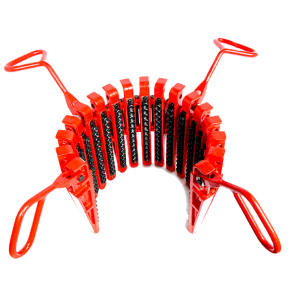
SGPE Drill Collar Slips, also known as Drill Collar Rotary Slips or Manual Rotary Table Slips, grip and temporarily support drill collars during oil and gas drilling, drill-string tripping, bottom hole assembly (BHA) preparation, connection make-up and break-out, and selected oilfield workover operations.
These mechanical oilfield handling tools use tapered wedge surfaces and gripping inserts to hold drill collars in compatible rotary table insert bowls. As the drill string transfers weight into the slips, the tapered surfaces create inward gripping force. This action provides stationary tubular support during controlled load transfers and rig-floor connection handling.
The SGPE range includes DCS-S, DCS-R, DCS-L, A Type and WT Type Drill Collar Slips, covering selected drill collar outside diameters from 3 to 14 in (76.2–355.6 mm) across the complete product family. Depending on the model, the slips feature alloy-steel bodies, segmented or multi-piece construction and replaceable gripping components.
Typical applications include onshore and offshore drilling, jack-up rig operations, drillships, deep-well drilling, directional and horizontal drilling, drill collar running and pulling, BHA assembly, well re-entry and selected workover operations. Suitable configurations also support drill-string handling on semi-submersible drilling units and other rigs with compatible rotary table systems.
SGPE supplies complete drill collar slip assemblies, replacement gripping inserts, slip dies, circular gripping buttons and selected spare parts. We also assist drilling contractors, rig operators, oilfield service companies and equipment distributors with model selection, insert bowl matching, replacement cross-reference enquiries and project-specific quotations.
Need Drill Collar Slips for your drilling project? Send SGPE the actual drill collar OD, existing insert bowl, required working load and order quantity. Our team can review the technical requirements and help identify a suitable configuration.
Drill Collar Slips Models and Quick Selection Guide
SGPE offers five main model groups for different drill collar sizes, gripping designs and rotary table arrangements.
| Model / Series | Drill Collar OD, in | OD, mm | Published Insert Bowl | Main Characteristics |
|---|---|---|---|---|
| DCS-S | 3–4-7/8 | 76.2–123.8 | API or No. 3 | Segmented slips for smaller drill collars |
| DCS-R | 4-1/2–9-1/2 | 114.3–241.3 | No. 2 | Intermediate-diameter DCS configurations |
| DCS-L | 8-1/2–14 | 215.9–355.6 | No. 1 | Larger-diameter DCS configurations |
| A Type | 3–11-3/4 | 76.2–298.45 | API, No. 3 or No. 2, depending on model | Multi-piece structure with a broad gripping range |
| WT Type | 4-1/2–9-1/2 | 114.3–241.3 | API or No. 3 | Conical body with liner and press plate components |
These figures show the overall diameter coverage of each model group. Individual assemblies support specific OD bands and require matching gripping components.
DCS-S offers configurations for smaller drill collars, while DCS-R covers intermediate sizes commonly encountered during petroleum drilling and BHA handling. DCS-L provides larger gripping ranges for compatible drilling programs that use substantial drill collar assemblies.
A Type Drill Collar Slips use a multi-piece structure that accommodates selected diameter variations within the manufacturer’s specified gripping range. Meanwhile, WT Type models use a conical body with model-specific gripping and retaining components.
Several series cover overlapping diameters. However, a matching drill collar OD does not guarantee that the slip assemblies are interchangeable. Buyers must also consider the insert bowl, gripping surface, complete assembly dimensions and approved working load.
General Technical Specifications
| Parameter | Specification |
|---|---|
| Product Name | Drill Collar Slips |
| Alternative Names | Drill Collar Rotary Slips, Manual Drill Collar Slips |
| Brand | SGPE |
| Product Category | Oilfield Tubular Handling Equipment |
| Equipment Type | Manual Rotary Table Slips |
| Available Models | DCS-S, DCS-R, DCS-L, A Type, WT Type |
| Overall Drill Collar OD Range | 3–14 in (76.2–355.6 mm) |
| Suitable Tubular | Drill Collars with Approved Gripping Surfaces |
| Main Body Material | High-Strength Alloy Steel, Depending on Model |
| Construction | Segmented, Hinged or Multi-Piece |
| Gripping Principle | Mechanical Tapered-Wedge Action |
| Gripping Components | Replaceable Inserts, Slip Dies or Circular Buttons |
| Operating Method | Manual Mechanical |
| External Power Supply | Not Required for Standard Manual Configurations |
| Supporting Equipment | Compatible Rotary Table Insert Bowls |
| Published Bowl References | API, No. 1, No. 2 and No. 3, Depending on Model |
| DCS Approx. Assembly Weight | 47–116 kg |
| WT Approx. Assembly Weight | 39–49 kg |
| A Type Assembly Weight | Confirm for Selected Configuration |
| Rated Working Load | Confirm from Model-Specific Approved Documentation |
| WT Published Load Reference | 40 tons; Unit and Rating Conditions Require Confirmation |
| Applicable Manufacturing Standard | API Spec 7K Requirements, According to Configuration |
| Working Position | Rotary Table / Drilling Rig Floor |
| Main Applications | Drilling, Tripping, BHA Handling and Selected Workover |
| Available Supply | Complete Assemblies and Compatible Spare Parts |
| Technical Support | Model Selection, Dimensional Matching and RFQ Assistance |
These specifications describe the complete SGPE product family rather than one universal assembly. Each model has its own dimensions, gripping components, insert bowl requirements and load rating.
The listed product weights describe the slip assemblies themselves. They do not represent working load capacity. Customers should confirm the relevant technical drawing and approved load documentation before selecting equipment.
DCS Type Drill Collar Slips – DCS-S, DCS-R & DCS-L
DCS Type Drill Collar Slips use segmented mechanical gripping assemblies to provide stationary drill collar support in matching rotary table insert bowls.
The SGPE DCS series covers selected drill collar outside diameters from 3 to 14 in (76.2–355.6 mm). Its three model groups offer different gripping ranges and bowl configurations for petroleum drilling operations.
DCS-S Drill Collar Slips – Smaller Diameter Models
DCS-S configurations cover drill collars from 3 to 4-7/8 in.
These models support smaller drill collars during BHA preparation, drill-string tripping and rig-floor connection handling. They use compatible API or No. 3 insert bowls.
For replacement enquiries, customers should provide the original slip dimensions and existing bowl information in addition to the actual drill collar OD.
DCS-R Drill Collar Slips – Intermediate Diameter Models
DCS-R configurations cover selected drill collar diameters from 4-1/2 to 9-1/2 in.
The series offers several size options for conventional drilling, drill collar running and pulling, BHA handling and selected offshore operations.
SGPE’s published DCS-R assemblies use No. 2 insert bowls. Buyers should check the complete seating geometry when replacing equipment from another manufacturer.
DCS-L Drill Collar Slips – Larger Diameter Models
DCS-L configurations accommodate drill collars from 8-1/2 to 14 in.
These models provide larger-diameter options for suitable petroleum drilling programs, including operations that involve substantial drill collar and BHA components.
The published DCS-L configurations use No. 1 insert bowls. Although the series covers larger collars, the approved load rating still depends on the individual assembly.
DCS Drill Collar Slips – Complete Size and Weight Chart
| Model | Drill Collar OD, in | OD, mm | Approx. Weight, kg | Approx. Weight, lb | Insert Bowl |
|---|---|---|---|---|---|
| DCS-S | 3–4 | 76.2–101.6 | 51 | 112 | API or No. 3 |
| DCS-S | 4–4-7/8 | 101.6–123.8 | 47 | 103 | API or No. 3 |
| DCS-R | 4-1/2–6 | 114.3–152.4 | 54 | 120 | No. 2 |
| DCS-R | 5-1/2–7 | 139.7–177.8 | 51 | 112 | No. 2 |
| DCS-R | 6-3/4–8-1/4 | 171.4–209.6 | 70 | 154 | No. 2 |
| DCS-R | 8–9-1/2 | 203.2–241.3 | 78 | 173 | No. 2 |
| DCS-L | 8-1/2–10 | 215.9–254.0 | 84 | 185 | No. 1 |
| DCS-L | 9-1/4–11-1/4 | 235.0–285.7 | 90 | 198 | No. 1 |
| DCS-L | 11–12-3/4 | 279.4–323.9 | 116 | 256 | No. 1 |
| DCS-L | 12–14 | 304.8–355.6 | 107 | 237 | No. 1 |
This table follows SGPE’s published complete DCS slip assembly specifications. The kilogram and pound values indicate approximate assembly weights, not rated working loads.
Some oilfield manufacturers classify intermediate DCS sizes differently. Therefore, customers looking for replacement DCS slips should not rely on the model designation alone.
For an accurate dimensional cross-reference, provide the original manufacturer, complete model number, drill collar OD and insert bowl information.
A Type Drill Collar Slips – Multi-Piece Rotary Slips
A Type Drill Collar Slips, also called Type A Drill Collar Slips, use a multi-piece mechanical gripping structure.
The SGPE A Type range covers selected drill collar outside diameters from 3 to 11-3/4 in (76.2–298.45 mm).
The multi-piece design accommodates certain diameter variations within the specified gripping range. This can help crews handle compatible collars with different outside diameters and manage limited changes caused by normal tubular wear.
However, drilling crews must measure the actual gripping section before using the equipment. Excessive wear, unsuitable surface profiles or incorrect bowl matching may affect compatibility.
Depending on the selected configuration, A Type slips work with compatible API, No. 3 or No. 2 insert bowls.
A Type Drill Collar Slips – Complete Size Chart
| Drill Collar OD, in | Drill Collar OD, mm |
|---|---|
| 3–4-1/2 | 76.2–114.3 |
| 3-1/4–4-3/4 | 82.55–120.65 |
| 4-1/4–5-3/4 | 107.95–146.05 |
| 5-1/2–7 | 139.7–177.8 |
| 6-3/4–8-1/4 | 171.5–209.55 |
| 8-1/4–10 | 209.55–254.0 |
| 10–11-3/4 | 254.0–298.45 |
SGPE’s published size reference lists API, No. 3 and No. 2 bowl options across the A Type range. However, it does not identify one unique bowl, assembly weight or working load for every diameter band.
Buyers should therefore provide the drill collar OD, existing insert bowl and rotary table arrangement when requesting technical selection.
Typical Applications of A Type Drill Collar Slips
A Type models support compatible drill collar handling during onshore and offshore drilling, BHA preparation, drill-string tripping, connection make-up and break-out, and selected workover operations.
Their multi-piece structure offers flexibility when crews handle different compatible collar sizes. In addition, standard manual configurations operate without an external hydraulic or pneumatic supply.
The correct working range and load rating still depend on the individual assembly and its matching bowl.
WT Type Drill Collar Slips – Conical Rotary Table Design
WT Type Drill Collar Slips use a conical mechanical gripping system to support drill collars at the rotary table.
The SGPE WT range covers selected drill collar diameters from 4-1/2 to 9-1/2 in (114.3–241.3 mm).
The WT construction includes a tapered slip body with model-specific gripping and retaining components. Published design details identify axial dovetail grooves, liner plates and slip press plates.
These components help retain the gripping elements inside the assembly. During controlled load transfer, the tapered surfaces guide the gripping system inward against the approved drill collar surface.
WT Type Drill Collar Slips – Technical Specifications
| Model | Drill Collar OD, in | OD, mm | Approx. Weight, kg | Approx. Weight, lb | Insert Bowl | Published Load Reference* |
|---|---|---|---|---|---|---|
| WT4-1/2–6 | 4-1/2–6 | 114.3–152.4 | 49 | 108 | API or No. 3 | 40 tons |
| WT5-1/2–7 | 5-1/2–7 | 139.7–177.8 | 46 | 101 | API or No. 3 | 40 tons |
| WT6-3/4–8-1/4 | 6-3/4–8-1/4 | 171.4–209.6 | 42 | 92 | API or No. 3 | 40 tons |
| WT8–9-1/2 | 8–9-1/2 | 203.2–241.3 | 39 | 86 | API or No. 3 | 40 tons |
The published 40-ton reference requires confirmation of the ton unit, approved load rating and applicable operating conditions. Customers must obtain the relevant technical documentation before using this value for engineering selection.
WT Type slips support compatible drill collar handling during petroleum drilling, BHA assembly, drill-string tripping, connection work and selected oilfield workover operations.
Their mechanical construction also allows maintenance teams to inspect and replace approved gripping components when necessary.
Common Drill Collar Sizes and Model Selection
Oilfield equipment buyers often search for drill collar slips by tubular diameter rather than complete model number.
The following chart helps identify SGPE model groups with published coverage for common drill collar sizes.
| Nominal Drill Collar OD | Possible SGPE Model Groups |
|---|---|
| 3 in | DCS-S, A Type |
| 4-1/2 in | DCS-S, DCS-R, A Type, WT Type |
| 5-1/2 in | DCS-R, A Type, WT Type |
| 6-3/4 in | DCS-R, A Type, WT Type |
| 8 in | DCS-R, A Type, WT Type |
| 8-1/2 in | DCS-R, DCS-L, A Type, WT Type |
| 9-1/2 in | DCS-R, DCS-L, A Type, WT Type |
| 10 in | DCS-L, A Type |
| 12 in | DCS-L |
| 14 in | DCS-L |
This table provides preliminary dimensional guidance only. It does not establish that every listed assembly suits the customer’s insert bowl or operating load.
For example, a buyer looking for 8 in Drill Collar Slips may find several possible configurations. However, the correct choice depends on the complete slip body, existing bowl and approved gripping range.
Likewise, 9-1/2 in Drill Collar Slips may fall within overlapping model groups. Buyers should compare the detailed size tables before choosing a complete assembly.
Replacement Models and Dimensional Cross-Reference
Different manufacturers use their own drill collar slip model names and part-number systems.
SGPE’s published product family includes DCS-S, DCS-R, DCS-L, A Type and WT Type. Other oilfield equipment manufacturers may use different classifications or proprietary designs.
For replacement equipment, provide the original manufacturer, model number, technical drawing and insert bowl information.
SGPE can review dimensional cross-reference enquiries, but any proposed substitute requires technical confirmation before use.
How Drill Collar Rotary Slips Work
Manual drill collar slips use a mechanical tapered-wedge gripping principle.
The drilling crew positions the slip assembly inside a matching insert bowl at the rotary table. During a controlled transfer of drill-string weight, the slip body moves along the bowl’s tapered surface.
This movement directs the gripping segments inward. The inserts, dies or circular gripping buttons then contact the approved collar surface and develop the force required for stationary support.
When qualified lifting equipment takes back the tubular load, the gripping force decreases. The crew can then release the slips according to the manufacturer’s operating instructions.
Main Components and Construction
The slip body provides the structural framework and tapered outer surfaces. Depending on the model, hinged or multi-piece segments form the gripping assembly around the drill collar.
The gripping inserts, slip dies or circular buttons contact the tubular directly. Their profile, mounting arrangement and condition affect the performance of the complete gripping system.
Handles and hinge components assist with manual handling on applicable configurations. WT models also include liner plates and press plates that help retain the gripping elements.
The matching insert bowl supports the slip body’s tapered surfaces, while the rotary table and compatible bushings provide the supporting rig-floor arrangement.
Although these components perform related functions, their dimensions vary among different slip series. For this reason, a DCS insert does not automatically fit an A Type or WT assembly.
Key Features and Benefits
Alloy-Steel Construction for Rig-Floor Service
Selected SGPE models use high-strength alloy-steel bodies for repeated mechanical handling during petroleum drilling and workover operations.
The material grade, heat treatment and structural dimensions depend on the selected model. Buyers should review these details against the applicable technical specification when their project requires particular material or inspection records.
Multiple Mechanical Gripping Designs
SGPE offers segmented DCS assemblies, multi-piece A Type configurations and conical WT models.
These designs provide different options for compatible drill collar sizes and rotary table arrangements. As a result, buyers can select equipment according to the existing rig-floor system instead of treating every rotary slip as interchangeable.
Manual Operation Without External Power
Standard manual configurations use the wedge mechanism rather than hydraulic or pneumatic actuation.
This allows the slips to work with compatible rotary table equipment during approved drill collar-handling procedures.
Replaceable Gripping Components
Gripping inserts experience direct contact with the drill collar during connections and load transfers.
As the inserts wear, maintenance teams can replace approved components on compatible assemblies. Buyers should match the original insert dimensions, tooth profile and mounting method before ordering replacement parts.
Support for Replacement Equipment
SGPE assists customers who need complete rotary slip assemblies or spare parts for existing drilling rigs.
Original model numbers, drawings and photographs help identify the relevant dimensions and reduce uncertainty during technical selection.
Drill Collar Slips Applications in the Oil and Gas Industry
SGPE supplies mechanical rotary slips for approved drill collar-handling procedures on land and offshore petroleum drilling rigs.
Onshore Oil and Gas Drilling
Land drilling rigs use drill collar slips during drill-string preparation, connection work and tripping.
The slips provide stationary support at the rotary table while suitable hoisting equipment controls the tubular string.
Common operations include drill collar running and pulling, BHA preparation and controlled load transfers during threaded connections.
Offshore Drilling, Jack-Up Rigs and Drillships
Suitable slip configurations support approved drill collar handling on fixed offshore platforms, jack-up drilling rigs, semi-submersibles and drillships equipped with compatible rotary table systems.
Offshore crews may use these tools during BHA assembly, drill collar tripping and connection make-up or break-out.
For offshore equipment procurement, buyers should also review inspection requirements, traceability, corrosion protection and spare-part availability.
The selected configuration must match the rig’s rotary table arrangement and approved operating conditions.
Drill-String Tripping – RIH and POOH
During running in hole (RIH) and pulling out of hole (POOH), crews handle different sections of the drill string.
When the operation reaches the drill collars, dedicated collar slips may provide a more suitable gripping arrangement than ordinary drill pipe slips.
Properly selected equipment supports the collar section during approved connection and load-transfer procedures.
The crew must verify the actual gripping diameter, surface condition and supported load before use.
Bottom Hole Assembly Preparation and Connection Handling
A petroleum drilling BHA may contain drill collars, stabilizers, drilling jars, downhole motors, measurement-while-drilling (MWD) tools and logging-while-drilling (LWD) components.
During BHA assembly or disassembly, crews may need stationary support for an approved drill collar section while they handle threaded connections.
Suitable rotary slips work alongside qualified lifting equipment and connection tools such as manual tongs, power tongs or iron roughnecks.
However, standard slip inserts do not automatically suit every BHA component. Specialized housings, spiral-grooved sections and sensitive instrument surfaces may require different handling methods.
Deep-Well, Directional and Horizontal Drilling
Deep-well and ultra-deep-well programs may involve substantial drill collar assemblies.
Directional, horizontal and extended-reach wells can also use specialized BHA designs with different collar diameters, materials and surface profiles.
Suitable DCS, A Type or WT models provide diameter options for approved drill collar handling during these operations.
However, well depth does not determine slip load capacity. Engineers must verify the actual supported load and manufacturer-approved rating.
Well Re-Entry, Sidetrack Drilling and Workover
Selected well re-entry and sidetrack operations involve drill collars during BHA preparation, replacement or retrieval.
Where the rig has a compatible rotary table and insert bowl, suitable slips may provide temporary stationary support during approved connection work.
Some oilfield workover and fishing-related operations also require drill collar handling. However, these slips do not replace tubing spiders or dedicated production tubing-handling tools.
Drilling Rig Maintenance and Refurbishment
Drilling contractors and maintenance teams may need replacement rotary slips, gripping inserts or related components for existing rigs.
Older installations can use specific insert bowls and proprietary slip designs. Therefore, the original equipment model and dimensions play an important role in replacement selection.
SGPE can review nameplates, technical drawings and photographs to support these enquiries.
How to Select the Right Drill Collar Slips
Correct model selection begins with the actual drill collar and rig-floor equipment.
Confirm the Actual Gripping Diameter
Measure the drill collar outside diameter at the intended gripping location.
Do not rely only on the nominal size, especially when the collar shows external wear.
For spiral-grooved, hardbanded or non-magnetic drill collars, identify the approved gripping section and provide the relevant surface details.
Match the Slip Model and Insert Bowl
Compare the measured OD with the published DCS, A Type and WT size ranges.
Next, identify the existing insert bowl, rotary table bushing and seating dimensions.
A matching bowl number provides useful information, but it does not establish complete compatibility. The slip body geometry and tapered contact surfaces must also match.
Verify the Required Working Load
Determine the maximum load that the assembly must support during the intended operation.
Then obtain the approved rated capacity for the exact slip-and-bowl configuration.
Do not estimate allowable working load from product weight, OD range or slip segment count.
Review Spare Parts and Documentation
For replacement equipment, the original part number and technical drawing provide useful cross-reference information.
Buyers should also confirm whether they need complete assemblies, gripping inserts or related mechanical components.
If the project requires material records, dimensional reports, testing documentation or third-party inspection, include those requirements during technical quotation.
Compatibility with Different Drill Collar Surfaces
The gripping surface affects how the slip inserts contact the tubular.
Smooth drill collars generally provide conventional gripping sections. However, the selected inserts must still match the actual OD, surface condition and load requirements.
Worn drill collars may have smaller diameters than their original nominal sizes. Crews should measure the intended gripping section and confirm that it remains within the specified range.
Spiral-grooved drill collars have interrupted external surfaces. Standard gripping inserts may not suit these grooves, so the operator should identify an approved gripping section or another suitable handling method.
Hardbanded and coated drill collars may have different contact properties. Buyers should confirm that the selected gripping arrangement suits the relevant surface.
Non-magnetic drill collars can also require special handling considerations because of their material and surface characteristics.
For these applications, send SGPE the tubular drawing, actual gripping diameter and relevant surface information. Our team can review the enquiry and help determine whether a suitable configuration is available.
Replacement Drill Collar Slip Inserts and Spare Parts
SGPE supports enquiries for Replacement Drill Collar Slip Inserts, Slip Dies, Circular Gripping Buttons and selected mechanical spare parts.
These components contact the drill collar during drilling, tripping and connection handling. Over time, repeated mechanical contact, drilling mud and debris may wear their gripping surfaces.
Maintenance teams should inspect the components according to the manufacturer’s requirements and replace parts that fail the applicable inspection criteria.
Replacement Components by Slip Series
| Slip Series | Typical Spare-Parts Enquiries | Matching Information |
|---|---|---|
| DCS-S / DCS-R | Gripping inserts, circular buttons and selected retaining parts | Model, OD range and insert dimensions |
| DCS-L | Gripping elements, selected segments and related hardware | Complete model, bowl and drawing |
| A Type | Inserts and selected segment or hinge components | Original assembly and component dimensions |
| WT Type | Gripping components, liner plates and slip press plates | WT model, part drawing and quantity |
Spare-part availability depends on the original design and selected configuration.
For an accurate quotation, provide the original manufacturer, complete slip model, insert part number, mounting profile and required quantity.
If you need a complete replacement set, clarify whether the quantity covers one slip segment or the entire assembly.
For older equipment, SGPE can review component markings, drawings and photographs to support replacement-part identification.
Drill Collar Slips vs. Other Oilfield Handling Equipment
Several rig-floor tools work together during petroleum drill-string operations, but they perform different functions.
| Equipment | Main Function | Typical Application |
|---|---|---|
| Drill Collar Slips | Stationary support for drill collars | BHA assembly, tripping and connections |
| Drill Pipe Slips | Stationary support for compatible drill pipe | Drill pipe handling and connections |
| Drill Collar Elevators | Hoisting and positioning drill collars | Collar lifting, running and pulling |
| MP Safety Clamps | Supplementary anti-slip restraint | Approved drill collar handling |
| Type C Safety Clamps | Supplementary anti-slip restraint | Drill collar and BHA connection work |
Drill Collar Slips provide stationary support through a matching rotary table insert bowl. By comparison, Drill Collar Elevators lift and position drill collars through the rig’s hoisting system.
Drill Pipe Slips serve a related function for compatible drill pipe, but they do not automatically suit drill collars with similar nominal diameters.
Meanwhile, MP and Type C Safety Clamps provide supplementary restraint during applicable tubular-handling procedures. A standard non-hoisting safety clamp cannot replace rated primary support equipment.
Inspection, Maintenance and Storage
Regular inspection helps drilling crews identify worn or damaged components before rig-floor operations.
Maintenance personnel should examine the slip body, gripping inserts, hinge connections, handles and retaining hardware. They should look for cracks, deformation, corrosion, damaged gripping teeth and missing parts.
The tapered contact surfaces also require attention. Abnormal wear or contamination may affect how the slips engage the insert bowl.
After drilling operations, crews should remove mud, sand and other debris according to the manufacturer’s maintenance instructions.
If a component fails the inspection criteria, the operator should withdraw the affected equipment from service until qualified personnel assess it.
For offshore use, suitable corrosion protection and inspection schedules help maintain equipment condition. Clean, dry storage also protects the slips between operations.
API Spec 7K and Product Documentation
SGPE identifies API Spec 7K as the applicable manufacturing standard for its published DCS, A Type and WT drill collar slip ranges.
API Spec 7K addresses relevant drilling and well-servicing equipment, including rotary slips and slip bowls.
Customers should confirm the applicable standard edition, complete model and agreed inspection requirements before ordering.
Depending on the configuration and purchase agreement, SGPE can review requests for technical drawings, material records, heat-treatment information, dimensional reports and applicable testing documentation.
Projects that require component traceability, third-party inspection or additional documents should state those requirements during the quotation process.
Manufacturing according to API Spec 7K does not automatically establish API Monogram licensing or independent product certification.
Buyers should verify any specific certification requirements before purchase.
Drill Collar Slips Supplier, Price and RFQ Support
SGPE supplies DCS, A Type and WT Drill Collar Slips for petroleum drilling contractors, rig operators, oilfield service companies, equipment distributors and international procurement teams.
Customers looking for Drill Collar Slips for sale, API 7K Drill Collar Slips, replacement DCS slips, Type A rotary slips, WT Drill Collar Slips or a Drill Collar Slips supplier generally need a quotation based on their actual equipment requirements.
What Determines Drill Collar Slips Prices?
The final price depends on the selected model, drill collar diameter range, gripping components, quantity, inspection scope and delivery destination.
A complete slip assembly and a replacement insert set have different specifications and procurement requirements.
Likewise, replacement equipment for an existing rig may need more detailed dimensional matching than a new order based on an approved product model.
SGPE therefore provides project-specific quotations according to the requested configuration and documentation.
Technical Information Required for a Quotation
| RFQ Item | Information to Provide |
|---|---|
| Required Product | Complete Slips or Replacement Parts |
| Model | DCS-S, DCS-R, DCS-L, A Type or WT |
| Drill Collar OD | Actual Diameter in Inches or Millimeters |
| Gripping Surface | Smooth, Worn, Spiral, Hardbanded or Special |
| Insert Bowl | Model, Number or Technical Drawing |
| Rotary Table | Model and Bushing Arrangement |
| Working Load | Required Value and Unit |
| Quantity | Complete Assemblies or Spare Sets |
| Replacement Components | Part Number, Dimensions and Quantity |
| Application | Drilling, BHA Handling, Tripping or Workover |
| Documentation | Inspection and Project Requirements |
| Delivery Destination | Country, City or Port |
| Existing Equipment | Manufacturer, Nameplate, Drawings or Photos |
For replacement orders, photographs of the existing slip assembly and insert bowl can help SGPE review dimensional compatibility.
If the original model number is unavailable, customers can begin with the measured drill collar OD, existing bowl details and available technical drawings.
This information helps narrow down suitable configurations before quotation.
Frequently Asked Questions About Drill Collar Slips
1. What are Drill Collar Slips used for in oil and gas drilling?
Drill Collar Slips grip and temporarily support compatible drill collars at the rotary table. Their mechanical wedge systems work with matching insert bowls to provide stationary support during controlled load transfers.
Drilling crews use them during drill-string tripping, BHA assembly, drill collar running and pulling, and connection make-up and break-out.
Unlike elevators, these slips do not serve as hoisting tools.
2. What Drill Collar Slips sizes and models does SGPE supply?
SGPE offers DCS-S, DCS-R, DCS-L, A Type and WT Type configurations.
Together, the models cover selected drill collar outside diameters from 3 to 14 in (76.2–355.6 mm).
The DCS series covers 3–14 in, A Type covers 3–11-3/4 in, and WT Type covers 4-1/2–9-1/2 in.
Each assembly has its own gripping range and bowl requirements, so buyers should confirm the complete model before purchase.
3. What is the difference between DCS-S, DCS-R and DCS-L?
The main differences involve their diameter ranges and insert bowl arrangements.
DCS-S covers 3–4-7/8 in and uses compatible API or No. 3 bowls. DCS-R covers 4-1/2–9-1/2 in and uses No. 2 bowls.
DCS-L accommodates 8-1/2–14 in drill collars and uses No. 1 bowls.
These specifications follow SGPE’s complete DCS assembly reference. Other manufacturers may use different model classifications.
4. Should I choose DCS, A Type or WT Type Drill Collar Slips?
Choose the model according to the actual drill collar OD, gripping surface, insert bowl and required working load.
DCS provides segmented assemblies across several size ranges. A Type uses a multi-piece structure that accommodates selected OD variations within its specified range.
WT Type uses a conical body with model-specific gripping and retaining components.
The complete rig-floor arrangement determines the suitable choice.
5. Which insert bowl fits Drill Collar Slips?
Insert bowl selection depends on the slip model and rotary table arrangement.
SGPE lists API or No. 3 bowls for DCS-S, No. 2 for DCS-R and No. 1 for DCS-L.
WT configurations use compatible API or No. 3 bowls, while A Type requirements vary by size.
Before ordering, verify the bowl taper, seating dimensions and existing bushings. A matching bowl number alone does not guarantee interchangeability.
6. What is the working load capacity of Drill Collar Slips?
The allowable working load depends on the complete slip-and-bowl arrangement and its approved operating conditions.
SGPE publishes a 40-ton maximum load reference for WT Type models, but customers must confirm the applicable unit and rating conditions.
DCS and A Type capacities require model-specific documentation.
The kilogram and pound figures in product tables describe assembly weights, not working load capacities.
7. Are SGPE Drill Collar Slips manufactured according to API Spec 7K?
SGPE identifies API Spec 7K as the manufacturing standard for its published DCS, A Type and WT ranges.
For a specific order, customers should confirm the selected model, applicable standard edition and inspection requirements.
SGPE can review requests for technical drawings, material records and dimensional inspection documents according to the purchase agreement.
API Spec 7K-based manufacturing does not automatically establish API Monogram licensing or independent certification.
8. Can Drill Collar Slips work on offshore and workover rigs?
Suitable configurations can support approved drill collar-handling operations on land rigs, offshore platforms, jack-up rigs, semi-submersibles and drillships equipped with compatible rotary table systems.
They may also serve selected workover and well re-entry operations involving drill collars.
However, rig type alone does not establish suitability. Buyers must verify the tubular dimensions, insert bowl and required working load.
9. Can these slips grip spiral, hardbanded or non-magnetic drill collars?
Only when the selected tool and intended gripping section suit the actual tubular surface.
Spiral grooves interrupt the contact area, while hardbanding, coatings and specialized materials may change gripping conditions.
Worn drill collars can also have smaller outside diameters than their nominal sizes.
Provide the collar drawing, measured gripping OD and surface details when requesting technical selection.
10. What is the difference between Drill Collar Slips, Drill Pipe Slips and Safety Clamps?
Drill Collar Slips provide stationary support for compatible drill collars, while Drill Pipe Slips serve approved drill pipe.
Drill Collar Elevators lift and position collars through the rig’s hoisting system.
MP and Type C Safety Clamps provide supplementary anti-slip restraint during applicable handling procedures.
A standard non-hoisting safety clamp cannot replace rated primary support equipment.
11. Can SGPE supply replacement Drill Collar Slip Inserts and spare parts?
Yes. SGPE supports enquiries for compatible gripping inserts, slip dies, circular buttons and selected spare parts.
Availability depends on the original slip model and component design.
For accurate matching, provide the manufacturer, complete assembly model, insert dimensions, mounting profile and required quantity.
If you need a full replacement set, specify whether the quantity covers one segment or the complete assembly.
12. How much do Drill Collar Slips cost, and how can I get a quotation?
Drill Collar Slips prices vary according to the model, diameter range, gripping components, quantity, inspection requirements and delivery destination.
For a quotation, send SGPE the actual drill collar OD, preferred model if known, existing insert bowl, required working load and order quantity.
For replacement equipment, include the original model number, part reference or photographs.
SGPE can review these details and prepare a project-specific quotation for suitable assemblies or spare parts.
Related SGPE Oilfield Handling Equipment
SGPE supplies complementary equipment for petroleum drilling, drill-string handling and selected workover operations.
For compatible drill pipe running, pulling and connection handling, customers can review Drill Pipe Slips.
Projects that require drill collar hoisting and positioning may also need Drill Collar Elevators.
For supplementary anti-slip restraint, SGPE offers MP Safety Clamps and Type C Safety Clamps.
Buyers who need replacement gripping components can explore Tong Dies and Slip Inserts.
SGPE also provides dedicated product information for A Type Drill Collar Slips and WT Drill Collar Rotary Slips.
Each tool performs a different function within the rig-floor handling system. Buyers should verify dimensional compatibility and applicable load ratings before combining equipment.
Request a Quote for Drill Collar Slips
Looking for a Drill Collar Slips supplier for oil and gas drilling, offshore operations, BHA handling, drill-string tripping or petroleum well workover?
SGPE supplies DCS-S, DCS-R, DCS-L, A Type and WT Type Drill Collar Slips, together with compatible replacement inserts and selected spare parts.
Whether you need complete rotary slip assemblies for a new drilling project, replacement equipment for an existing rig or gripping components for scheduled maintenance, SGPE can review your technical requirements and support your procurement enquiry.
For a faster quotation, provide the actual drill collar OD, existing insert bowl, required working load, quantity and delivery destination. If you need replacement equipment, include the original model number or photographs whenever possible.
Contact SGPE
Email: info@sgpe.com
Tel / WhatsApp: +86 186-1599-5239