Description
Floating Oil Hose for SPM, CALM, FPSO Offloading & Offshore Tanker Loading
SGPE manufactures Floating Oil Hose for offshore crude oil loading, unloading and petroleum transfer between SPM, SBM and CALM buoy systems, offshore oil terminals, FPSO and FSO facilities, shuttle tankers and crude oil carriers.
Our Marine Floating Oil Hose range covers 6 to 24 in. I.D., rated working pressures of 15, 19 and 21 bar, and standard section lengths of 9.1 m, 10.7 m and 12.2 m. Single carcass and double carcass designs are available, together with full-floating, controlled-buoyancy and position-specific configurations.
Available hose types include First-Off-Buoy Hose, Mainline Floating Hose, Reducing Floating Hose, Tail Floating Hose, Tanker Rail Hose, Double Carcass Floating Hose, FPSO End Hose and Shuttle Tanker End Hose.
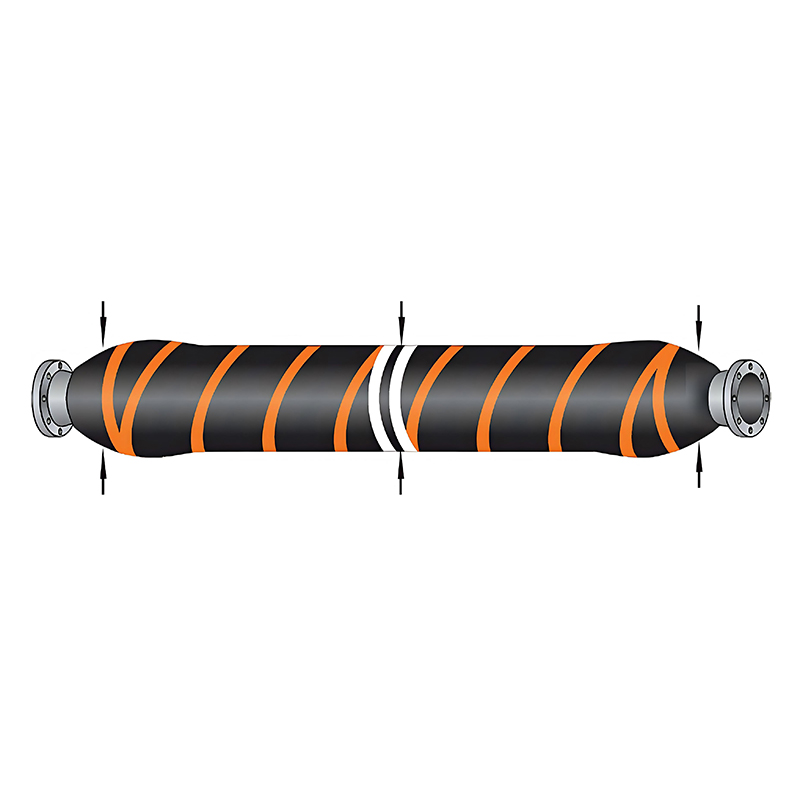
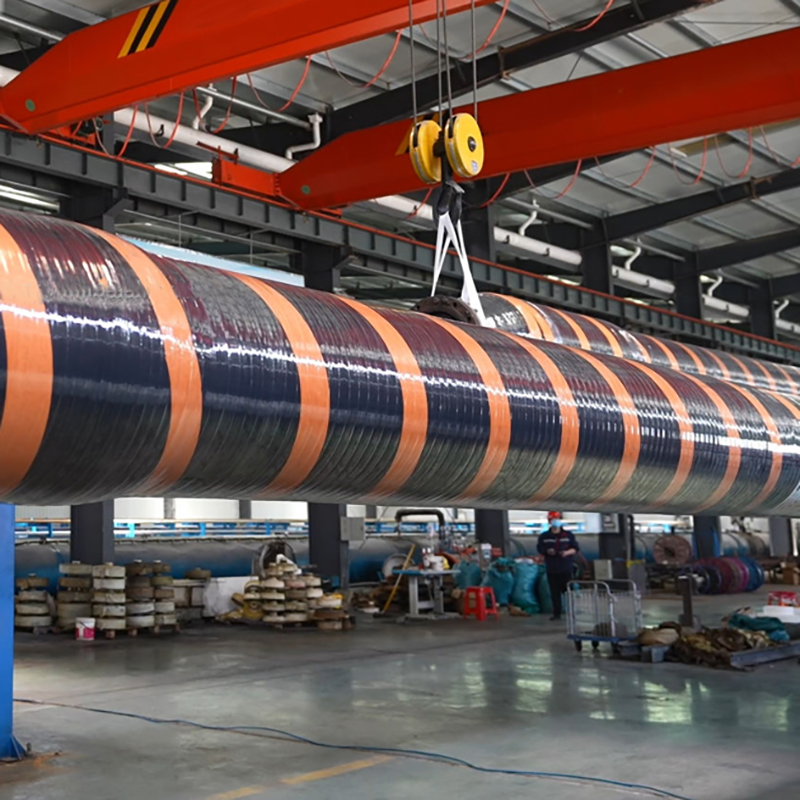
Each hose combines a petroleum-resistant liner, reinforced pressure carcass, structural wire helix, closed-cell flotation and marine-grade outer protection. This construction allows the hose to carry petroleum while following wave movement, tanker excursion and changes in vessel draft.
SGPE supplies individual replacement hoses, matched sections and complete SPM Floating Hose Strings for new offshore terminals, brownfield upgrades, EPC packages and marine MRO requirements.
Email: info@sgpe.com
Tel/Whatsapp: +86 186-1599-5239
Contact Us for a Quote
Floating Oil Hose Description
A Floating Oil Hose forms the flexible sea-surface petroleum connection between an offshore loading facility and an oil tanker.
Project specifications may also use terms such as SPM Floating Hose, Single Point Mooring Hose, Marine Floating Oil Hose, Floating Marine Hose, Offshore Oil Transfer Hose, Crude Oil Transfer Hose, Marine Oil Transfer Hose, Crude Oil Loading Hose, Tanker Loading Hose or Floating Oil Suction and Discharge Hose.
In a typical SPM or CALM terminal, a subsea pipeline carries petroleum between the offshore mooring system and a production facility, refinery or storage terminal. Submarine hoses connect the PLEM or subsea pipeline to the buoy. The floating hose string then completes the transfer path between the buoy and tanker cargo manifold.
The tanker moves continuously relative to the buoy. Wind, current, waves, cargo loading and vessel draft all change the geometry of the hose string. The hose must remain flexible while maintaining pressure integrity and the required floating profile.
Diameter and working pressure alone do not define the correct marine hose. SGPE also reviews the installation position, flow rate, section length, petroleum product, operating temperature, carcass construction, minimum bend radius, flotation profile, flange interface, electrical design and connected MBC or ERC equipment.
This position-based approach becomes especially important when replacing one section within an existing offshore hose string.
Floating Oil Hose Product Overview
A floating marine hose must manage fluid transfer, pressure, movement and buoyancy at the same time.
The petroleum-resistant inner liner creates the product flow path. Around it, the primary carcass carries internal pressure and mechanical loads.
A structural wire helix supports the hose bore during bending and applicable suction conditions. Closed-cell flotation keeps the hose at the sea surface and helps maintain the required hose-string profile.
Integral end fittings transfer mechanical loads between the flexible hose body and adjacent equipment.
Those loads change according to hose position. A Mainline Floating Hose mainly handles pressure, axial load and repeated bending. A Tanker Rail Hose experiences greater handling and concentrated movement near the tanker manifold. A First-Off-Buoy Hose sees a different load pattern directly at the buoy.
SGPE therefore selects each hose by position and function, not simply by bore and pressure rating.
Floating Oil Hose Technical Specifications
| Technical Parameter | SGPE Available Configuration |
|---|---|
| Product | Floating Oil Hose |
| Product Category | Offshore Marine Oil Transfer Hose |
| Design Reference | OCIMF GMPHOM 2009 project requirements |
| Primary Service | Offshore crude oil loading, unloading and petroleum transfer |
| Nominal I.D. | 6″, 8″, 10″, 12″, 16″, 20″, 24″ |
| Metric Bore | DN150–DN600 |
| Rated Working Pressure | 15 / 19 / 21 bar |
| Approx. Working Pressure | 218 / 276 / 305 PSI |
| Primary Carcass Minimum Burst Pressure | 75 / 95 / 105 bar |
| Standard Section Lengths | 9.1 m / 30 ft, 10.7 m / 35 ft, 12.2 m / 40 ft |
| Custom Length | Supported |
| Carcass Construction | Single Carcass / Double Carcass |
| Buoyancy Configuration | Full Floating / Half-Floating / Controlled Buoyancy |
| Inner Liner | Petroleum-resistant NBR-based elastomer |
| Main Reinforcement | High-tensile reinforcement with structural wire helix |
| Flotation Material | Closed-cell foam |
| Outer Cover | Marine-grade reinforced elastomer |
| PU Outer Protection | Available |
| Maximum Product Velocity | Up to approximately 21 m/s |
| Fluid Temperature | Approx. -20°C to +82°C |
| Ambient Temperature | Approx. -29°C to +52°C |
| Floating Hose MBR | Approx. 6 × Nominal I.D. for typical mainline configurations |
| Aromatic Content | Up to approx. 60% with compatible liner construction |
| Flange Standard | ASME B16.5 |
| Flange Class | Class 150 / Class 300 |
| Flange Face | Flat Face / Raised Face |
| Electrical Design | Electrically Continuous / Discontinuous |
| Main Media | Crude Oil / Heavy Crude / Fuel Oil / Diesel / Condensate |
| Supply Scope | Individual Hose / Replacement Hose / Complete Hose String |
| Custom Manufacturing | Supported |
The approved project datasheet and manufacturing drawing control the final values. Outside diameter, dry weight, flotation and position-specific reinforcement vary with hose size, pressure class and configuration.
For an OCIMF Floating Hose or GMPHOM Floating Hose project, SGPE reviews the applicable design basis, testing scope, inspection requirements and documentation before manufacturing.
SPM Floating Hose Pressure Ratings
Offshore oil loading and discharge systems commonly use 15, 19 and 21 bar working-pressure classes.
| Hose Configuration | Rated Working Pressure | Approx. PSI | Primary Carcass Minimum Burst Pressure |
|---|---|---|---|
| 15 Bar Floating Oil Hose | 15 bar | 218 PSI | 75 bar |
| 19 Bar SPM Floating Hose | 19 bar | 276 PSI | 95 bar |
| 21 Bar Marine Floating Hose | 21 bar | 305 PSI | 105 bar |
Pressure selection should consider the complete hydraulic system rather than only normal operating pressure.
Pump discharge pressure, tanker discharge conditions, static head, valve operation, flow restriction and hydraulic surge can all influence the final pressure requirement.
For an accurate Floating Oil Hose quotation, provide the working pressure together with the hose position, bore, length and transfer conditions.
Floating Oil Hose Sizes & Standard Lengths
| Nominal I.D. | Metric Bore | Common Procurement Term | Typical Application |
|---|---|---|---|
| 6″ | DN150 | 6 Inch Floating Oil Hose | Smaller petroleum transfer systems |
| 8″ | DN200 | 8 Inch Marine Oil Hose | Offshore loading and discharge |
| 10″ | DN250 | 10 Inch Floating Marine Hose | Offshore petroleum transfer |
| 12″ | DN300 | 12 Inch Crude Oil Transfer Hose | Crude and refined petroleum service |
| 16″ | DN400 | 16 Inch SPM Floating Hose | High-flow SPM / CALM systems |
| 20″ | DN500 | 20 Inch Floating Oil Hose | Large crude export terminals |
| 24″ | DN600 | 24 Inch Marine Floating Hose | High-capacity offshore loading |
Large crude oil terminals often use 16 Inch, 20 Inch or 24 Inch Mainline Floating Hose where the required loading rate calls for a larger flow path.
A Reducing Floating Hose can then transition the mainline to a smaller tanker-side bore.
| Section Length | Imperial Equivalent | Typical Use |
|---|---|---|
| 9.1 m | 30 ft | Shorter or position-specific section |
| 10.7 m | 35 ft | Intermediate hose-string section |
| 12.2 m | 40 ft | Common full-length offshore hose section |
| Custom | Project-Specific | Replacement or special hose-string layout |
Project-specific lengths are available where an existing terminal, tanker interface or hose-string geometry requires a non-standard section.
Floating Hose Minimum Bend Radius
A floating hose needs sufficient space to follow tanker movement without excessive local bending.
| Hose I.D. | Reference MBR for Typical Floating Mainline Hose |
|---|---|
| 6″ / DN150 | Approx. 0.9 m |
| 8″ / DN200 | Approx. 1.2 m |
| 10″ / DN250 | Approx. 1.5 m |
| 12″ / DN300 | Approx. 1.8 m |
| 16″ / DN400 | Approx. 2.4 m |
| 20″ / DN500 | Approx. 3.0 m |
| 24″ / DN600 | Approx. 3.6 m |
These reference figures use approximately 6 × nominal bore for typical floating mainline configurations.
The approved hose drawing governs the final minimum bend radius because different hose positions can require different structural characteristics.
Floating Oil Hose Construction
| Component | Typical Construction | Main Function |
|---|---|---|
| Inner Liner | Petroleum-resistant NBR-based elastomer | Product compatibility |
| Primary Carcass | High-tensile reinforcement | Pressure and mechanical loads |
| Structural Wire | Embedded steel helix | Bore support and collapse resistance |
| Secondary Carcass | Independent reinforced structure | Secondary containment |
| Flotation | Closed-cell foam | Maintains surface buoyancy |
| Outer Cover | Reinforced marine elastomer | Offshore environmental protection |
| PU Protection | Optional polyurethane layer | Additional abrasion resistance |
| End Fitting | Integral reinforced assembly | Transfers end loads |
| Flange | Class 150 / 300, FF / RF | Equipment connection |
| Leak Indication | Double carcass option | Indicates loss of primary carcass integrity |
Petroleum-Resistant Inner Liner
The inner liner remains in direct contact with the transferred petroleum product.
SGPE selects suitable liner construction for crude oil, heavy crude, fuel oil, diesel, condensate and compatible refined petroleum products.
For a technical RFQ, the actual fluid is more useful than the general description “oil.” Aromatic content, temperature, density and viscosity can all influence liner and hose selection.
Reinforcement & Structural Wire
The primary carcass carries internal pressure, axial load and repeated offshore movement.
A structural wire helix supports the hose cross-section during bending and applicable suction conditions. Selected configurations can therefore suit Floating Oil Suction and Discharge Hose or Marine Oil Suction Hose requirements.
Integrated Flotation
Closed-cell foam provides distributed buoyancy around the hose body.
The required flotation profile depends on the hose position, petroleum density, hose weight and connected equipment.
A standard Mainline Floating Hose can therefore use a different buoyancy arrangement from an FPSO End Hose or tanker-end section carrying heavier connection equipment.
Marine Outer Cover
The outer cover protects the hose against seawater, salt spray, UV exposure, weathering, abrasion, petroleum contamination and normal offshore handling.
Polyurethane outer protection is also available where the project requires additional abrasion resistance.
Floating Hose Types for SPM, CALM & FPSO Systems
| Hose Type | Alternative Project Terms | Typical Position | Main Function |
|---|---|---|---|
| First-Off-Buoy Hose | SPM Buoy Hose / Buoy End Hose | Directly at buoy | Starts the floating string |
| Mainline Floating Hose | Floating Main Line Hose | Main sea-surface string | Primary petroleum transfer |
| Controlled Buoyancy Hose | Variable Buoyancy Hose | Position-specific | Controls hose profile |
| Half-Floating Hose | Half Float Hose | Transition position | Position-specific buoyancy |
| Reducing Floating Hose | Floating Reducer Hose | Bore transition | Changes hose diameter |
| Tail Floating Hose | SPM Tail Hose | Tanker-side string | Dynamic transition |
| Tanker Rail Hose | TRH / Tanker End Hose | Tanker manifold | Final tanker connection |
| Double Carcass Floating Hose | Anti-Pollution Hose | Project-specific | Secondary containment |
| FPSO End Hose | FPSO Offloading Hose | FPSO side | Offloading interface |
| Shuttle Tanker End Hose | Tanker Offloading Hose | Tanker side | Receiving connection |
First-Off-Buoy Hose
The First-Off-Buoy Floating Hose connects directly to the SPM or CALM buoy.
This position sees concentrated bending and tensile loads, so the hose normally incorporates additional end reinforcement.
Project specifications may also call it a Buoy End Hose, SPM Buoy Hose, One-End-Reinforced Floating Hose or End-Reinforced Floating Hose.
Mainline Floating Hose
The Mainline Floating Hose forms most of the sea-surface petroleum transfer string.
It provides the principal flexible flow path between the buoy and tanker while maintaining the required pressure rating, buoyancy and bending characteristics.
Other common terms include SPM Mainline Hose, Mainline Floating Oil Hose and Floating Main Line Hose.
Controlled Buoyancy & Half-Floating Hose
A Controlled Buoyancy Hose uses a tailored flotation distribution where connected equipment or local geometry changes the required profile.
A Half-Floating Hose provides position-specific flotation and commonly serves transition or reinforced areas of the string.
Reducing Floating Hose
A Reducing Floating Hose changes the bore between two flexible hose sections.
| Larger Bore | Reduced Bore |
|---|---|
| 8″ | 6″ |
| 10″ | 8″ |
| 12″ | 10″ |
| 16″ | 12″ |
| 20″ | 16″ |
| 24″ | 20″ |
For example, a high-capacity SPM system can use a 20″ Mainline Floating Hose followed by a 16″ Floating Reducer and 16″ tanker-side sections.
Tail & Tanker Rail Hose
The Tail Floating Hose operates toward the tanker end and helps absorb vessel movement before the final manifold connection.
The Tanker Rail Hose, or TRH, works close to the vessel and therefore experiences repeated handling and concentrated bending.
Depending on the specification, buyers may also use Tanker Loading Hose, Tanker Unloading Hose, Tanker End Hose, Crude Oil Tanker Hose, Oil Tanker Transfer Hose or Offshore Tanker Hose.
FPSO & Shuttle Tanker End Hose
FPSO and FSO offloading systems require floating hoses that accommodate movement at both ends of the transfer line.
A typical arrangement can use an FPSO End-Reinforced Hose, Mainline Floating Hoses, high-buoyancy sections and a Shuttle Tanker End Hose.
Where an MBC or ERC adds concentrated end weight, the adjoining hose requires suitable reinforcement and flotation.
Single Carcass vs Double Carcass Floating Hose
| Feature | Single Carcass | Double Carcass |
|---|---|---|
| Primary Pressure Carcass | Yes | Yes |
| Independent Secondary Carcass | No | Yes |
| Secondary Containment | No | Yes |
| Leak Indication Option | Conventional monitoring | Available |
| Mainline Configuration | Available | Available |
| Reducer / Tail Configuration | Available | Available |
| Tanker Rail Configuration | Available | Available |
| SPM / CALM Service | Yes | Yes |
| FPSO / FSO Service | Yes | Yes |
A Single Carcass Floating Hose uses one primary pressure-containing structure.
A Double Carcass Floating Oil Hose adds an independent secondary carcass. If the primary carcass loses integrity, the secondary structure provides another containment barrier.
A compatible leak-indication arrangement can alert the operator to a primary carcass problem.
Double carcass construction is particularly relevant to projects requiring secondary containment, anti-pollution marine hose or higher-integrity offshore oil transfer systems.
Offshore Floating Oil Hose Applications
| Application | Typical Hose Arrangement | Main Selection Focus |
|---|---|---|
| SPM Crude Oil Export | Buoy End + Mainline + Tail + TRH | Loading rate and tanker movement |
| SPM Crude Oil Import | Tanker-to-buoy string | Tanker discharge pressure and surge |
| CALM Buoy Transfer | First-Off-Buoy + Mainline + Tail | Buoy movement and hose profile |
| SBM Petroleum Transfer | Mainline + tanker-end hose | Mooring arrangement |
| FPSO Tandem Offloading | FPSO End + Mainline + Tanker End | Dual-vessel movement |
| FSO Offloading | Floating transfer string | Storage-to-tanker transfer |
| Shuttle Tanker Loading | Tail + tanker-end hose | Handling and vessel movement |
| Refinery Offshore Import | SPM / CALM string | Tanker discharge conditions |
| Offshore Oil Terminal | Loading / unloading string | Terminal interface |
| Terminal MRO | Replacement hose sections | Existing-system compatibility |
SPM & CALM Crude Oil Transfer
SPM and CALM systems allow tankers to load or discharge crude oil offshore without relying on a conventional berth.
For export service, petroleum travels through the subsea system toward the buoy and then through the SPM Floating Hose String to the tanker.
For import service, the direction reverses. The tanker pumps crude oil through the floating hose, buoy and subsea pipeline toward a refinery or storage facility.
Large terminals commonly use 16″, 20″ or 24″ Mainline Floating Hose where high transfer capacity is required.
Offshore Oil Loading & Discharge
Floating marine hoses support both offshore loading and tanker discharge.
Relevant project terminology can include Offshore Oil Loading Hose, Crude Oil Loading Hose, Oil Discharge Hose, Marine Loading Hose, Marine Oil Transfer Hose and Oil Terminal Hose.
The actual hose arrangement depends on the terminal design, direction of flow and tanker interface.
FPSO, FSO & Shuttle Tanker Offloading
FPSO and FSO facilities periodically transfer stored crude oil to receiving tankers.
Both floating units move during transfer, so the hose string must accommodate changing distance, wave motion and concentrated end loads.
SGPE supplies configurations for FPSO Offloading Hose, FSO Oil Transfer Hose, Shuttle Tanker Hose and tandem offloading systems.
Offshore Terminal Replacement & MRO
Mature terminals often replace individual hose sections rather than the complete string.
SGPE supports Replacement SPM Floating Hose, Mainline Floating Hose, CALM Buoy Hose, Floating Reducer, Tail Hose, Tanker Rail Hose, Double Carcass Hose and FPSO Offloading Hose requirements.
Typical SPM Floating Hose String
A typical crude oil transfer route runs from the production facility or tank farm through the subsea pipeline toward the PLEM.
Submarine Oil Hose sections connect the PLEM to the SPM or CALM buoy. From the buoy, the surface string commonly follows this arrangement:
First-Off-Buoy Hose → Mainline Floating Hoses → Reducing Floating Hose → Tail Floating Hose → Tanker Rail Hose → Tanker Cargo Manifold
The exact sequence varies by terminal design.
Every position performs a different mechanical function. The complete string must therefore maintain compatible pressure ratings, flange interfaces, electrical characteristics, buoyancy and bending behavior.
How to Select a Floating Oil Hose
The correct hose selection starts with its position in the offshore system.
| Selection Data | Why It Matters |
|---|---|
| Application | Defines SPM, CALM, FPSO, FSO or tanker service |
| Hose Position | Determines mechanical loads and flotation requirement |
| Nominal I.D. | Defines flow bore and connection size |
| Working Pressure | Defines pressure class and reinforcement |
| Section Length | Controls hose-string geometry |
| Petroleum Product | Determines liner compatibility |
| Product Density / Viscosity | Supports hydraulic and flotation review |
| Operating Temperature | Affects liner and material selection |
| Required Flow Rate | Supports bore selection |
| Carcass Type | Defines single or secondary containment |
| Flange Interface | Ensures mechanical compatibility |
| Electrical Design | Maintains terminal electrical configuration |
| MBC / ERC Data | Defines concentrated end load |
| Quantity | Defines project and hose-string scope |
A hose should not be selected simply because another section shares the same diameter and working pressure.
For example, a 16 in., 19 bar Mainline Floating Hose and a 16 in., 19 bar Tanker Rail Hose can require different reinforcement and flotation because they operate in different positions.
Petroleum Media & Operating Conditions
| Petroleum Product | Typical Application | Important Selection Data |
|---|---|---|
| Crude Oil | SPM / CALM / FPSO | Density, viscosity, aromatics |
| Heavy Crude | Export loading | Viscosity and temperature |
| Fuel Oil | Marine petroleum transfer | Product grade |
| Diesel | Offshore transfer | Temperature |
| Condensate | Offshore production | Composition |
| Refined Petroleum Products | Import / export | Product compatibility |
Typical petroleum hose constructions can support fluid temperatures around -20°C to +82°C and ambient conditions around -29°C to +52°C.
Suitable NBR-based liner constructions can handle hydrocarbon products with aromatic content up to approximately 60%.
Standard Floating Oil Hose is not intended as a dedicated LPG, LNG or cryogenic transfer hose.
Electrical Continuity, Flange & MBC / ERC Interfaces
An offshore petroleum hose string may require either electrically continuous or electrically discontinuous construction.
For replacement work, SGPE checks the existing hose marking, terminal specification or previous electrical test record so the new section maintains the intended configuration.
| Connection Parameter | Available Configuration |
|---|---|
| Flange Standard | ASME B16.5 |
| Flange Class | Class 150 / Class 300 |
| Flange Face | Flat Face / Raised Face |
| End Construction | Integral Marine Hose End Fitting |
| Equipment Interface | Buoy / Adjacent Hose / MBC / ERC / Tanker Manifold |
| Replacement Matching | Existing flange dimensions and drilling pattern |
A Marine Breakaway Coupling or Emergency Release Coupling can add concentrated weight to the hose end.
SGPE therefore reviews the component weight, installation position, flange connection and adjoining hose before confirming the end reinforcement and flotation arrangement.
Replacement Floating Oil Hose
Replacing an existing offshore hose requires more than matching its pressure rating and flange.
SGPE manufactures replacement sections for existing SPM, SBM, CALM, FPSO and FSO systems.
| Existing Information | Why It Matters |
|---|---|
| Hose Nameplate | Identifies hose type and rating |
| Serial Number | Supports traceability |
| Existing Drawing | Confirms dimensions |
| Hose Position | Defines structural function |
| Nominal I.D. | Confirms flow bore |
| Overall Length | Maintains hose-string geometry |
| Working Pressure | Confirms hydraulic compatibility |
| Carcass Type | Maintains containment philosophy |
| Flange Data | Confirms mechanical interface |
| Electrical Property | Maintains system configuration |
| Dry Weight | Supports flotation comparison |
| MBC / ERC Data | Defines local end loading |
| Hose String Drawing | Shows adjacent hose sections |
| Field Photographs | Shows installed arrangement |
| Inspection Report | Supports replacement planning |
If the original drawing is no longer available, clear photographs of the hose, nameplate, flanges and adjacent sections provide a useful starting point.
SGPE compares the hose position, overall length, reinforcement, bending characteristics, electrical configuration and flotation requirements with the remaining installed string before manufacturing the replacement.
This supports Replacement Floating Oil Hose, Replacement SPM Hose and Offshore Marine Hose MRO requirements.
Custom Floating Oil Hose Manufacturing
SGPE supports custom offshore petroleum hose projects rather than limiting customers to one catalogue configuration.
Depending on the installation, we can configure the hose I.D., section length, pressure class, carcass construction, flotation profile, end reinforcement, reducer bore, flange dimensions, flange class, flange face, electrical configuration and leak-indication arrangement.
The hose can also be matched to tanker-end, FPSO, MBC or ERC interfaces.
This supports projects sourcing a Custom Floating Oil Hose Manufacturer, SPM Floating Hose Supplier, Marine Oil Hose Supplier, Offshore Oil Transfer Hose Manufacturer, Double Carcass Floating Hose Supplier, Tanker Rail Hose Manufacturer or FPSO Offloading Hose Supplier.
Floating Oil Hose Inspection & Project Documentation
Quality control can follow the approved project ITP and customer specification.
| Inspection / Document | Main Purpose |
|---|---|
| Material Verification | Confirms specified materials |
| Visual Inspection | Checks workmanship and external condition |
| Dimensional Inspection | Confirms hose and flange dimensions |
| Weight Verification | Supports handling and flotation records |
| Bend Verification | Checks flexible performance |
| Hydrostatic Test | Confirms pressure integrity |
| Vacuum Test | Checks applicable suction / collapse performance |
| Electrical Test | Confirms electrical configuration |
| Buoyancy Verification | Confirms floating performance |
| Double Carcass Leak Check | Checks monitoring arrangement |
| Flange Inspection | Confirms mating dimensions |
| Hose Marking / Serial Check | Confirms traceability |
| Manufacturing Drawing | Records final configuration |
| Test Reports | Records inspection results |
| FAT / TPI Records | Supports project acceptance |
Customer witness points and third-party inspection can be incorporated into the agreed inspection plan.
EPC, MRO & Offshore Hose Procurement
SGPE supports new EPC projects, operating offshore terminals and marine MRO requirements.
For a new terminal, an EPC contractor can provide the hose datasheet, hydraulic information, environmental conditions, hose-string arrangement, interface drawings and ITP. SGPE then develops the matching technical proposal.
For brownfield replacement, operators often begin with an old drawing, hose nameplate, inspection report and field photographs. These records can provide enough information to start the replacement review.
Marine service companies and MRO buyers may initially know only the hose type, I.D., pressure, length and installation position. SGPE can identify the remaining information required before production.
Floating Oil Hose Price & Quotation Factors
A Floating Oil Hose price depends on the complete configuration rather than nominal diameter alone.
| Price Factor | Main Effect on Quotation |
|---|---|
| Hose I.D. | Changes material volume |
| Working Pressure | Changes reinforcement |
| Section Length | Changes carcass and flotation material |
| Single / Double Carcass | Changes containment structure |
| Hose Position | Changes reinforcement and flotation |
| End Reinforcement | Adds position-specific structure |
| Reducer Design | Adds bore transition |
| Flange Size / Class | Changes end fitting |
| Electrical Design | Changes construction and testing |
| Leak Indication | Adds monitoring arrangement |
| PU Protection | Adds outer-cover protection |
| Petroleum Product | Influences liner selection |
| MBC / ERC Interface | Changes end design |
| Inspection / TPI | Changes quality scope |
| Documentation | Changes project dossier |
| Quantity | Influences production planning |
A 12 Inch Single Carcass Mainline Floating Hose, for example, does not have the same manufacturing scope as a 24 Inch Double Carcass Tanker Rail Hose.
Buyers requesting a Floating Oil Hose quotation, SPM Floating Hose price, Marine Oil Hose price or Double Carcass Floating Hose price should provide the actual application and interface data for an accurate offer.
Complete Offshore Oil Transfer Hose Package
SGPE can supply one replacement section or coordinate a complete offshore petroleum hose package.
The supply scope can include First-Off-Buoy Hose, Mainline Floating Hose, Controlled Buoyancy Hose, Floating Reducer Hose, Tail Floating Hose, Tanker Rail Hose, Double Carcass Floating Hose, Submarine Oil Hose, FPSO Offloading Hose and Shuttle Tanker End Hose.
Matching flange interfaces, gaskets, bolting and selected MBC or ERC interface components can also form part of the project.
A coordinated hose package helps align pressure classes, bore transitions, flange connections, electrical requirements, position-specific designs and project documentation across the complete transfer system.
Why Choose SGPE as a Floating Oil Hose Manufacturer & Supplier?
A Floating Oil Hose is part of a complete offshore petroleum transfer system, not an isolated rubber component.
SGPE reviews the hose together with the SPM, SBM or CALM arrangement, installation position, adjacent hose sections, petroleum product, flow requirement, working pressure, section length, electrical design, flange interface and connected end equipment.
For replacement projects, we can work from drawings, nameplates, inspection records and field measurements to develop a compatible replacement configuration.
For new projects, SGPE supports custom bore, pressure class, section length, carcass construction, flotation profile, flange configuration and complete hose-string supply.
Project support can include technical RFQ review, manufacturing drawings, inspection and test planning, third-party inspection coordination, test documentation, serial traceability and international project delivery.
This approach suits offshore operators, EPC contractors, oil terminal owners, marine service companies, distributors and MRO buyers sourcing a Floating Oil Hose manufacturer in China and a project-oriented supplier.
Floating Oil Hose RFQ Data Sheet
| RFQ Item | Information to Provide |
|---|---|
| Project Type | New / Replacement / EPC / MRO |
| Application | SPM / SBM / CALM / FPSO / FSO |
| Transfer Operation | Loading / Unloading / Import / Export / Offloading |
| Hose Position | First-Off-Buoy / Mainline / Reducer / Tail / Tanker Rail / End Hose |
| Hose I.D. | Required nominal bore |
| Working Pressure | 15 / 19 / 21 bar |
| Section Length | Required overall length |
| Carcass | Single / Double |
| Buoyancy Type | Full / Half / Controlled |
| Petroleum Product | Crude Oil / Fuel Oil / Diesel / Condensate |
| Product Density | Operating value |
| Viscosity | Where available |
| Aromatic Content | Where available |
| Temperature | Minimum / Maximum |
| Required Flow Rate | m³/h |
| End A Flange | Complete specification |
| End B Flange | Complete specification |
| Flange Class | Class 150 / 300 |
| Flange Face | FF / RF |
| Electrical Design | Continuous / Discontinuous |
| Leak Indication | Required / Not Required |
| MBC / ERC | Type / Weight / Interface |
| Quantity | Number of hose sections |
| TPI Requirement | Client / Third Party |
| Documentation | Required project dossier |
| Existing Drawing | Replacement projects |
| Nameplate / Serial Number | Replacement projects |
| Field Photographs | Replacement projects |
| Hose String Drawing | Recommended |
| Destination | Country / Project |
If the complete datasheet is not available, send the existing hose nameplate, drawing and clear photographs first. SGPE can use these references to identify the remaining information required for quotation.
Frequently Asked Questions About Floating Oil Hose
1. What is a Floating Oil Hose, and where is it used?
A Floating Oil Hose is a large-bore flexible marine hose designed to transfer crude oil and compatible petroleum products between offshore loading facilities and tankers while remaining at the sea surface. It is commonly used in SPM, SBM and CALM buoy systems, offshore oil terminals, FPSO and FSO facilities, shuttle tanker loading operations and crude oil import or export terminals.
Unlike a conventional dockside oil hose, a Marine Floating Oil Hose combines a reinforced pressure carcass with integrated flotation. This allows the hose to maintain the required floating profile while following wave action, tanker excursion and changes in vessel draft. Depending on the project, it may also be specified as an Offshore Oil Transfer Hose, Marine Oil Transfer Hose, Crude Oil Loading Hose or Floating Oil Suction and Discharge Hose.
2. What is an SPM Floating Hose, and how does it work in a Single Point Mooring system?
An SPM Floating Hose forms the flexible surface connection between a Single Point Mooring buoy and an oil tanker. In a typical offshore crude oil transfer system, submarine hoses connect the PLEM or subsea pipeline to the buoy, while the floating hose string carries petroleum between the buoy and tanker cargo manifold.
A complete SPM hose string may include a First-Off-Buoy Hose, Mainline Floating Hose, Reducing Floating Hose, Tail Floating Hose and Tanker Rail Hose. Each position experiences different bending, axial and handling loads, so the hose construction, reinforcement and flotation profile can vary along the string.
SPM Floating Hose systems are widely used for offshore crude oil export, tanker unloading, refinery import terminals and other high-capacity petroleum transfer operations where conventional jetty loading is not practical.
3. What Floating Oil Hose sizes, pressure ratings and section lengths does SGPE supply?
SGPE supplies Floating Oil Hose from 6 to 24 in. I.D., covering common offshore petroleum transfer sizes such as 6″, 8″, 10″, 12″, 16″, 20″ and 24″. Typical rated working pressures are 15, 19 and 21 bar, equivalent to approximately 218, 276 and 305 PSI.
Standard hose section lengths include approximately 9.1 m / 30 ft, 10.7 m / 35 ft and 12.2 m / 40 ft, while project-specific lengths are also available for replacement and custom hose-string layouts.
Large SPM and CALM crude oil terminals often use 16 Inch, 20 Inch or 24 Inch Mainline Floating Hose where higher transfer capacity is required. Final bore, pressure class and section length should always be selected together with hose position, flow rate and terminal operating conditions.
4. What is the difference between Single Carcass and Double Carcass Floating Hose?
A Single Carcass Floating Hose uses one primary pressure-containing carcass to carry the transferred petroleum product and operating loads. This configuration is used in many conventional SPM, CALM, tanker loading and offshore petroleum transfer systems.
A Double Carcass Floating Hose adds an independent secondary carcass around the primary pressure structure. If the primary carcass loses integrity, the secondary carcass provides an additional containment barrier. Compatible leak-indication arrangements can also help operators identify a primary carcass problem and remove the affected hose from service.
Double carcass construction is particularly relevant to projects requiring secondary containment, anti-pollution marine hose, higher-integrity SPM hose systems or FPSO offloading service. SGPE can supply both single and double carcass configurations according to the project specification.
5. What types of Floating Oil Hose are used in SPM, CALM and FPSO systems?
A floating hose string normally uses several position-specific hose types rather than one identical hose throughout the system. The section connected directly to the buoy is commonly a First-Off-Buoy Hose or SPM Buoy Hose, followed by one or more Mainline Floating Hoses that form the principal sea-surface transfer path.
Where the hose bore needs to change, a Reducing Floating Hose provides a flexible transition. Toward the tanker end, a Tail Floating Hose and Tanker Rail Hose help accommodate vessel movement and connect the string to the cargo manifold.
FPSO and FSO offloading systems may also use FPSO End Hose, high-buoyancy sections and Shuttle Tanker End Hose. Controlled-buoyancy and half-floating designs can be used where local equipment weight or hose-string geometry requires a different floating profile.
6. How do I select the correct Floating Oil Hose for my project?
The correct Floating Oil Hose should be selected according to its actual position and operating conditions rather than diameter and working pressure alone. Important project data includes the hose I.D., working pressure, overall length, transfer rate, petroleum product, operating temperature, carcass type, flange interface, electrical configuration and quantity.
The hose position is equally important. A Mainline Floating Hose and a Tanker Rail Hose can have the same bore and pressure rating but require different reinforcement and flotation because they experience different mechanical loads.
For SPM, CALM, FPSO or tanker loading projects, buyers should also provide information about connected MBC or ERC equipment where applicable. For replacement work, the original hose drawing, nameplate, serial number and clear field photographs help SGPE match the new hose to the existing offshore transfer system.
7. What petroleum products can a Floating Oil Hose transfer?
A Floating Oil Hose is primarily used for crude oil and compatible liquid petroleum products in offshore loading and unloading service. Typical applications include crude oil, heavy crude, fuel oil, diesel, condensate and compatible refined petroleum products transferred through SPM, CALM buoy, FPSO, FSO and offshore tanker systems.
The correct inner liner depends on the actual fluid composition, aromatic content and operating temperature. Suitable NBR-based liner constructions can support hydrocarbon products with substantial aromatic content when specified correctly for the project.
When requesting a quotation, buyers should provide the petroleum product and any available data on density, viscosity, aromatic content and temperature. Standard Floating Oil Hose is not intended as a dedicated LPG, LNG or cryogenic transfer hose, which requires a different hose design and material system.
8. Can SGPE supply Floating Oil Hose for FPSO and FSO offloading operations?
Yes. SGPE supplies FPSO Offloading Hose and FSO Oil Transfer Hose configurations for crude oil transfer between floating production or storage facilities and receiving shuttle tankers.
A typical FPSO or FSO hose string can include an end-reinforced hose near the floating facility, Mainline Floating Hoses, controlled or high-buoyancy sections, and a Shuttle Tanker End Hose toward the receiving vessel. Because both units can move during the transfer operation, hose position, bending behavior, flotation and end loading are important design considerations.
Where a Marine Breakaway Coupling or Emergency Release Coupling is installed, SGPE also reviews its weight, flange interface and location when selecting the adjoining hose. This helps maintain the required hose-string profile during offshore tandem offloading operations.
9. What flange and electrical configurations are available for Floating Oil Hose?
Common Floating Oil Hose end connections include ASME B16.5 Class 150 and Class 300 flanges, with Flat Face or Raised Face configurations according to the terminal or tanker interface.
The hose string can also be supplied with electrically continuous or electrically discontinuous construction depending on the offshore terminal design. Electrical configuration is particularly important when replacing one hose within an existing SPM, CALM or tanker loading system because the replacement should remain compatible with the installed string.
For replacement projects, SGPE can review the original flange dimensions, drilling pattern, hose drawing and electrical test information. Where MBC, ERC, valves or other end equipment connect directly to the hose, their interface data should also be provided before the final hose configuration is confirmed.
10. Can SGPE manufacture a Replacement Floating Oil Hose for an existing offshore terminal?
Yes. SGPE supplies Replacement Floating Oil Hose for existing SPM, SBM, CALM, FPSO and FSO systems, including replacement Mainline Hose, Buoy End Hose, Floating Reducer, Tail Hose, Tanker Rail Hose and Double Carcass Floating Hose.
A replacement hose should match more than the nominal bore and pressure rating. SGPE also reviews the hose position, overall length, carcass construction, flange interface, electrical configuration, dry weight, flotation requirement and connected equipment.
Where the original specification is no longer available, the existing hose nameplate, serial number, drawing, inspection report and clear field photographs can provide useful reference information. This replacement service is suitable for brownfield upgrades, offshore terminal maintenance, marine hose MRO and emergency hose replacement projects.
11. Can SGPE supply a complete SPM Floating Hose String instead of individual hose sections?
Yes. SGPE can supply individual hoses, matched replacement sections or a complete SPM Floating Hose String for offshore petroleum transfer projects.
A complete surface string can include a First-Off-Buoy Hose, Mainline Floating Hoses, Controlled Buoyancy Hose, Floating Reducer, Tail Floating Hose and Tanker Rail Hose, with single or double carcass construction according to the project specification. FPSO and FSO projects can also include suitable end hoses and high-buoyancy sections.
Complete package supply helps coordinate bore transitions, pressure ratings, flange connections, electrical configuration, flotation characteristics and position-specific hose designs across the transfer system. It is particularly useful for new offshore terminals, EPC packages, terminal upgrades and complete marine hose replacement projects.
12. What affects Floating Oil Hose price, and what information is required for a quotation?
Floating Oil Hose price depends on the complete technical configuration rather than nominal diameter alone. A Mainline Floating Hose, Tanker Rail Hose and Double Carcass Floating Hose can have very different manufacturing requirements even when they share the same bore and pressure rating.
Key price factors include the hose I.D., working pressure, section length, hose position, single or double carcass construction, flotation profile, end reinforcement, flange specification, electrical design, leak-indication requirement, petroleum product, inspection scope, documentation and quantity.
For an accurate Floating Oil Hose quotation or SPM Floating Hose price, provide the project application, hose position, I.D., pressure, length, petroleum product, carcass type, flange details and required quantity. For replacement work, the existing drawing, hose nameplate and field photographs are also useful. SGPE will review the operating conditions and interface requirements before providing the corresponding technical configuration and commercial quotation.
Related Offshore Petroleum Hose Products
Submarine Oil Hose – subsea petroleum transfer between the PLEM or subsea pipeline and offshore buoy.
Mainline Floating Hose – the principal sea-surface petroleum transfer section between the buoy and tanker.
Double Carcass Marine Oil Hose – offshore petroleum hose with independent secondary containment.
Tanker Rail Hose – final flexible connection toward the tanker cargo manifold.
Floating Reducer Hose – flexible diameter transition within an SPM or CALM hose string.
FPSO Offloading Hose – crude oil transfer between FPSO or FSO facilities and shuttle tankers.
These product names should link to their corresponding SGPE product pages as the Offshore Marine Hose product matrix expands.
Request a Floating Oil Hose Quote from SGPE
SGPE supplies Floating Oil Hose for SPM, CALM buoy, FPSO/FSO, tanker loading and offshore petroleum transfer projects, including Mainline Floating Hose, Tanker Rail Hose, Double Carcass Floating Hose and FPSO Offloading Hose.
For a new project, please provide the hose type and position, I.D., working pressure, section length, petroleum product, carcass construction, flange specification and quantity.
For replacement requirements, please also send the existing hose drawing, nameplate, serial number, flange details and clear field photographs where available.
Email: info@sgpe.com
Tel/Whatsapp: +86 186-1599-5239