
Description
Hydraulic Bucking Unit for Tubing, Casing, Drill Pipe & Downhole Tools
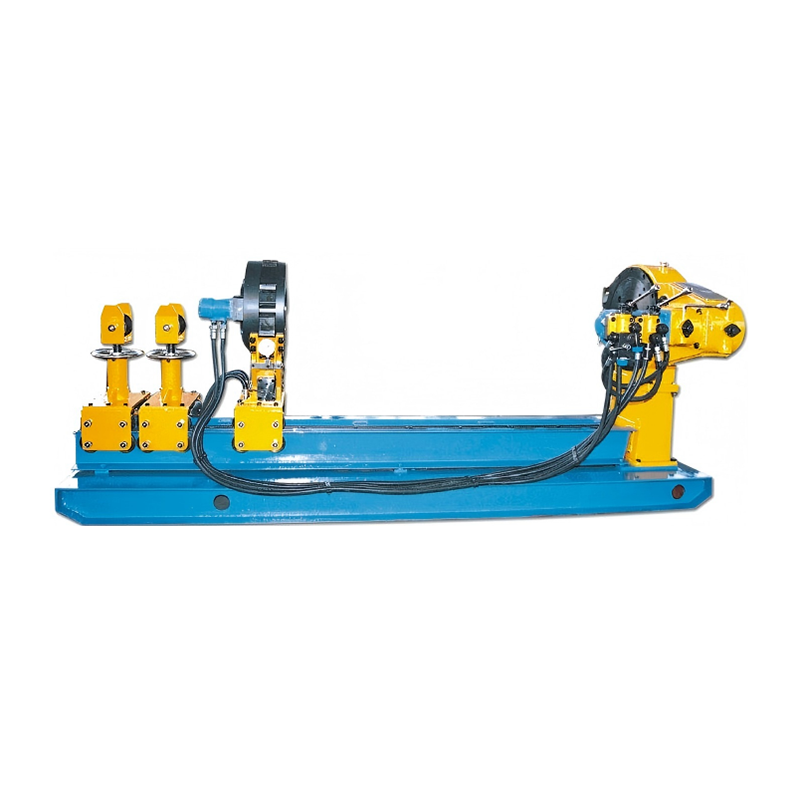
SGPE Hydraulic Bucking Unit provides controlled make-up and breakout for threaded oilfield tubulars, drill string components and downhole tools. It combines hydraulic gripping, powered rotation, controlled torque and high breakout capability in one workshop machine.
Typical workpieces include tubing, casing, drill pipe, heavy weight drill pipe, drill collars, tool joints, couplings, pup joints, crossover subs, stabilizers, mud motors, fishing tools, completion tools and other BHA components.
SGPE configures each system around the actual workpiece and workshop process. Depending on the application, the machine can include 360° continuous rotation, multi-speed hydraulic drive, hydraulic backup, interchangeable jaws, powered rollers, hydraulic elevation, push-pull, digital torque measurement, torque-turn monitoring, data acquisition and PLC/HMI control.
Across different oilfield markets, buyers may also refer to this equipment as a Hydraulic Bucking Machine, Oilfield Bucking Machine, Tubular Bucking Unit, Hydraulic Make/Break Unit, Pipe Torque Machine, OCTG Bucking Unit, Coupling Make-Up Machine, Drill Pipe Bucking Unit, Mud Motor Breakout Machine or Downhole Tool Make/Break Machine.
Need a custom Hydraulic Bucking Unit or technical quotation? Send SGPE your workpiece OD, connection type, normal make-up torque and maximum expected breakout torque. We can review the application and recommend a suitable configuration.
Email: info@sgpe.com
Tel / WhatsApp: +86 186-1599-5239
Hydraulic Bucking Unit at a Glance
| Parameter | Available Configuration |
|---|---|
| Product | Hydraulic Bucking Unit |
| Main Function | Controlled make-up and breakout |
| Applications | OCTG, drill string components and downhole tools |
| Typical Workpieces | Tubing, casing, drill pipe, HWDP, drill collars, subs and tools |
| Drive | Hydraulic |
| Rotation Direction | Forward and reverse |
| Rotation Type | Continuous / fully rotational / make-break |
| Make-Up Torque | Selected according to connection requirement |
| Maximum Breakout Torque | Selected according to service requirement |
| OD Range | Selected according to head and jaw configuration |
| Rotation Speed | Adjustable |
| Multi-Speed Drive | Available |
| Gripping | Hydraulic jaws with replaceable dies |
| Backup | Hydraulic |
| Jaw Options | Standard, interchangeable, reducer and customized |
| Non-Marking Gripping | Available for suitable applications |
| Torque Measurement | Hydraulic or electronic |
| Digital Torque Display | Available |
| Torque-Turn Monitoring | Optional |
| RPM / Rotation Monitoring | Optional |
| Data Acquisition | Optional |
| Digital Job Reports | Optional |
| Hydraulic Push-Pull | Optional |
| Powered Rollers | Optional |
| Hydraulic Elevation | Optional |
| Control | Hydraulic, electro-hydraulic or PLC/HMI |
| HPU | Integrated or separate |
| Machine Bed | Standard or customized |
| Installation | Workshop, production line, service base or skid-mounted |
| Electrical Supply | Project specific |
Final specifications depend on workpiece OD, connection geometry, required torque, gripping position, weight, production rate and control requirements.
What Is a Hydraulic Bucking Unit?
A Hydraulic Bucking Unit is a workshop machine used to make up and break out threaded oilfield connections under controlled torque.
During make-up, the backup head secures one component while the rotating head turns the mating component. The hydraulic system provides the gripping force and rotational torque required to complete the connection.
During breakout, the machine reverses direction and applies controlled torque while the backup holds the opposite component.
This arrangement gives the operator better control over alignment, gripping pressure, speed and torque than manual tongs, chain tongs or impact-based methods.
OCTG manufacturers use bucking units for tubular finishing and coupling make-up. Drill pipe manufacturers use them for tool joints and related drill string components. Oilfield service shops use high-torque make/break equipment for inspection, repair, rebuild and downhole tool maintenance.
Common Hydraulic Bucking Unit Configurations
The equipment name usually reflects the workpiece or operating method rather than a completely different machine concept.
| Industry Term | Typical Use |
|---|---|
| Hydraulic Bucking Unit | General controlled make-up and breakout |
| Hydraulic Bucking Machine | Workshop torque equipment |
| Oilfield Bucking Machine | Oilfield tubular and tool assembly |
| Tubular Bucking Unit | Tubing, casing and drill string components |
| Hydraulic Pipe Make-Up Machine | Controlled tubular connection assembly |
| Pipe Torque Machine | Controlled tubular torque |
| Hydraulic Make/Break Unit | Threaded tool assembly and disassembly |
| Hydraulic Breakout Unit | Repair and high-torque breakout |
| Continuous Rotation Bucking Unit | Repetitive tubular make-up |
| OCTG Bucking Unit | Tubing, casing, couplings and pup joints |
| Coupling Make-Up Machine | Casing and tubing coupling installation |
| Drill Pipe Bucking Unit | Drill pipe and tool joints |
| Drill Collar Make/Break Unit | High-torque BHA components |
| Mud Motor Breakout Machine | Mud motor repair |
| Downhole Tool Make/Break Machine | Drilling, fishing, completion and workover tools |
| Torque-Turn Bucking Unit | Torque and rotation monitoring |
When comparing machines, focus on the actual OD range, make-up torque, breakout torque, gripping arrangement, backup design, rotation speed, support system and monitoring package.
Continuous Rotation and Fully Rotational Bucking Unit
A Continuous Rotation Bucking Unit can rotate through complete 360° revolutions without repeatedly resetting the rotating head.
This design is useful for repetitive tubular work such as casing finishing, tubing production, coupling make-up, pup-joint assembly and drill pipe manufacturing.
During thread run-in, the operator can use a higher rotation speed. As the connection approaches final make-up, the machine can slow down and apply controlled torque.
This balance between speed and torque makes continuous rotation attractive for OCTG production and other repetitive assembly work.
For repair shops that mainly dismantle heavy used tools, maximum breakout torque, gripping flexibility and stable workpiece support may be more important than continuous rotation.
Hydraulic Make/Break and High-Torque Breakout Unit
A Hydraulic Make/Break Unit performs both assembly and disassembly of threaded components.
Typical service applications include drill collars, crossover subs, stabilizers, reamers, mud motors, fishing tools, completion tools and workover equipment.
Used tools often create more demanding breakout conditions than new production because the connection may have experienced high mechanical loads, temperature changes, contamination, corrosion or altered thread friction.
For this reason, a repair-oriented machine normally places greater emphasis on high breakout torque, strong hydraulic gripping, flexible jaw positions, stable workpiece support and controlled reverse rotation.
For correct selection, provide both the normal make-up torque and the highest expected breakout torque.
OCTG Bucking Unit and Coupling Make-Up Machine
An OCTG Bucking Unit supports tubing and casing manufacturing, coupling installation, pup-joint assembly, threading-shop rework and final inspection.
Production-oriented machines often combine continuous rotation with more than one operating speed. Faster rotation shortens thread run-in, while slower rotation improves control during final make-up.
Digital torque measurement can improve consistency. Premium connection projects can also use torque-turn monitoring and data acquisition when the approved connection procedure requires more detailed records.
A Casing Coupling Make-Up Machine or Tubing Coupling Make-Up Machine can integrate with adjustable or powered rollers to improve pipe handling.
Typical users include tubing mills, casing mills, pup-joint manufacturers, OCTG threading shops and tubular repair facilities.
Core Hydraulic Bucking Machine Functions
Hydraulic Gripping
The jaws must hold the tubular or tool securely while torque builds.
SGPE selects the gripping arrangement according to workpiece OD, material, surface condition, available gripping length and required torque.
Conventional carbon-steel drilling tools can use hardened dies. Chrome tubing, CRA tubulars, stainless steel components and finished tool bodies may need a larger contact area or reduced-marking jaw arrangement.
The gripping system must transmit the required torque without excessive slippage or unnecessary surface damage.
Adjustable Clamp Pressure
Different workpieces need different gripping forces.
A heavy drill collar can tolerate a different contact pressure from premium production tubing. Where required, adjustable hydraulic clamping can work together with application-specific jaws.
Multi-Speed Hydraulic Drive
A multi-speed drive allows faster thread run-in and slower final make-up.
This improves cycle efficiency while giving the operator better control as torque rises.
Controlled Make-Up Torque
The hydraulic drive applies torque progressively rather than through sudden impact.
A basic system can show hydraulic or digital torque. Advanced configurations can also monitor turns, rotation angle and RPM.
High Breakout Torque
Connections that have worked downhole may require significantly more torque to loosen than a new connection requires during make-up.
A correctly sized breakout system applies controlled reverse torque while the backup secures the opposite component.
Hydraulic Backup
The backup keeps the stationary component from rotating.
Depending on workpiece geometry and loading method, SGPE can evaluate fixed, closed, hinged, floating or customized backup arrangements.
Hydraulic Bucking Unit Technical Specifications
| Technical Parameter | SGPE Configuration / Selection Basis |
|---|---|
| Equipment | Hydraulic Bucking Unit |
| Operation | Make-up and breakout |
| Main Applications | OCTG, drill string and downhole tools |
| Minimum Workpiece OD | Application specific |
| Maximum Workpiece OD | Application specific |
| Maximum Passing OD | Model dependent |
| Make-Up Torque | Application specific |
| Maximum Breakout Torque | Application specific |
| Minimum Controlled Torque | Depends on torque measurement package |
| Torque Units | N·m / kN·m / ft·lb |
| Torque Control | Hydraulic / digital |
| Torque Measurement | Hydraulic or electronic |
| Rotation Direction | Forward and reverse |
| Rotation Type | Fully rotational / continuous / make-break |
| Rotation Speed | Adjustable |
| Multi-Speed Drive | Available |
| Hydraulic Pressure | Application dependent |
| Hydraulic Flow | Selected according to drive and speed |
| Hydraulic Power Unit | Integrated or separate |
| HPU Drive | Electric motor or project-specific source |
| Rotating Head | Hydraulic |
| Backup Head | Hydraulic |
| Replaceable Jaws | Available |
| Interchangeable Jaw Sets | Available |
| Reducer Jaws | Optional |
| Non-Marking Jaws | Optional |
| Clamp Pressure Adjustment | Available according to configuration |
| Support Rollers | Available |
| Powered Rollers | Optional |
| Self-Centering Rollers | Optional |
| Hydraulic Supports | Optional |
| Hydraulic Elevation | Optional |
| Hydraulic Push-Pull | Optional |
| Push-Pull Force | Application specific |
| Push-Pull Stroke | Application specific |
| Machine Bed Length | Customized |
| Digital Torque Display | Available |
| Torque-Turn Monitoring | Optional |
| RPM Monitoring | Optional |
| Rotation Monitoring | Optional |
| Data Acquisition | Optional |
| PLC / HMI | Optional |
| Digital Connection Report | Optional |
| Remote Operation | Optional |
| Electrical Supply | Customized |
| Installation | Fixed workshop / skid-mounted |
A tubing coupling, drill pipe tool joint and mud motor can require very different torque, gripping and handling arrangements. SGPE therefore confirms the final technical values after reviewing the actual workpiece.
Hydraulic Bucking Unit Application Guide
| Application | Typical Workpiece | Main Selection Priority | Useful Options |
|---|---|---|---|
| Casing Production | Casing, couplings | OD capacity and repeatability | Continuous rotation, torque monitoring |
| Tubing Production | Tubing, couplings | Controlled torque | Torque-turn monitoring |
| OCTG Threading Shop | EUE, NUE, premium connections | Product flexibility | Interchangeable jaws |
| Coupling Make-Up | Casing / tubing couplings | Cycle efficiency | Fully rotational head |
| Drill Pipe Production | Tool joints | Repeatable make-up | Multi-speed rotation |
| HWDP Assembly | Heavy tool joints | Higher torque | Reinforced supports |
| Drill Collar Workshop | Drill collars | Make-up / breakout torque | Heavy-duty configuration |
| BHA Workshop | Subs, stabilizers, reamers | Tool flexibility | Adjustable supports |
| Mud Motor Repair | Motor sections | Breakout and gripping | Push-pull |
| Fishing Tool Repair | Jars, spears, overshots | High breakout torque | Flexible jaws |
| Completion Workshop | Packers, running tools | Controlled assembly | Digital monitoring |
| Premium OCTG | Premium casing / tubing | Connection monitoring | Torque-turn + data acquisition |
| CRA / Chrome Tubing | Damage-sensitive tubulars | Surface protection | Non-marking gripping |
| Oilfield Service Center | Multiple tool families | Wide working range | Multiple jaw sets |
Hydraulic Bucking Unit for Casing, Tubing and OCTG
A bucking unit used in an OCTG plant must combine repeatability with efficient tubular handling.
For casing, typical products include surface casing, intermediate casing, production casing, liners, pup joints and couplings. Depending on the project, the machine can work with STC, LTC, BTC and premium casing connections when its gripping range and torque capacity suit the product.
For tubing, typical applications include production tubing, workover tubing, EUE, NUE, tubing couplings, pup joints and premium connections.
Chrome and CRA tubulars need more careful gripping because aggressive dies can mark the finished surface. SGPE can evaluate contact geometry, clamp pressure and reduced-marking or non-marking jaw options.
For repetitive OCTG production, continuous rotation can shorten thread run-in time. Digital torque measurement and optional torque-turn monitoring can support controlled final make-up.
Drill Pipe Bucking Unit and HWDP Make-Up
A Drill Pipe Bucking Unit applies controlled torque to rotary shouldered connections.
Typical workpieces include drill pipe, heavy weight drill pipe, drill collars and crossover subs. Common connection families can include NC, IF, REG and FH, subject to the actual connection specification and make-up procedure.
Continuous rotation can improve thread run-in efficiency during repetitive production. Multi-speed operation then allows the machine to slow down during final make-up.
HWDP normally requires stronger gripping and heavier support than production tubing. Powered rollers, hydraulic stands and extended beds can help maintain alignment during make-up or breakout.
For a hydraulic bucking unit for drill pipe, confirm the tool-joint OD, required torque, pipe length, weight and handling method before final machine selection.
Drill Collar and BHA Make/Break Machine
A Drill Collar Make/Break Unit handles high-torque bottomhole assembly components such as conventional and non-magnetic drill collars, crossover subs, bit subs, shock subs, stabilizers, reamers and hole openers.
These components are often heavy and may require substantial breakout torque after field service.
A suitable BHA Make/Break Machine therefore needs strong gripping, stable support and sufficient reverse torque for used connections.
Powered rollers or hydraulic supports can also improve loading, alignment and repositioning of heavy BHA components.
Mud Motor Breakout Machine
Mud motor workshops regularly dismantle and rebuild threaded motor sections.
A Hydraulic Mud Motor Breakout Machine can work on top subs, bearing sections, power sections, adjustable bent housings and threaded motor subs.
Mud motors often provide only a short or restricted gripping area, so drawings are especially useful during machine selection.
For engineering review, provide the tool OD, overall length, available gripping positions, normal make-up torque, maximum breakout torque, tool weight and any required axial movement.
When the service procedure needs controlled axial force, SGPE can add hydraulic push-pull.
This configuration can also suit workshops looking for a hydraulic make/break machine for mud motors and downhole tools.
Fishing Tool and Downhole Tool Bucking Unit
A Downhole Tool Bucking Unit gives service workshops more flexibility when they handle several tool families.
Typical workpieces include overshots, spears, fishing jars, bumper subs, mills, washover tools, mud motors, stabilizers, crossover subs, completion tools and workover equipment.
These tools may return from the field with heavily loaded or difficult threaded connections, so high breakout capacity can matter more than production speed.
For a multi-purpose repair shop, the most useful configuration usually combines wide OD coverage, interchangeable jaw sets, strong workpiece supports, flexible gripping positions, high breakout torque and optional hydraulic push-pull.
Completion Tool Make/Break Unit
A Completion Tool Make/Break Unit provides controlled torque for threaded completion equipment such as packers, running tools, setting tools, completion subs, seal assemblies and landing tools.
The machine allows technicians to complete assembly in a controlled workshop before mobilization to the wellsite.
Where the procedure requires traceable torque, digital monitoring and job recording can be added.
Premium Connection Bucking Machine
Premium connections often require more information than a final torque value.
A Premium Connection Bucking Machine can combine controlled low-speed rotation with digital torque measurement, torque-turn monitoring, rotation measurement and job data storage.
These functions help the operator follow an approved connection procedure and review how the connection behaved during make-up.
The connection manufacturer, owner or license holder must define the applicable make-up procedure and acceptance criteria.
A bucking unit does not independently qualify a premium connection. It provides the gripping, rotation, torque measurement and recording functions needed to carry out the specified procedure.
Torque-Turn Monitoring, Data Acquisition and PLC/HMI
A Hydraulic Bucking Unit with Torque-Turn Monitoring records both torque and connection rotation during make-up.
| Recorded Data | Purpose |
|---|---|
| Current Torque | Real-time monitoring |
| Peak Torque | Final torque record |
| Turns | Connection movement |
| Rotation Angle | Detailed make-up analysis |
| RPM | Speed monitoring |
| Job Number | Traceability |
| Workpiece ID | Product tracking |
| Connection Type | Procedure identification |
| Operator | Production record |
| Date & Time | Traceability |
| Torque-Turn Curve | Connection evaluation |
Torque-turn monitoring provides more information than peak torque alone. It can be especially useful for premium casing, premium tubing and other quality-controlled OCTG applications.
A data-acquisition package can also store job recipes, torque limits, rotation limits, workpiece IDs, connection history, operator information and alarms.
With PLC/HMI control, the operator interface can manage rotation, gripping, backup functions, torque display, RPM and job parameters. Advanced systems can display torque-turn curves, store connection recipes and retain production records.
Hydraulic Gripping, Workpiece Support and Push-Pull
The correct gripping and handling arrangement depends on torque, workpiece geometry and surface condition.
Hardened dies provide strong grip on conventional carbon-steel drilling tools. Interchangeable jaw sets allow one machine to cover several OD ranges, while reducer jaws extend the working range toward smaller components.
For chrome tubing, CRA tubulars, premium pipe, stainless steel parts and finished tool bodies, reduced-marking or non-marking options can help protect the surface.
| Support System | Typical Use |
|---|---|
| Adjustable Roller Stand | General tubular support |
| Self-Centering Roller | Faster OD changes |
| Powered Roller | Heavy tubular movement |
| V-Type Support | Stable tool positioning |
| Hydraulic Jack Stand | Heavy BHA components |
| Hydraulic Elevation | Center-height adjustment |
| Extended Machine Bed | Long tubulars and tools |
| Headstock / Tailstock Extension | Additional working length |
| Push-Pull Carriage | Controlled axial movement |
Correct support keeps the workpiece close to the machine centerline and reduces unwanted side loading at the threaded connection.
Some tools also require axial movement during service. In these applications, hydraulic push-pull can provide controlled positioning or assist selected assembly and disassembly procedures.
Push-pull force and stroke depend on the actual workpiece and maintenance process.
Hydraulic Power Unit
The Hydraulic Power Unit (HPU) supplies pressure and flow to the rotating head, backup, gripping system and other hydraulic functions.
HPU sizing depends on the required make-up torque, breakout torque, rotation speed, working pressure, hydraulic flow, duty cycle and number of hydraulic functions operating at the same time.
The HPU can be integrated into the machine package or installed separately.
Electrical voltage, frequency and phase can be configured for the destination workshop.
OCTG Production vs. Oilfield Repair Configuration
| Feature | OCTG Production | Oilfield Repair Workshop |
|---|---|---|
| Main Priority | Repeatability and throughput | Flexibility and breakout |
| Continuous Rotation | High priority | Application dependent |
| High Run-In Speed | Useful | Less important |
| Torque-Turn | Important for premium connections | Optional / useful |
| Data Recording | Production traceability | Repair records |
| OD Range | Usually defined | Often wider |
| Jaw Changes | Product based | Frequent |
| Breakout Torque | Less dominant | Critical |
| Push-Pull | Selected applications | Often useful |
| Heavy Tool Supports | Product dependent | Common |
An OCTG production machine focuses on repeatable cycle time and consistent connection make-up.
An oilfield repair machine needs more flexibility because tool size, gripping position and breakout load can change from job to job.
Hydraulic Bucking Unit vs. Oilfield Power Tong
| Hydraulic Bucking Unit | Oilfield Power Tong |
|---|---|
| Mainly workshop based | Mainly rig-floor based |
| Workpiece rests on machine supports | Tong works around field-positioned tubulars |
| Suits manufacturing and repair | Suits tubular running and pulling |
| Strong centerline control | Depends on rig handling |
| Continuous rotation available | Depends on tong design |
| Torque-turn monitoring available | Torque monitoring on selected systems |
| Handles many tool geometries | Primarily tubular products |
| Supports repeatable shop assembly | Supports field operations |
A bucking unit provides better workpiece support and process control for workshop assembly and repair.
A power tong provides greater mobility for drilling, casing running and workover operations at the rig.
How to Select the Right Hydraulic Bucking Unit
Start with the actual workpiece rather than a generic machine torque rating.
First, confirm whether the machine will handle tubing, casing, drill pipe, HWDP, drill collars, couplings, mud motors, fishing tools, completion equipment or another downhole tool.
Next, provide the minimum gripping OD, maximum gripping OD and maximum passing diameter. These values can differ because a coupling, upset section or tool body may be larger than the actual gripping area.
Then confirm the connection type. Typical examples include EUE, NUE, STC, LTC, BTC, NC, IF, REG, FH, premium connections and proprietary tool threads.
Provide both make-up and breakout torque. For used drilling tools, the expected maximum breakout torque is especially important.
For long or heavy workpieces, include overall length and weight so the correct bed, rollers and support arrangement can be selected.
For premium, CRA or chrome tubulars, specify surface-protection requirements and whether the project needs torque-turn monitoring or digital reports.
For production applications, also provide the expected throughput or cycle requirement.
Hydraulic Bucking Unit Price and Quotation
The Hydraulic Bucking Unit price depends on machine capacity and configuration, so one standard price cannot represent every project.
The main cost drivers include the workpiece OD range, make-up torque, maximum breakout torque, rotation system, rotation speed, HPU capacity, jaw packages, workpiece supports, hydraulic push-pull, torque-turn monitoring, PLC/HMI control, data acquisition, machine bed length, electrical configuration, FAT scope and documentation requirements.
A basic workshop make/break unit does not require the same equipment package as a fully rotational OCTG bucking machine with torque-turn monitoring and production data recording.
For an accurate Hydraulic Bucking Unit quotation, send SGPE the workpiece drawing and operating requirements.
Typical Hydraulic Bucking Unit Supply Scope
A typical package can include the main bucking machine, rotating head, hydraulic backup, selected jaw sets and hydraulic power unit.
Depending on the approved configuration, the supply can also include support rollers, hydraulic stands, powered rollers, hydraulic elevation, push-pull equipment, an electrical control cabinet, PLC/HMI, torque measurement hardware and torque-turn software.
The final supply scope follows the approved technical offer and purchase order.
Inspection, FAT and Documentation
SGPE can prepare an agreed inspection and documentation package according to project requirements.
| Document / Test | Availability |
|---|---|
| Technical Datasheet | Available |
| General Arrangement Drawing | Available |
| Hydraulic Schematic | Available |
| Electrical Drawing | When applicable |
| Operation Manual | Available |
| Maintenance Manual | Available |
| Recommended Spare Parts List | Available |
| Packing List | Available |
| Functional Test Record | As agreed |
| Hydraulic Test Record | As agreed |
| Torque Measurement Record | As applicable |
| Calibration Documentation | As agreed |
| FAT Procedure | When requested |
| FAT Report | When included |
An agreed Factory Acceptance Test can verify hydraulic gripping, forward and reverse rotation, speed adjustment, backup operation and torque monitoring.
When included in the machine scope, FAT can also cover powered rollers, hydraulic elevation, push-pull functions, PLC/HMI operation, emergency stops and other agreed safety features.
Optional Equipment and Custom Configuration
SGPE can configure the machine around the actual production or repair process.
Production applications may need continuous rotation, multi-speed drive, powered rollers and digital torque monitoring, while premium connection work may require torque-turn monitoring, rotation measurement, job storage and digital reports.
Repair workshops may place greater value on hydraulic push-pull, multiple jaw sets, heavy tool supports, hydraulic elevation and extended machine beds.
The HPU, electrical system, operator controls and safety guarding can also be customized for the project.
Recommended Spare Parts
For long-term operation, it is useful to keep the main wear and service items available locally.
A typical spare-parts package can include jaw inserts, gripping dies, hydraulic seal kits, hoses, filters, pressure gauges, common hydraulic fittings and control switches.
Machines with digital monitoring may also require spare torque, rotation or proximity sensors depending on the final configuration.
Information Required for a Hydraulic Bucking Unit Quotation
Please provide:
- Workpiece type: ___
- Minimum gripping OD: ___ in / mm
- Maximum gripping OD: ___ in / mm
- Maximum passing OD: ___ in / mm
- Connection type: ___
- Normal make-up torque: ___ kN·m / ft·lb
- Maximum make-up torque: ___ kN·m / ft·lb
- Maximum breakout torque: ___ kN·m / ft·lb
- Minimum controlled torque, if required: ___
- Workpiece length: ___
- Maximum workpiece weight: ___
- Available gripping length: ___
- Required rotation speed: ___ rpm
- Continuous rotation required: Yes / No
- Hydraulic push-pull required: Yes / No
- Push-pull force / stroke: ___
- Torque-turn monitoring: Yes / No
- Data acquisition / digital reports: Yes / No
- Non-marking gripping: Yes / No
- Power supply: ___ V / ___ Hz / ___ Phase
- Installation location: ___
- FAT / inspection requirement: ___
- End-user or project specification: ___
If some values are unavailable, send SGPE the tool drawing, connection information, clear photos and intended application. We can review the available data and help define the required configuration.
Why Choose SGPE for a Custom Hydraulic Bucking Unit?
SGPE configures the machine around the actual workpiece and workshop process instead of forcing every project into one fixed specification.
This allows the torque range, gripping system, rotation speed, support equipment and controls to match the actual application.
The equipment can support both production and repair work, from OCTG coupling make-up and drill pipe assembly to drill collar maintenance, mud motor breakout and downhole tool servicing.
Optional torque-turn monitoring, PLC/HMI and data acquisition can add traceability when the project requires it.
For heavy or long workpieces, SGPE can also configure powered rollers, hydraulic supports, elevation systems, extended beds and push-pull equipment.
Frequently Asked Questions About Hydraulic Bucking Units
1. What is a Hydraulic Bucking Unit used for?
A Hydraulic Bucking Unit is used for controlled make-up and breakout of threaded oilfield tubulars, drill string components and downhole tools. Typical workpieces include tubing, casing, drill pipe, HWDP, drill collars, couplings, crossover subs, stabilizers, mud motors, fishing tools and completion equipment.
OCTG manufacturers use bucking machines for casing and tubing coupling make-up, while drill pipe plants use them for tool-joint assembly. Oilfield service and repair workshops also use hydraulic make/break equipment to dismantle, inspect and rebuild BHA components and other threaded downhole tools that require controlled torque and stable workpiece support.
2. Is a Hydraulic Bucking Unit the same as a Hydraulic Make/Break Unit?
The two terms often refer to similar equipment, although the wording usually reflects the application. Hydraulic Bucking Unit is the broader term and can include OCTG production machines, drill pipe bucking units, coupling make-up machines and workshop breakout systems.
Hydraulic Make/Break Unit is more common when describing equipment for drill collars, mud motors, fishing tools and other downhole tool repair work. In practice, the important differences are not the names but the machine’s OD range, make-up torque, maximum breakout torque, jaw design, backup system, rotation method and workpiece handling capability.
3. What is a Continuous Rotation Bucking Unit?
A Continuous Rotation Bucking Unit, also called a fully rotational bucking unit, uses a rotating head that can complete full 360° revolutions without repeatedly resetting the drive. This design is especially useful in OCTG production, casing and tubing coupling make-up, pup-joint assembly and drill pipe manufacturing because it can shorten thread run-in time.
The operator can use a higher speed during initial thread engagement and reduce the rotation speed as the connection approaches final torque. For workshops focused mainly on heavy tool breakout, however, maximum breakout torque and gripping flexibility may be more important than continuous rotation.
4. Can one Hydraulic Bucking Machine handle tubing, casing and drill pipe?
Yes, a single Hydraulic Bucking Machine can handle tubing, casing and drill pipe when its rotating head, backup system, torque capacity, passing diameter and jaw packages cover all required workpieces. Interchangeable jaws and reducer sets can extend the OD range, while adjustable or powered support rollers can accommodate different tubular lengths and weights.
However, production tubing, large casing and drill pipe tool joints have different gripping and torque requirements. SGPE therefore reviews the minimum gripping OD, maximum passing OD, connection type, make-up torque and breakout torque before selecting one machine for several tubular product families.
5. Can a Bucking Unit make up casing and tubing couplings?
Yes. An OCTG Bucking Unit or Coupling Make-Up Machine can assemble casing and tubing couplings under controlled torque in casing mills, tubing mills, pup-joint plants and threading shops. Applications can include STC, LTC, BTC, EUE, NUE and selected premium connections when the machine capacity and tooling suit the product.
Continuous rotation can improve cycle efficiency in repetitive production, while digital torque measurement can improve process control. Premium connection applications may also use torque-turn monitoring and data acquisition, although the connection manufacturer or license holder must define the approved make-up procedure and acceptance criteria.
6. Can a Drill Pipe Bucking Unit handle NC, IF, REG and FH connections?
Yes, a Drill Pipe Bucking Unit can handle common rotary shouldered connection families such as NC, IF, REG and FH when the machine torque range, jaws and workpiece supports match the specific drill string component.
Typical applications include drill pipe tool joints, heavy weight drill pipe, drill collars, crossover subs and other BHA components. Continuous rotation can improve thread run-in efficiency during production, while low-speed final rotation gives better control as torque increases.
The final make-up torque and connection procedure should always follow the applicable product specification, drawing or connection manufacturer’s instructions.
7. Can a Hydraulic Bucking Unit be used for mud motor repair?
Yes. A Mud Motor Breakout Machine or hydraulic make/break unit can dismantle and reassemble threaded mud motor components such as top subs, bearing sections, power sections, adjustable bent housings and threaded motor subs. Mud motors often have short or restricted gripping areas, so the available gripping length and tool geometry are important when selecting the machine.
Oilfield repair workshops should provide the mud motor OD, overall length, weight, make-up torque and maximum breakout torque. Where the maintenance procedure also requires controlled axial movement, SGPE can configure the bucking unit with hydraulic push-pull and suitable workpiece supports.
8. What is torque-turn monitoring on a Hydraulic Bucking Unit?
Torque-turn monitoring records both applied torque and connection rotation throughout the make-up process instead of showing only the final torque value. Depending on the selected system, the operator can monitor peak torque, turns, rotation angle, RPM, workpiece ID and job information while viewing a torque-turn curve.
This function is particularly useful for premium casing, premium tubing and other quality-controlled OCTG connections that require more detailed production records. A Hydraulic Bucking Unit with torque-turn monitoring provides the measurement and recording tools needed to follow a defined make-up procedure, while the connection owner or license holder remains responsible for the approved acceptance criteria.
9. Can a Hydraulic Bucking Unit generate digital connection reports?
Yes, when the machine includes a suitable data acquisition and PLC/HMI control system. The system can record information such as applied torque, turns, rotation speed, workpiece ID, connection type, operator, date, job number and selected process limits. Depending on the software configuration, the machine can also generate or export digital connection records for production traceability and quality documentation.
This is particularly useful in OCTG manufacturing, premium connection make-up and high-volume threading shops. Oilfield service workshops can also use digital job records to document mud motor, drill collar, fishing tool or other downhole tool repair work.
10. Can a Hydraulic Bucking Machine handle CRA, chrome or premium tubing?
Yes, but CRA, chrome tubing, stainless steel components and other damage-sensitive tubulars require more careful gripping than conventional carbon-steel products. Standard aggressive dies can leave marks on finished surfaces, so the gripping system should balance sufficient friction with surface protection.
SGPE can evaluate reduced-marking or non-marking jaws, contact geometry and adjustable clamp pressure according to the workpiece. For premium tubing applications, the machine can also combine controlled low-speed make-up with digital torque measurement and optional torque-turn monitoring.
The final gripping arrangement depends on tubular OD, material, surface condition, required torque and available gripping length.
11. How much does a Hydraulic Bucking Unit cost?
The Hydraulic Bucking Unit price depends on the required machine capacity and configuration rather than one standard specification. Important cost factors include workpiece OD range, make-up torque, maximum breakout torque, continuous rotation, HPU capacity, jaw packages, machine bed length, workpiece supports and electrical requirements.
Additional functions such as hydraulic push-pull, powered rollers, torque-turn monitoring, PLC/HMI control, data acquisition and customized FAT requirements can also affect the quotation. A basic oilfield workshop make/break machine therefore has a different cost structure from a fully rotational OCTG bucking machine designed for repetitive production and digital connection recording.
12. What information is required for a Hydraulic Bucking Unit quotation?
For an accurate Hydraulic Bucking Unit quotation, provide the workpiece type, minimum and maximum gripping OD, maximum passing diameter, connection type, normal make-up torque and maximum expected breakout torque. Workpiece length, weight and available gripping area are also important because they affect machine-bed length, roller supports and handling requirements.
Please also confirm whether the project needs continuous rotation, hydraulic push-pull, non-marking jaws, torque-turn monitoring, PLC/HMI control, digital data recording or FAT. If complete specifications are not available, SGPE can review tool drawings, connection details, clear photos and the intended application before recommending a suitable configuration and preparing the technical and commercial quotation.
Request a Hydraulic Bucking Unit Quote From SGPE
SGPE supplies custom Hydraulic Bucking Units for OCTG production, drill pipe manufacturing, threading shops and oilfield repair workshops. Typical applications include casing and tubing coupling make-up, drill pipe and HWDP assembly, BHA servicing, mud motor repair, fishing tool maintenance, completion tool assembly and other downhole tool make/break operations.
Depending on the application, the system can be configured with 360° continuous rotation, high breakout torque, hydraulic gripping, interchangeable jaws, powered rollers, hydraulic elevation, push-pull, digital torque measurement, torque-turn monitoring, data acquisition and PLC/HMI control.
To prepare the correct configuration, please send us your workpiece type and OD, connection type, normal make-up torque, maximum breakout torque, workpiece length and weight, together with any special requirements for non-marking gripping, torque-turn monitoring, FAT or data recording.
Email: info@sgpe.com
Tel / WhatsApp: +86 186-1599-5239


