Description
Triplex Frac Pump 400–2500 HP for Shale Fracturing, Well Stimulation, Acidizing and Oilfield Pressure Pumping
SGPE manufactures and supplies Triplex Frac Pumps from 400 HP to 2,500 HP for hydraulic fracturing, well stimulation, acidizing, cementing, workover and other oilfield pressure pumping operations.
The range includes 400 HP, 600 HP, 1,000 HP, 1,500 HP, 2,000 HP, 2,250 HP and 2,500 HP configurations. It covers compact triplex well service pumps, medium-duty triplex plunger pumps and high-horsepower hydraulic fracturing pumps for different treatment programs, drivetrain arrangements and equipment layouts.
Customers can source complete pumps, bare pumps, triplex power ends, high-pressure fluid ends and selected wear parts. SGPE also supports OEM frac truck projects, skid-mounted pressure pumping packages, replacement pump requirements and spare-parts programs for operating fleets.
Selecting the right pump starts with the required operating point rather than the horsepower label. Treatment pressure, flow rate, hydraulic horsepower, plunger diameter, connecting rod load, pump speed, fluid-end configuration, pumped medium and available drive power all influence the final design.
Typical applications include shale oil and shale gas fracturing, tight oil and tight gas stimulation, horizontal well multi-stage fracturing, matrix acidizing, acid fracturing, oil and gas well cementing, sand control, remedial stimulation and workover service.
The three-plunger positive-displacement architecture combines high-pressure capability, strong power density and a relatively compact mechanical layout. Its established field history and familiar maintenance make the triplex design a practical choice for frac fleets, well-service contractors, stimulation companies, frac equipment manufacturers, EPC projects and oil and gas operators.
Email: info@sgpe.com
Tel / WhatsApp: +86 186-1599-5239
Triplex Frac Pump at a Glance
| Item | Available Configuration |
|---|---|
| Product | Triplex Frac Pump |
| Related Terms | Triplex Fracturing Pump / Triplex Plunger Pump / Hydraulic Fracturing Pump |
| Power Range | 400–2,500 HP |
| Power Classes | 400 / 600 / 1,000 / 1,500 / 2,000 / 2,250 / 2,500 HP |
| Pump Type | Positive-Displacement Reciprocating Pump |
| Pump Arrangement | Horizontal Triplex |
| Number of Plungers | 3 |
| Operation | Single Acting |
| Main Services | Fracturing / Acidizing / Cementing / Stimulation / Workover |
| Installation | Bare Pump / Frac Truck / Trailer / Skid |
| Drive Options | Diesel / Electric / Mechanical |
| Supply Scope | Complete Pump / Power End / Fluid End / Spare Parts |
| OEM Projects | Supported |
| Replacement Projects | Supported |
| Custom Configuration | According to operating and installation requirements |
How Does a Triplex Frac Pump Work?
A Triplex Frac Pump, also known as a triplex fracturing pump, triplex plunger pump or high-pressure frac pump, uses three reciprocating plungers to move treatment fluid at high pressure.
The power end receives rotary input from an engine, electric motor or mechanical transmission. A crank mechanism converts this rotary input into reciprocating movement, and the plungers transfer mechanical force into the treatment fluid inside the high-pressure fluid end.
Each pumping chamber contains suction and discharge valves. During the suction stroke, fluid enters the chamber. During the discharge stroke, the plunger increases fluid pressure and sends the fluid into the high-pressure treatment line.
In hydraulic fracturing, the pump delivers frac fluid and proppant toward the wellhead and treatment interval. During acidizing, it injects acid-based treatment fluid into the formation. In cementing service, it pumps cement slurry at the pressure and rate required by the cementing program.
These applications use the same basic triplex architecture, but their hydraulic and material requirements differ. A cementing unit, acidizing skid and high-horsepower frac truck may therefore use different plunger diameters, fluid ends, pump speeds and power classes.
The final configuration must match the actual duty rather than a single headline horsepower figure.
Triplex Frac Pump Technical Specifications
| Parameter | Available Configuration |
|---|---|
| Pump Arrangement | Horizontal Triplex |
| Pump Principle | Positive-Displacement Reciprocating |
| Number of Plungers | 3 |
| Operation | Single Acting |
| Power Range | 400–2,500 HP |
| Approx. Power Range | 298–1,864 kW |
| Working Pressure | Determined by plunger, fluid end, rod load and pump speed |
| Flow Rate / Displacement | Determined by plunger diameter, stroke and RPM |
| Stroke | Configuration dependent |
| Maximum Connecting Rod Load | Configuration dependent |
| Pump Speed | Configuration dependent |
| Gear / Speed Ratio | Configuration dependent |
| Plunger Diameter | Multiple sizes available |
| Fluid End | Multiple high-pressure configurations |
| Fluid End Material | Selected for pressure, abrasion and corrosion conditions |
| Power End | Heavy-duty triplex power end |
| Drive Options | Diesel / Electric / Mechanical / Project-Specific |
| Suction Connection | According to pump and package layout |
| Discharge Connection | High-pressure oilfield connection |
| Installation | Bare Pump / Frac Truck / Trailer / Skid |
| Pumped Media | Frac Fluid / Proppant Slurry / Acid / Cement Slurry |
| Applications | Fracturing / Acidizing / Cementing / Well Stimulation / Workover |
| Replacement Service | Available |
| OEM / Custom Engineering | Available |
Maximum pressure and maximum flow do not normally occur at the same operating point. Pump selection should therefore focus on the required pressure-flow combination rather than a single maximum pressure, displacement or horsepower value.
Available Triplex Frac Pump Horsepower Range
| Power Rating | Approx. Power | Product Positioning | Typical Application |
|---|---|---|---|
| 400 HP | 298 kW | Compact Triplex Well Service Pump | Cementing, acidizing, workover |
| 600 HP | 447 kW | Compact / Medium-Duty Triplex Pump | Cementing, acidizing, well stimulation |
| 1,000 HP | 746 kW | Medium-Duty Triplex Frac Pump | Stimulation and hydraulic fracturing |
| 1,500 HP | 1,119 kW | Medium / High-Power Frac Pump | Fracturing and acid stimulation |
| 2,000 HP | 1,491 kW | High-Horsepower Triplex Frac Pump | Shale and tight formation fracturing |
| 2,250 HP | 1,678 kW | Heavy-Duty Triplex Fracturing Pump | Multi-stage and high-pressure fracturing |
| 2,500 HP | 1,864 kW | High-Horsepower Frac Pump | High-rate fracturing and large frac spreads |
Horsepower provides a useful first filter, but it does not define the complete hydraulic performance envelope. For example, a 2,250 HP pump can operate at different pressure and displacement points depending on plunger diameter, pump speed, connecting rod load and fluid-end configuration.
400–600 HP Triplex Well Service Pumps
The 400 HP and 600 HP Triplex Pumps suit operations that require high-pressure pumping in a relatively compact truck or skid package.
Typical work includes primary cementing, squeeze cementing, remedial cementing, matrix acidizing, remedial acid treatment, well stimulation and workover pumping. Their smaller mechanical envelope also leaves more room for the prime mover, transmission, cooling system, suction manifold, discharge piping and control equipment.
Depending on the duty, this range can be configured as a triplex well service pump, oilfield cementing pump, acidizing pump or compact high-pressure pumping unit.
Lower horsepower does not automatically mean low pressure. Pressure capability still depends on plunger size, fluid-end configuration, connecting rod load and pump speed.
1,000–1,500 HP Medium-Duty Triplex Frac Pumps
The 1,000 HP and 1,500 HP Triplex Frac Pump range bridges compact well-service equipment and large high-horsepower fracturing pumps.
These configurations suit well stimulation, medium-duty hydraulic fracturing, acid fracturing, high-pressure acidizing and mobile pressure pumping packages.
For OEM frac trucks and stimulation skids, this range can provide a practical balance between hydraulic output, equipment weight, installation envelope and available drive horsepower.
Choosing the largest power class is not always the most efficient solution. If the required pressure-flow point can be reached with a smaller pump, the complete package may become lighter, simpler and easier to maintain.
2,000–2,500 HP High-Horsepower Triplex Frac Pumps
The 2,000 HP, 2,250 HP and 2,500 HP Triplex Frac Pump range targets demanding hydraulic fracturing and high-output stimulation work.
Typical service includes shale oil fracturing, shale gas completions, tight oil and tight gas stimulation, long horizontal wells, multi-stage hydraulic fracturing, refracturing and large frac spreads.
Several pumping units can operate in parallel to provide the total hydraulic horsepower required by the treatment design. At this duty level, fluid-end wear, connecting rod load, pump speed, lubrication, suction performance and planned maintenance become important factors in fleet availability.
When comparing a 2000 HP frac pump, 2250 HP Triplex Frac Pump or 2500 HP frac pump, the best option depends on the required pressure-flow envelope, drivetrain and package layout rather than rated horsepower alone.
SGPE Reference Triplex Pump Configurations
The following data represents actual SGPE reference configurations at different power levels.
| Parameter | HT400 Reference | 600S Reference | 2250 Reference |
|---|---|---|---|
| Maximum Power | 400 BHP / 298 kW | 600 BHP / 447 kW | 2,250 HP / 1,678 kW |
| Maximum Connecting Rod Load | 180,000 lbf / 800 kN | 100,000 lbf / 445 kN | 229,305 lbf / 1,020 kN |
| Stroke | 8 in / 203.2 mm | 6 in / 152.4 mm | 8 in / 203.2 mm |
| Speed Ratio | 8.6:1 | 4.6:1 | 6.353:1 |
| Drive / Transmission | Turbine drive configuration | Not specified in published reference data | Double-gear transmission |
| Fluid End Options | 4 in / 4.5 in | 3.5 in / 4 in / 4.5 in | 4 in / 4.5 in / 5 in / 5.5 in |
| Overall Dimensions | 1,965 × 1,002 × 1,189 mm | 1,299 × 1,418 × 683 mm | 2,230 × 1,462 × 1,105 mm |
| Approx. Weight | 2,500 kg | 2,086 kg | 6,250 kg |
| Typical Positioning | Compact well service | Compact pressure pumping | High-horsepower fracturing |
These values are reference configurations, not universal specifications for every pump in the 400–2500 HP family.
For 1,000 HP, 1,500 HP, 2,000 HP and 2,500 HP projects, the final stroke, rod load, plunger diameter, fluid end, drive arrangement and package interfaces are confirmed against the actual operating requirements.
Triplex Frac Pump Pressure, Flow and Hydraulic Horsepower
Selecting a hydraulic fracturing pump by horsepower alone can lead to the wrong operating point.
Actual hydraulic output depends on plunger diameter, stroke, pump RPM, available input horsepower, maximum connecting rod load, fluid-end configuration and drivetrain efficiency. These parameters work together and should not be evaluated independently.
A smaller plunger generally supports higher pressure at lower displacement. In contrast, a larger plunger increases displacement but reduces the maximum pressure available within the same mechanical load limits.
For preliminary sizing:
Hydraulic Horsepower (HHP) ≈ Pressure (psi) × Flow (gpm) ÷ 1714
| Example Pressure | Example Flow | Approx. HHP |
|---|---|---|
| 10,000 psi | 100 gpm | 583 HHP |
| 10,000 psi | 200 gpm | 1,167 HHP |
| 12,000 psi | 200 gpm | 1,400 HHP |
| 15,000 psi | 150 gpm | 1,313 HHP |
| 15,000 psi | 250 gpm | 2,188 HHP |
These figures are hydraulic calculation examples only and do not represent rated SGPE pump performance.
The actual drive system must also allow for mechanical losses, drivetrain efficiency and a suitable operating margin.
What Information Is Needed for Triplex Frac Pump Sizing?
For a new pump project, customers should provide the normal working pressure, maximum treatment pressure and required flow rate first. The expected power class, treatment fluid and operating duty should also be identified.
For hydraulic fracturing service, proppant type, particle size and concentration help define the expected abrasion level in the fluid end. Drive information should include whether the package uses a diesel engine or electric motor, the available input power and the expected pump speed.
The installation arrangement should also be confirmed at an early stage. A bare pump, frac truck, trailer-mounted system and skid-mounted package can require very different shaft positions, piping routes and maintenance clearances.
With these inputs, the pump, plunger and fluid end can be matched to the real duty point rather than a nominal horsepower target.
For replacement projects, dimensional information, drivetrain data, mounting details and existing piping interfaces are equally important.
Triplex Frac Pump Power End, Fluid End and Wear Components
Triplex Frac Pump Power End
The Triplex Frac Pump power end handles the mechanical side of the pumping process.
| Component | Main Function |
|---|---|
| Crankshaft | Converts rotary input into crank motion |
| Connecting Rods | Transfer mechanical load |
| Crossheads | Guide reciprocating motion |
| Gear Train | Matches drive speed to pump speed |
| Bearings | Support rotating and loaded components |
| Lubrication System | Reduces friction and controls wear |
| Power-End Housing | Maintains structural alignment |
High-horsepower fracturing creates repeated cyclic loading. For this reason, operating teams should routinely monitor lubrication condition, oil temperature, bearing temperature, vibration and unusual mechanical noise.
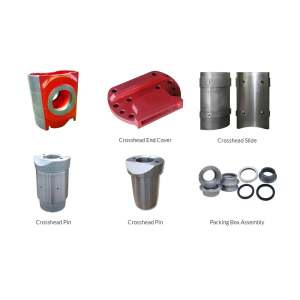
Complete pumps, standalone frac pump power ends and selected replacement power-end components are available according to project scope.
Triplex Frac Pump Fluid End
The frac pump fluid end creates hydraulic pressure and comes into direct contact with the treatment medium.
Depending on the operation, it may handle clean treatment fluid, abrasive frac sand, ceramic proppant, corrosive acid or cement slurry. Fluid-end selection therefore has a direct impact on reliability, wear rate and maintenance planning.
| Reference Pump Class | Fluid End Options | Reference Data |
|---|---|---|
| HT400 | 4 in / 4.5 in | 4330V material in reference configuration |
| 600S | 3.5 in / 4 in / 4.5 in | 715 × 489 × 298.5 mm reference dimensions |
| 2250 | 4 in / 4.5 in / 5 in / 5.5 in | 928 × 581 × 505 mm reference dimensions |
| Custom Configuration | Project-specific | Selected from pressure, flow and treatment medium |
Fluid-end selection should consider operating pressure, required flow, plunger diameter, proppant concentration, particle size, operating temperature, acid chemistry, duty cycle and suction conditions.
SGPE can supply frac pump fluid ends for new equipment, replacement projects and fleet maintenance, including configurations for abrasive fracturing, acidizing and other well-stimulation duty.
Frac Pump Plungers, Valves, Seats and Packing
Plungers transfer mechanical force into the treatment fluid, and their diameter directly affects the relationship between pressure and displacement.
Surface condition also affects maintenance. A worn or damaged plunger can shorten packing life and increase leakage.
Suction and discharge valves regulate fluid flow through each pumping chamber. In frac service, high cycle rates and abrasive proppant can accelerate valve and valve-seat wear.
Packing forms the seal around each plunger. Correct material selection, lubrication, installation and adjustment help control leakage and extend service life. Seals and gaskets must also match the expected pressure, temperature and treatment-fluid chemistry.
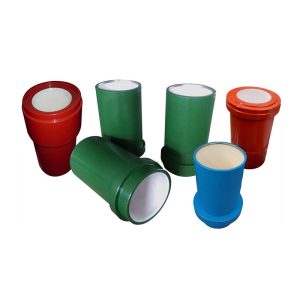
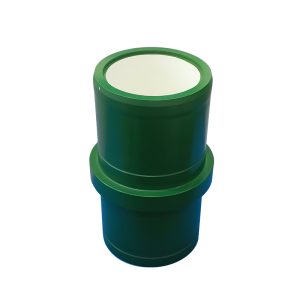
For maintenance and replacement work, SGPE can supply frac pump plungers, valves, valve seats, packing, seals and related fluid-end parts.
Oilfield Applications for Triplex Frac Pumps
Hydraulic Fracturing Pump for Shale Oil, Shale Gas and Tight Formations
Hydraulic fracturing is the main application for a high-horsepower Triplex Frac Pump.
A frac spread normally uses multiple pumping units in parallel to deliver water, chemical additives and proppant into the well. Together, these pumps must provide enough hydraulic horsepower to achieve the treating pressure and pumping rate specified in the fracture design.
Triplex pumps can serve conventional hydraulic fracturing, shale oil and shale gas completions, tight oil and tight gas stimulation, horizontal well multi-stage fracturing, refracturing and remedial stimulation.
Long horizontal wells may require many treatment stages. This creates repeated mechanical loading in the power end and sustained abrasive wear in the fluid end.
When selecting a pump for shale or tight formation fracturing, the treatment pressure and target pumping rate define the main hydraulic duty. Total hydraulic horsepower influences the number of pumping units required, while proppant rate affects fluid-end wear. Stage count and stage duration influence the total mechanical and thermal duty, so spare-parts planning also becomes important for maintaining fleet availability.
For large unconventional completion programs, the 2,000–2,500 HP range provides the highest horsepower concentration within the SGPE triplex product family.
Triplex Pump for Acidizing and Acid Fracturing
A triplex plunger pump can also operate as an oilfield acidizing pump.
Matrix acidizing injects acid into the formation to remove near-wellbore damage and improve permeability. Acid fracturing uses higher pressure to create fractures while acid reacts with the formation.
Typical operations include matrix acidizing, carbonate stimulation, remedial acid treatment, acid fracturing and production enhancement.
Pump selection for acidizing should consider acid type and concentration because both influence material compatibility and corrosion exposure. Temperature affects seal and material selection, while treatment pressure and pumping rate determine the required hydraulic duty. Treatment duration and exposure time should also be considered when reviewing wetted materials and sealing components.
Because acid chemistry can affect the fluid end, valves, seals and other wetted parts, the treatment medium should be confirmed before the final configuration is selected.
Triplex Cementing Pump, Sand Control and Workover Service
Compact and medium-power triplex pumps can serve as oilfield cementing pumps and triplex well service pumps.
Typical cementing work includes primary cementing, squeeze cementing, remedial cementing, plug cementing and abandonment cementing.
Cement slurry density, required pumping rate and maximum treating pressure determine the main hydraulic requirement. Pumping duration also affects the duty cycle, while available truck or skid space influences package integration. Because cement slurry can create solids wear and cleaning challenges, fluid-end cleanout requirements should be considered during equipment selection.
The 400–600 HP range is particularly suitable for compact cementing trucks and well-service skids, while larger power classes can support higher-output pumping packages.
Triplex pumps can also serve selected gravel-packing and sand-control treatments. In these operations, solids concentration, particle size and pumping rate influence fluid-end wear.
For workover service, compact pumps can support well circulation, remedial treatment, formation treatment, fluid injection and production restoration.
Frac Truck, Skid-Mounted and Electric Frac Pump Integration
Frac Truck Pump and Skid-Mounted Triplex Pump
A frac truck pump must work as part of the complete pressure pumping package.
A typical unit combines the pump with a diesel engine or electric motor, transmission or gearbox, cooling system, lubrication system, suction manifold, high-pressure discharge piping and controls.
| Integration Parameter | Information Required |
|---|---|
| Drive Type | Diesel / Electric |
| Available Horsepower | Engine or motor output |
| Transmission Ratio | Pump-speed matching |
| Input RPM | Normal and maximum |
| Installation Envelope | L × W × H |
| Shaft Position | Drive alignment |
| Suction Direction | Low-pressure piping arrangement |
| Discharge Direction | High-pressure piping arrangement |
| Maintenance Clearance | Access to fluid end and power end |
SGPE works with OEM frac truck manufacturers, pressure pumping equipment builders and replacement frac truck pump projects.
Where truck installation is not suitable, a skid-mounted Triplex Frac Pump provides more layout flexibility. Skid packages can serve hydraulic fracturing units, stimulation systems, acidizing equipment, cementing packages and selected offshore well-treatment projects.
Pump orientation, skid dimensions, shaft position, drivetrain alignment, piping interfaces and maintenance clearance should be reviewed before the package layout is finalized.
Diesel and Electric Triplex Frac Pump Drive Options
Traditional pressure pumping fleets commonly use a diesel engine and transmission.
A typical drivetrain is:
Diesel Engine → Transmission → Triplex Frac Pump
Engine output, transmission ratio and pump RPM must remain compatible throughout the expected operating range.
Electric stimulation fleets can instead use an electric Triplex Frac Pump driven by an electric motor with a suitable gearbox or drive arrangement.
For an electric frac pump or e-frac pump integration project, the motor output, rated speed, available electrical system, target pump RPM and package layout should be confirmed during technical selection.
Changing from diesel to electric drive does not remove the pump’s mechanical limits. Connecting rod load, pump speed and fluid-end ratings still define the allowable operating envelope.
Onshore and Offshore Oilfield Pressure Pumping
SGPE Triplex Frac Pumps can support shale well pads, tight oil developments, tight gas fields, conventional oil and gas fields, desert locations, cold-region operations and remote stimulation sites.
Ambient temperature, dust and other environmental conditions can affect lubrication, cooling and auxiliary equipment. These conditions should therefore be included in project data.
Selected offshore projects may also require skid-mounted high-pressure pumping for acidizing, cementing, remedial treatment and well stimulation.
Offshore installations can introduce additional requirements for skid dimensions, equipment weight, deck loading, lifting arrangements, corrosion protection, hazardous-area conditions and maintenance access.
Replacement Triplex Frac Pump and Retrofit Projects
A replacement Triplex Frac Pump must match more than the horsepower of the existing unit.
Drive alignment, mounting dimensions, shaft position, pump RPM and piping interfaces are equally important.
| Replacement Data | Why It Matters |
|---|---|
| Existing Pump Model | Identifies current configuration |
| Nameplate Photo | Confirms available technical data |
| GA Drawing | Shows overall arrangement |
| Mounting Dimensions | Confirms mechanical fit |
| Shaft Centerline | Confirms drive alignment |
| Input Direction | Reviews drivetrain configuration |
| Engine / Motor Data | Confirms available power |
| Transmission Data | Determines pump RPM |
| Suction Connection | Matches low-pressure piping |
| Discharge Connection | Matches high-pressure piping |
| Installation Photos | Shows surrounding equipment |
| Maintenance Clearance | Confirms service access |
Providing these details early reduces unnecessary redesign and shortens the technical review.
SGPE supports replacement frac pump projects for existing frac trucks, stimulation skids, cementing units, acidizing equipment and other oilfield pressure pumping systems.
OEM and Custom Triplex Frac Pump Manufacturer
OEM projects often require more than a standard bare pump.
Frac truck manufacturers, skid builders and pressure pumping equipment integrators may have fixed limits for overall dimensions, shaft position, drive direction, mounting arrangement and piping connections.
For an OEM Triplex Frac Pump project, useful data includes required horsepower, pressure-flow duty, drivetrain information, plunger requirement, fluid-end requirement, shaft position, suction and discharge interfaces and available maintenance space.
Reviewing these interfaces before the surrounding package design is finalized can reduce later modification work.
SGPE supports custom Triplex Frac Pump configurations, high-pressure frac pump OEM projects and oilfield pressure pumping equipment integration for both new-build and replacement applications.
Triplex Frac Pump Spare Parts and Fleet Maintenance
SGPE supplies Triplex Frac Pump spare parts and wear components for scheduled maintenance, replacement and fleet support.
Typical fluid-end requirements include complete fluid ends and related components. Plunger systems may require plungers and sealing parts, while valve maintenance normally involves suction or discharge valves and valve seats. Packing systems, gaskets, O-rings and other seals are also common fleet-maintenance items. Selected power-end mechanical components can be supplied according to the pump model and project scope.
For accurate parts matching, customers should provide the pump model and original part number whenever available. Drawings, dimensions and clear photographs can also help identify a component when the original part number is unknown.
During operation, maintenance teams should monitor fluid-end leakage, plunger condition, packing leakage, valve and seat wear, lubrication condition, oil temperature, bearing temperature, vibration and suction performance.
Keeping the correct high-wear parts on site can reduce non-productive time during long fracturing campaigns.
Inspection, Manufacturing and Project Documentation
SGPE reviews agreed project requirements for material control, machining, dimensional inspection, assembly, alignment, pressure-containing components and functional checks.
Depending on the purchase order and supply scope, project documentation can include material records, dimensional inspection reports, pressure-test records, inspection documentation and a Certificate of Conformity where required.
Third-party inspection can also be coordinated when specified in the purchase order or inspection and test plan. Other project-specific documentation can be prepared according to the agreed PO and ITP scope.
Oil-company, EPC and third-party inspection requirements should be defined during the RFQ stage so they can be included in the technical and commercial offer.
Triplex Frac Pump vs. Quintuplex Frac Pump
| Comparison | Triplex Frac Pump | Quintuplex Frac Pump |
|---|---|---|
| Number of Plungers | 3 | 5 |
| Mechanical Layout | Three-plunger design | Five-plunger design |
| Discharge Pulsation | Relatively higher | Generally smoother |
| Installed Base | Large and established | Growing in newer fleets |
| Maintenance Familiarity | High in many existing fleets | Depends on fleet experience |
| Typical Service | Fracturing, acidizing, cementing, stimulation | Mainly high-output stimulation |
| Fleet Fit | Existing triplex fleets | Newer high-rate fleets |
Neither architecture is automatically better for every application.
A triplex pump may be the stronger choice for operators with an established triplex fleet, familiar maintenance procedures and an existing spare-parts inventory. A quintuplex pump can offer smoother discharge and may suit newer high-rate stimulation fleets.
The final choice should reflect required hydraulic horsepower, treatment rate, fleet standardization, available installation space, maintenance strategy and spare-parts availability.
Triplex Frac Pump Price, Cost and Quotation Factors
A Triplex Frac Pump price cannot be determined from horsepower alone.
The final cost depends on the required pressure and flow, plunger size, fluid-end configuration, drivetrain, installation type, supply scope, documentation, spare parts and order quantity.
A higher power class normally changes the mechanical configuration and overall pump size. Pressure requirements influence plunger and fluid-end selection, while flow rate affects displacement and pump speed. The treatment medium may also change material and wear-component requirements.
Pricing can also differ between a bare pump, complete pump, power end, fluid end or spare-parts package. A frac truck, trailer or skid-mounted project can require additional interface and integration work.
When comparing Triplex Frac Pump prices or requesting a quotation, buyers should therefore compare the actual operating configuration rather than horsepower alone.
For an accurate commercial offer, provide normal working pressure, maximum treatment pressure, required flow, treatment fluid, available drive power, installation arrangement and required supply scope.
How to Select the Right Triplex Frac Pump
Start with the required power class. SGPE offers 400, 600, 1,000, 1,500, 2,000, 2,250 and 2,500 HP configurations.
Next, define the application. Hydraulic fracturing, acidizing, cementing, sand control and workover create different pressure, displacement and wet-end requirements.
Normal working pressure defines the main duty point, while maximum treatment pressure helps establish mechanical and fluid-end limits.
Required flow affects plunger diameter and pump speed. The pumped medium adds another selection factor because frac slurry, acid and cement create different abrasion, corrosion and cleaning conditions.
For hydraulic fracturing, proppant type, particle size and concentration should be provided whenever possible.
Drive information should include diesel engine or electric motor output, RPM and transmission data. The installation type should also be identified, whether the project requires a bare pump, frac truck, trailer, skid-mounted unit, cementing package, acidizing unit or replacement pump.
With this information, the engineering team can recommend a practical pump and fluid-end configuration instead of simply choosing the largest available power class.
Why Choose SGPE as a Triplex Frac Pump Manufacturer and Supplier?
SGPE covers a 400–2500 HP Triplex Frac Pump range for compact well-service equipment, medium-duty stimulation units and high-horsepower fracturing applications.
The company works across oil and gas drilling, completion, well control, workover and pressure pumping equipment. This industry focus allows the engineering team to review the pump together with its drivetrain, fluid end, piping and installation interfaces.
Customers can source complete pumps, bare pumps, power ends, high-pressure fluid ends, replacement pumps and maintenance components from one supplier.
OEM support is available for frac truck manufacturers, skid builders, EPC contractors and pressure pumping equipment integrators.
For replacement projects, existing drawings, mounting dimensions, drivetrain information and piping interfaces can be reviewed before the replacement configuration is finalized.
Fleet operators can also source fluid ends, plungers, valves, valve seats, packing and selected power-end parts according to the installed pump population and maintenance plan.
Both diesel-driven and electric-drive projects can be reviewed according to the required package layout.
Frequently Asked Questions About Triplex Frac Pumps
1. What is a Triplex Frac Pump and how does it work?
A Triplex Frac Pump is a high-pressure positive-displacement reciprocating pump that uses three plungers to move treatment fluid through a high-pressure fluid end. The oilfield industry also commonly refers to it as a triplex fracturing pump, triplex plunger pump, hydraulic fracturing pump or high-pressure frac pump.
The power end receives rotary input from a diesel engine, electric motor or mechanical drivetrain and converts it into reciprocating motion. The three plungers then pressurize the treatment fluid, while suction and discharge valves control fluid movement through each pumping chamber.
Oilfield pressure pumping companies use triplex pumps because the design combines high-pressure capability, strong power density and practical field maintenance. Typical applications include hydraulic fracturing, shale oil and shale gas stimulation, acidizing, cementing, workover pumping and other well-treatment operations.
2. What horsepower Triplex Frac Pumps does SGPE offer?
SGPE supplies Triplex Frac Pumps from 400 HP to 2,500 HP, with available power classes of 400 HP, 600 HP, 1,000 HP, 1,500 HP, 2,000 HP, 2,250 HP and 2,500 HP.
The 400–600 HP range mainly serves compact well-service equipment, cementing units, acidizing packages and workover applications. The 1,000–1,500 HP range supports medium-duty stimulation, acid fracturing and hydraulic fracturing packages. For large frac spreads, shale developments and demanding multi-stage completions, the 2,000–2,500 HP range provides high-horsepower pumping options.
Engineers should not choose a pump by horsepower alone. Plunger diameter, pump speed, connecting rod load, required pressure, target flow and fluid-end configuration all affect the final operating envelope.
3. Which Triplex Frac Pump is suitable for shale oil, shale gas and horizontal well fracturing?
The correct Triplex Frac Pump for shale hydraulic fracturing depends on treatment pressure, required pumping rate, total hydraulic horsepower, proppant program, stage duration and overall frac spread design.
For demanding shale oil, shale gas, tight oil and tight gas completions, SGPE offers 2,000 HP, 2,250 HP and 2,500 HP high-horsepower Triplex Frac Pumps. These power classes can support long horizontal wells, multi-stage hydraulic fracturing, refracturing and other high-output stimulation programs when the selected configuration matches the required operating envelope.
Large unconventional completions normally use several frac pumps in parallel rather than relying on one unit. Engineers determine pump quantity from the total HHP and treatment rate, while operators also need to account for proppant concentration, fluid-end wear, stage duration and spare-parts planning during long fracturing campaigns.
4. How much pressure and flow can a Triplex Frac Pump produce?
No single pressure or flow rating applies to every Triplex Frac Pump. Actual performance depends on plunger diameter, stroke, pump RPM, available input horsepower, maximum connecting rod load, fluid-end configuration and drivetrain efficiency.
A smaller plunger generally allows the pump to reach a higher pressure at lower displacement. A larger plunger increases displacement and flow but lowers the maximum pressure available within the same mechanical load limits.
Maximum pressure and maximum flow therefore do not normally occur at the same operating point. For preliminary sizing, engineers can estimate hydraulic horsepower with the formula HHP ≈ Pressure in psi × Flow in gpm ÷ 1714. Final pump selection should use the actual pressure-flow duty point rather than only the maximum PSI, GPM or horsepower rating.
5. How do I select the correct plunger size and frac pump fluid end?
Start with the required normal working pressure, maximum treatment pressure and target flow rate. These values define the basic operating point for plunger and frac pump fluid-end selection.
Plunger diameter directly affects the balance between pressure and displacement. Smaller plungers generally support higher-pressure operation, while larger plungers provide greater displacement. Engineers must keep the selected combination within the allowable connecting rod load, pump speed and fluid-end pressure limits.
The pumped medium also plays an important role. Proppant-bearing fracturing fluid creates abrasive wear, acidizing fluids introduce corrosion concerns, and cement slurry increases solids loading and cleaning requirements. Temperature, proppant concentration, particle size, acid chemistry, duty cycle and suction conditions can all influence fluid-end material, valve, valve-seat, plunger, packing and sealing selection.
SGPE supplies complete pumps as well as replacement frac pump fluid ends for new equipment, retrofit projects and operating frac fleets.
6. Can a Triplex Frac Pump handle high-proppant fracturing slurry?
Yes. A Triplex Frac Pump can handle proppant-bearing fracturing fluid when engineers match the fluid end and wear components to the treatment program.
High proppant loading increases abrasion inside the fluid end and accelerates wear on valves, valve seats, plungers, packing and internal fluid passages. Proppant type, particle size, concentration, treatment rate and stage duration therefore form important parts of frac pump selection.
For long multi-stage fracturing programs, operators should also include fluid-end wear in the maintenance plan. Keeping suitable valves, valve seats, packing, plungers and other high-wear parts on site can reduce non-productive time and help maintain frac fleet availability during continuous pressure pumping operations.
7. Can the same Triplex Pump work for fracturing, acidizing and cementing?
Yes, the same basic triplex plunger pump architecture can serve hydraulic fracturing, acidizing and oilfield cementing. However, each service may require a different wet-end configuration.
Frac service exposes the fluid end to abrasive proppant and repeated high-pressure cycles, so operators need suitable wear components and spare-parts planning. Acidizing introduces chemical compatibility and corrosion concerns that affect wetted materials, seals and other fluid-end components. Cementing adds slurry density, solids loading, pumping-rate and cleanout considerations.
For this reason, engineers should evaluate the treatment medium, pressure, flow, temperature, duty cycle and installation arrangement before deciding whether one pump configuration can cover several well-treatment services.
8. Does SGPE supply OEM Triplex Frac Pumps for frac trucks, skids and electric frac systems?
Yes. SGPE supports OEM Triplex Frac Pump projects for frac trucks, skid-mounted stimulation equipment, pressure pumping packages and selected electric frac or e-frac systems.
For a frac truck or stimulation skid, the pump must fit the complete equipment package. SGPE therefore reviews available engine or motor horsepower, transmission ratio, input RPM, shaft position, installation envelope, suction and discharge directions and maintenance clearance.
For an electric Triplex Frac Pump, the engineering team also reviews motor output, rated speed, target pump RPM, gearbox or drive arrangement and the available electrical system.
Providing these interface details at the beginning of the project helps SGPE match the pump to the drivetrain, piping and equipment layout while reducing unnecessary modifications during package assembly.
9. Can SGPE supply a replacement Triplex Frac Pump for an existing frac truck or stimulation skid?
Yes. SGPE supports replacement Triplex Frac Pump and retrofit projects for existing frac trucks, stimulation skids, acidizing equipment, cementing units and other oilfield pressure pumping systems.
A replacement pump must match much more than the horsepower rating of the original unit. Mounting dimensions, shaft centerline, input direction, available engine or motor power, transmission ratio, pump RPM and suction and discharge connections all affect compatibility.
For a replacement project, customers should provide the existing pump model or nameplate, GA drawing, mounting dimensions, drivetrain information and clear installation photographs whenever possible. SGPE uses these details to check hydraulic performance, mechanical fit and piping interfaces before recommending the replacement configuration.
This approach helps reduce field modification and simplifies installation on existing pressure pumping equipment.
10. Does SGPE supply Triplex Frac Pump fluid ends, power ends and spare parts?
Yes. SGPE supplies Triplex Frac Pump fluid ends, power ends and selected spare parts for new equipment, replacement projects and frac fleet maintenance.
Typical fluid-end requirements include complete fluid ends, plungers, suction and discharge valves, valve seats, packing, seals, gaskets and other wear components. SGPE can also provide selected power-end components according to the pump model and project scope.
For accurate parts matching, customers should provide the pump model and original part number whenever possible. When the original part number is unavailable, drawings, dimensions and clear photographs can help the engineering team identify the required component.
Frac fleets operating long shale or multi-stage stimulation campaigns can reduce downtime by keeping frequently replaced fluid-end components in stock.
11. What affects Triplex Frac Pump price and cost?
A Triplex Frac Pump price depends on the complete operating requirement and supply scope rather than horsepower alone.
Required pressure and flow affect plunger size, fluid-end configuration and pump speed. The treatment medium can change material, sealing and wear-component requirements. Diesel-driven, electric-drive, bare pump, frac truck and skid-mounted configurations also require different drivetrain and installation arrangements.
The supply scope has a direct effect on cost as well. A complete pump, bare pump, power end, high-pressure fluid end and spare-parts package each involve different materials and manufacturing requirements. Documentation, inspection scope, third-party inspection, initial spare parts and order quantity can also influence the final quotation.
Buyers comparing Triplex Frac Pump prices should therefore compare equivalent technical configurations rather than only horsepower ratings or headline unit prices.
12. What information should I provide to request a Triplex Frac Pump quotation?
For a new Triplex Frac Pump quotation, please provide the required horsepower, normal working pressure, maximum treatment pressure, target flow rate and intended application. Please also identify the pumped medium, whether the project involves fracturing fluid, proppant slurry, acid or cement slurry.
For hydraulic fracturing projects, proppant type, particle size and concentration help SGPE evaluate expected fluid-end wear. Drive information should include the diesel engine or electric motor type, available horsepower and RPM whenever these values are available.
Please also confirm whether the project requires a bare pump, frac truck, trailer-mounted system or skid-mounted pressure pumping package. Quantity, destination and required delivery schedule help SGPE complete the technical and commercial review.
For replacement projects, please additionally provide the existing pump model or nameplate, GA drawing, mounting dimensions, shaft position, drivetrain information, suction and discharge connections and clear installation photographs.
Based on these details, SGPE can recommend a suitable pump configuration and prepare the corresponding technical proposal and commercial quotation.
Request a Triplex Frac Pump Quote from SGPE
For a new Triplex Frac Pump project, please provide the required horsepower, normal and maximum treatment pressure, target flow rate, application, treatment fluid, proppant information where applicable, drive type, installation arrangement, quantity, destination and delivery requirement.
For a replacement pump or retrofit project, please also send the existing pump model or nameplate, GA drawing, mounting dimensions, shaft position, suction and discharge connections, drivetrain information and clear installation photographs.
Email: info@sgpe.com
Tel / WhatsApp: +86 186-1599-5239