Description
Tubing Elevator for Workover Rigs, Pulling Units & Well-Service Operations
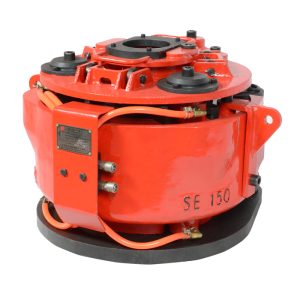
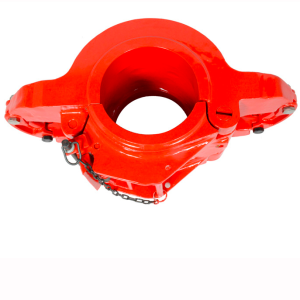
SGPE supplies Tubing Elevators for lifting, supporting and handling production tubing during tubing running, tubing pulling, oil and gas well workover, completion, recompletion, well servicing and production well intervention.
The range includes Y-Series Slip Type Tubing Elevators, TA Type Split Elevators and selected CD Type Side-Opening Elevators. These configurations allow workover contractors, well-service companies and oilfield operators to match the elevator to the tubing OD, connection profile, suspended load and rig arrangement.
For conventional production tubing, the main Y-Series models are LYT, MYT, YT and HYT. Their published pipe OD range extends from approximately 1.05 to 3-1/2 in (26.7–88.9 mm), with rated capacities from 20 to 150 short tons (180–1350 kN).
For selected NU and EU tubing programs, SGPE also supplies TA-35, TA-65 and TA-100 elevators. Where a side-opening structure better suits the rig-floor procedure, selected CD-80 and CD-150 models provide additional options for common tubing sizes and higher-load service.
Applicable elevator ranges are manufactured according to API Spec 8C requirements for drilling and production hoisting equipment.
Typical operating environments include workover rigs, pulling units, well-service rigs, completion units, production well maintenance sites and selected offshore well-service operations.
For model selection, provide the tubing OD, tubing type, connection or NU/EU profile, tubing unit weight, total string length, maximum suspended load, required capacity, elevator-link information and rig type.
Email: info@sgpe.com
Tel / WhatsApp: +86 186-1599-5239
Tubing Elevator Product Overview
| Parameter | Specification / Supply Range |
|---|---|
| Product Name | Tubing Elevator |
| Product Category | Oilfield Hoisting & Tubular Handling Equipment |
| Main Designs | Slip Type / Split Type / Side-Opening Type |
| Primary Y-Series Models | LYT / MYT / YT / HYT |
| TA Tubing Models | TA-35 / TA-65 / TA-100 |
| Selected CD Models | CD-80 / CD-150 |
| Standard Basis | Applicable API Spec 8C Requirements |
| Primary Tubular | Production Tubing |
| Tubing Types | Conventional / NU / EU / Selected Integral-Joint / Workover Tubing |
| Primary Y-Series OD Range | Approx. 1.05–3-1/2 in |
| Primary Y-Series Capacity | 20–150 Short Tons |
| TA Capacity Options | 35 / 65 / 100 Short Tons |
| Selected CD Capacity Options | 80 / 150 Short Tons |
| Y-Series Body Material | High-Strength Alloy Steel |
| Main Operations | Running / Pulling / Workover / Completion / Well Service |
| Artificial Lift Applications | Rod-Pump Service / Selected ESP Tubing Handling |
| Typical Equipment | Workover Rig / Pulling Unit / Well-Service Rig / Completion Unit |
| Selection Basis | Tubing OD + Connection + Suspended Load + Rig + Elevator Links |
Main Types of Tubing Elevators
The correct elevator depends on how the tubing is supported, the outside profile around the connection and the required lifting load.
| Elevator Type | Common Models | Design | Typical Application |
|---|---|---|---|
| Slip Type Tubing Elevator | LYT / MYT / YT / HYT | Slips grip the tubing body | Production tubing, workover, selected integral-joint tubing |
| Split Type Tubing Elevator | TA-35 / TA-65 / TA-100 | Split body with specified aperture | NU tubing, EU tubing and workover |
| Side-Opening Tubing Elevator | CD-80 / CD-150 | Side-opening flat-step structure | Production tubing and higher-load service |
For most production tubing programs, LYT, MYT, YT and HYT provide the main selection range.
TA elevators are suited to projects where a defined aperture and NU/EU compatibility matter. Selected CD models provide a side-opening alternative when the rig-floor procedure calls for that structure.
Y-Series Slip Type Tubing Elevator
The Y-Series uses slips and inserts to grip the tubing body directly. This design suits repeated tubing running and pulling and can also support selected tubing profiles that do not rely only on a conventional coupling shoulder.
Y-Series Tubing Elevator Specifications
| Model | Applicable Tubing / Pipe OD | Rated Load | Typical Application |
|---|---|---|---|
| LYT | 26.7–52.4 mm / 1.05–2-1/16 in | 180 kN / 20 Short Tons | Small tubing and lighter well-service work |
| MYT | 33.4–73 mm / 1.315–2-7/8 in | 360 kN / 40 Short Tons | Small and medium production tubing |
| YT | 33.4–88.9 mm / 1.315–3-1/2 in | 675 kN / 75 Short Tons | General workover and tubing service |
| HYT | 60.3–88.9 mm / 2-3/8–3-1/2 in | 1350 kN / 150 Short Tons | Higher-load tubing and demanding workover |
The tubing OD and maximum suspended load must both fall within the selected model’s operating range.
LYT Tubing Elevator – 20 Short Tons
The LYT Tubing Elevator covers approximately 1.05 to 2-1/16 in (26.7–52.4 mm) and has a rated capacity of 20 short tons / 180 kN.
As the lower-capacity option in the tubing-focused Y-Series range, LYT is suited to smaller-diameter tubing strings where the expected suspended load remains relatively light. Its size range makes it a practical choice for smaller production tubing and routine well-service requirements without moving to a heavier elevator than the job requires.
When evaluating a 20 Ton Tubing Elevator, confirm the actual tubing OD and calculated suspended load to ensure both fall within the published operating range.
MYT Tubing Elevator – 40 Short Tons
The MYT Tubing Elevator covers approximately 1.315 to 2-7/8 in (33.4–73 mm) and provides a rated capacity of 40 short tons / 360 kN.
MYT occupies the middle of the Y-Series range and covers several frequently used production tubing diameters. Its published range includes common 2-3/8 in and 2-7/8 in tubing, making it suitable for projects that need more lifting capacity than LYT while remaining below the 75-ton class.
For MYT selection, tubing size alone is not sufficient. The final choice should also reflect tubing unit weight, total string length and maximum suspended load.
YT Tubing Elevator – 75 Short Tons
The YT Tubing Elevator covers approximately 1.315 to 3-1/2 in (33.4–88.9 mm) and carries a rated capacity of 75 short tons / 675 kN.
Among the main tubing-focused Y-Series models, YT offers the broadest published size range, extending from smaller production tubing up to 3-1/2 in. This makes it a flexible option where one elevator family needs to cover several tubing sizes within a 75-ton load class.
Common tubing sizes within the published range include approximately 2-3/8 in, 2-7/8 in and 3-1/2 in. For these sizes, the deciding factor between YT and another model is often the calculated suspended load rather than diameter alone.
HYT Tubing Elevator – 150 Short Tons
The HYT Tubing Elevator covers approximately 2-3/8 to 3-1/2 in (60.3–88.9 mm) and has a rated capacity of 150 short tons / 1350 kN.
HYT provides the highest rated capacity in the main tubing-focused Y-Series range while concentrating on common larger production tubing sizes. It is intended for heavier tubing strings and operating conditions where the required lifting capacity exceeds the range of MYT or YT.
Because HYT shares part of its tubing-size range with lower-capacity models, selection should be based on the actual string weight and maximum expected suspended load. A higher rated capacity should be chosen because the operating load requires it, not simply because the tubing diameter fits the published range.
TA Type Tubing Elevator for NU and EU Tubing
SGPE TA Type Elevators use a split-body structure with specified apertures.
In tubing applications, NU means Non-Upset Tubing, while EU means External Upset Tubing. Because an external upset changes the outside profile near the connection, the selected aperture needs to match the actual tubing dimensions.
TA Tubing Elevator Specifications
| Model | NU Tubing Range | EU Tubing Range | Rated Load |
|---|---|---|---|
| TA-35 | 1.05–2-7/8 in | 1.05–2-7/8 in | 35 Short Tons |
| TA-65 | 1.66–2-7/8 in | 1.66–2-7/8 in | 65 Short Tons |
| TA-100 | 2-3/8–5 in | 2-3/8–4-1/2 in | 100 Short Tons |
TA-35 suits lighter tubing programs, TA-65 provides a medium-capacity option, and TA-100 extends the range for larger NU and EU tubing.
For custom apertures or replacement equipment, include the actual tubing dimensions and connection profile in the RFQ.
CD Side-Opening Tubing Elevator
Selected CD Type Side-Opening Flat-Step Elevators provide another option for production tubing and workover service.
The side-opening body allows crews to position the elevator around the tubular from the side, which can suit specific rig-floor handling procedures.
| Model | Published Pipe OD Range | Rated Capacity | Typical Application |
|---|---|---|---|
| CD-80 | 2-3/8–2-7/8 in | 80 Short Tons | Production tubing and workover |
| CD-150 | 2-3/8–4 in | 150 Short Tons | Higher-load tubing and well service |
For a Side Opening Tubing Elevator, confirm the bore size, tubing profile and maximum suspended load before ordering.
Tubing Elevator Capacity Comparison
Rated capacity should match the actual suspended tubing load. Choosing a higher-capacity model does not automatically make it more suitable.
| Capacity | Common Model | Typical Positioning |
|---|---|---|
| 20 Tons | LYT | Smaller production tubing |
| 35 Tons | TA-35 | Light NU/EU tubing handling |
| 40 Tons | MYT | Common production tubing |
| 65 Tons | TA-65 | Medium-duty tubing handling |
| 75 Tons | YT | General workover applications |
| 80 Tons | CD-80 | Side-opening tubing handling |
| 100 Tons | TA-100 | Higher-load NU/EU tubing |
| 150 Tons | HYT / CD-150 | Heavy tubing and demanding workover |
Tubing OD, connection geometry, support method, elevator links and rig compatibility remain essential selection factors.
Tubing Elevator Sizes and Model Selection
Many procurement inquiries begin with tubing diameter.
| Tubing Size | Possible Starting Models | Main Selection Factor |
|---|---|---|
| 1.05 in | LYT / TA-35 | Actual OD + load |
| 1.315 in | LYT / MYT / YT / TA-35 | Gripping method + load |
| 1.66 in | LYT / MYT / YT / TA-35 / TA-65 | Tubing style |
| 1.90 in | LYT / MYT / YT / TA-35 / TA-65 | NU/EU + load |
| 2-1/16 in | LYT / MYT / YT / TA-35 / TA-65 | Profile + load |
| 2-3/8 in | MYT / YT / HYT / TA / CD | Maximum suspended load |
| 2-7/8 in | MYT / YT / HYT / TA / CD | Load + tubing type |
| 3-1/2 in | YT / HYT / TA-100 / CD-150 | Required capacity |
| 4 in | TA-100 / CD-150 | Tubing configuration |
| 4-1/2 in | Selected TA-100 configuration | Confirm actual profile |
| 5 in | Selected TA-100 NU configuration | Special large-bore requirement |
This table provides an initial reference only. Final selection should follow the actual tubing dimensions, connection profile, suspended load and rig arrangement.
2-3/8 in Tubing Elevator
2-3/8 in tubing falls within the published range of several SGPE elevator models, including MYT, YT, HYT and selected TA or CD configurations.
Because the same tubing size can be handled by elevators with different structures and rated capacities, the correct 2-3/8 in Tubing Elevator should be selected according to the tubing profile, connection type and maximum suspended load rather than nominal size alone.
For standard production tubing, MYT or YT may suit moderate-load requirements, while HYT provides a higher-capacity option. TA and CD models may be considered where a split-type or side-opening structure better matches the tubing profile or rig-handling procedure.
2-7/8 in Tubing Elevator
2-7/8 in tubing is also covered by several SGPE Tubing Elevator configurations, including MYT, YT, HYT and selected TA or CD models.
This gives buyers several possible starting points, but model selection should account for more than the 2-7/8 in tubing size. Tubing unit weight, total string length, connection geometry and expected suspended load can change the required elevator capacity significantly.
For this reason, two projects using the same nominal tubing size may require different elevator models. The most suitable 2-7/8 in Tubing Elevator is the one that matches both the tubing profile and the calculated operating load.
3-1/2 in Tubing Elevator
For 3-1/2 in tubing, YT and HYT provide two main Y-Series capacity options. YT carries a rated load of 75 short tons, while HYT carries 150 short tons.
Selected TA-100 and CD-150 configurations can also cover 3-1/2 in tubing within their published ranges, providing alternatives where a split-type or side-opening design is preferred.
When selecting a 3-1/2 in Tubing Elevator, compare the tubing connection profile, support method and maximum suspended load before choosing between the available configurations. The higher-capacity model should be used when the operating load requires it, not simply because the nominal tubing size fits the range.
Tubing Elevator for Tubing Running and Completion
During well completion, the elevator supports production tubing while crews build and lower the string into the well.
The tool travels with the hoisting system as the crew picks up, positions, connects and lowers each tubing joint or stand.
Typical operations include new production tubing installation, recompletion, tubing replacement, ESP installation and artificial lift conversion.
The same handling equipment can later support tubing retrieval and rerunning during workover or production intervention.
Workover Tubing Elevator for Tubing Pulling
During workover, the elevator supports the production string while a workover rig, pulling unit or well-service rig raises tubing from the well.
Crews may pull tubing because of corrosion, leakage, mechanical damage, downhole pump failure, artificial lift repair, completion servicing or routine inspection.
The equipment can support removal of the existing string, tubing inspection and installation of a repaired or replacement string.
Because well depth and tubing weight vary between jobs, the maximum expected suspended load should guide capacity selection.
Tubing Elevator for Pulling Units and Well-Service Rigs
Pulling units and well-service rigs handle production tubing during maintenance of producing wells.
Typical work includes tubing retrieval, tubing rerunning, pump replacement, tubing inspection, leak repair and artificial lift service.
Contractors operating across different fields may handle several tubing sizes and string weights, so more than one elevator capacity or configuration may be required.
For a Tubing Elevator for a Pulling Unit or Well-Service Rig, provide the rig hoisting capacity and existing elevator-link information whenever possible.
Tubing Elevator for Rod-Pump Well Service
Rod-pumped wells contain both sucker rods and production tubing.
During many workover jobs, crews retrieve the sucker rod string before pulling the tubing to reach the downhole pump or inspect the production string.
A Sucker Rod Elevator handles the rod string, while the Tubing Elevator supports production tubing.
Typical jobs include pump repair, tubing inspection, tubing replacement and return-to-production work.
Tubing Elevator for ESP Workover
Electric submersible pump systems often use production tubing together with additional completion equipment.
Selected elevator configurations can support tubing during ESP installation, ESP retrieval, pump replacement and ESP workover.
Because ESP completion equipment can increase suspended weight and change the string arrangement, provide the complete tubing and completion data rather than tubing diameter alone.
SGPE can then review the required capacity and elevator structure against the actual well program.
Integral-Joint Tubing Elevator
Integral-joint tubing can have a different outside profile from conventional coupled tubing.
A Slip Type Tubing Elevator may provide a practical handling option because its slips grip the tubular body directly.
For an integral-joint requirement, provide the tubing OD, connection profile, unit weight, string length, maximum suspended load, rig type and intended operation.
SGPE can then review the required slip and insert configuration.
NU, EU and Conventional Tubing
| Tubing Type | Description | Main Selection Consideration |
|---|---|---|
| NU Tubing | Non-Upset Tubing | Confirm tubing body and coupling dimensions |
| EU Tubing | External Upset Tubing | Allow for the larger upset profile |
| Integral-Joint Tubing | Integral connection without conventional coupling | Slip-type gripping may suit the body profile |
| Conventional Coupled Tubing | Standard production tubing with coupling | Select by OD, coupling profile and suspended load |
This distinction becomes especially important when selecting a fixed-aperture TA elevator.
Tubing Elevator Application Matrix
| Application | Typical Rig / Unit | Main Selection Focus |
|---|---|---|
| Tubing Running | Workover / Completion Rig | OD + Connection + Load |
| Tubing Pulling | Pulling Unit / Workover Rig | Maximum Suspended Load |
| Oil Well Workover | Workover Rig | Tubing Program + Links |
| Gas Well Workover | Workover / Service Unit | OD + Load + Connection |
| Well Servicing | Well-Service Rig | Repeated Handling |
| Completion | Drilling / Completion Unit | Production Tubing String |
| Recompletion | Workover / Completion Unit | Existing + New Tubing |
| Rod-Pump Service | Pulling / Workover Unit | Tubing + Sucker Rod Program |
| ESP Workover | Workover / Service Rig | Tubing + Completion Load |
| Production Intervention | Workover / Service Unit | Existing Tubing Condition |
| Selected Offshore Service | Platform / Service Unit | Load + Documentation |
API Spec 8C Tubing Elevator
Tubing elevators fall within the drilling and production hoisting equipment category covered by API Spec 8C.
SGPE manufactures applicable elevator ranges according to API Spec 8C requirements.
If a project requires specific inspection, load testing, material documentation, third-party verification, certification or Monogram status, identify those requirements in the RFQ.
Manufacturing according to API Spec 8C requirements and holding a specific certification or API Monogram are separate matters. Project documentation requirements should therefore be confirmed before quotation.
How to Select the Right Tubing Elevator
The correct model depends on more than nominal tubing size.
| Selection Parameter | Why It Matters |
|---|---|
| Actual Tubing OD | Determines the required gripping or aperture size |
| Tubing Type | Identifies conventional, NU, EU or integral-joint requirements |
| Connection Profile | Affects clearance and gripping geometry |
| Tubing Unit Weight | Helps calculate total string weight |
| String Length | Directly affects suspended load |
| Maximum Suspended Load | Determines required lifting capacity |
| Well Depth | Helps define the tubing program |
| Completion Equipment Weight | Adds to suspended load |
| Elevator Type | Determines the support or gripping method |
| Elevator Links | Must match the elevator and hoisting system |
| Rig Type | Affects the handling arrangement |
| Special String Design | ESP and integral-joint strings need additional review |
| Inspection Requirements | Affect the required documentation package |
| Spare Parts Requirements | Support long-term field service |
Do not select an elevator only because its bore or slip range matches the tubing OD. The rated load, connection geometry and rig compatibility must also meet the operating requirement.
Quick Model Selection Guide
| Requirement | Recommended Starting Point |
|---|---|
| Small tubing and lighter string | LYT 20 Ton |
| Small / medium tubing, moderate load | MYT 40 Ton |
| Broad tubing range to 3-1/2 in | YT 75 Ton |
| Heavy 2-3/8–3-1/2 in tubing | HYT 150 Ton |
| NU / EU tubing with lighter load | TA-35 / TA-65 |
| Larger NU / EU tubing | TA-100 |
| Side-opening 2-3/8–2-7/8 in service | CD-80 |
| Higher-load side-opening service | CD-150 |
| Integral-joint tubing | Slip-type configuration review |
| ESP tubing string | Complete tubing and completion-string review |
| Deep-well workover | Select by calculated maximum suspended load |
| Pulling-unit application | Confirm elevator links and hoisting system |
| Replacement elevator | Provide model, nameplate and photos |
Tubing Elevator Spare Parts and Replacement
Oilfield elevators contain load-bearing and wear components that may require replacement during long-term field service.
Depending on the model, spare requirements can include slips, slip inserts, dies, setting plates, insert retainers, latch components, hinge pins, springs, link blocks, pins and other wear parts.
Part numbers and interchangeability depend on the exact elevator configuration.
For a replacement Tubing Elevator or spare-parts inquiry, provide the existing model, tubing size, part number if available and clear photographs.
This information can help identify Tubing Elevator Slips, Tubing Elevator Inserts, YT Elevator Parts, MYT Elevator Parts and other replacement components.
Inspection and Maintenance
Tubing-handling equipment operates under repeated lifting loads, so regular inspection is essential.
Crews should inspect the elevator body, slips, inserts, gripping surfaces, bore or contact areas, latch mechanism, safety latch, hinges, pins, springs, retainers, link contact areas and other load-bearing components.
Check for cracks, deformation, corrosion, excessive wear, damaged gripping surfaces, loose hardware, impact damage or abnormal movement.
After field use, clean the equipment and lubricate moving components according to the applicable operating instructions.
Do not continue using equipment when structural damage or wear exceeds the permitted operating condition.
Related Oilfield Tubular Handling Equipment
A complete tubing-handling system can include several tools during the same completion, workover or well-service job.
| Equipment | Main Function |
|---|---|
| Tubing Elevator | Lifts and lowers the production tubing string |
| Tubing Spider | Supports tubing at the well center |
| Tubing Slips | Grip tubing during connection work |
| Tubing Power Tong | Makes up and breaks out tubing connections |
| Tubing Manual Tong | Applies or reacts connection torque |
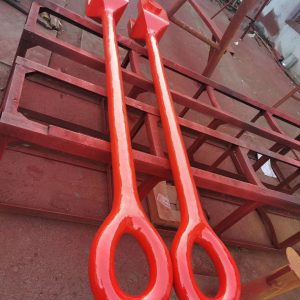
| Elevator Links | Connect the elevator to the traveling system |
| Single Joint Elevator | Handles individual tubing joints |
| Sucker Rod Elevator | Handles sucker rods |
| Casing Elevator | Handles casing strings |
| Drill Pipe Elevator | Handles drill pipe during drilling and tripping |
These related products can be combined with the elevator as part of a broader tubing-running, workover or well-service equipment package.
Why Choose SGPE?
SGPE offers several Tubing Elevator families rather than relying on a single configuration.
The range includes LYT, MYT, YT, HYT, TA and selected CD models, giving buyers options for different tubing sizes, support methods and lifting capacities.
SGPE can review conventional production tubing, NU tubing, EU tubing and selected integral-joint tubing. Selected ESP-related requirements, custom TA apertures and replacement equipment can also be reviewed during technical selection.
For replacement projects, customers can send the existing model, nameplate, bore marking and photographs so SGPE can compare the requirement with available configurations.
Spare slips, inserts and other wear components can be included in the same RFQ.
Information Required for a Tubing Elevator RFQ
For accurate selection and quotation, provide as much of the following information as possible.
| RFQ Information | Recommended Detail |
|---|---|
| Tubing OD | Actual outside diameter |
| Nominal Tubing Size | API or project designation |
| Tubing Type | Conventional / NU / EU / Integral-Joint |
| Connection Type | Coupling or connection information |
| Tubing Grade | If available |
| Tubing Unit Weight | Weight per unit length |
| String Length | Total tubing-string length |
| Maximum Suspended Load | Calculated operating load |
| Well Depth | Project information |
| Required Capacity | If specified |
| Preferred Elevator Type | Slip / Split / Side Opening |
| Rig Type | Workover / Pulling / Well Service / Completion |
| Elevator Links | Size or existing equipment information |
| Quantity | Required units |
| Destination | Country / port |
| Inspection Requirement | Customer or project scope |
| Documentation Requirement | Certificates or reports requested |
| Spare Parts | Slips / inserts / wear components |
For replacement equipment, also provide the existing model, nameplate, bore or size marking and clear photographs.
Frequently Asked Questions About Tubing Elevators
1. What is a Tubing Elevator used for?
A Tubing Elevator lifts, supports and positions production tubing during tubing running, tubing pulling, workover, completion, recompletion and well-service operations. Elevator links connect the tool to the rig hoisting system, allowing it to move with the tubing string as crews raise or lower the pipe.
Crews use Tubing Elevators for production tubing installation, tubing recovery, tubing replacement, production well maintenance and artificial lift service. Typical operating equipment includes workover rigs, pulling units, well-service rigs and completion units.
2. What are the main types of Tubing Elevators?
The main designs include Slip Type Tubing Elevators, Split Type Tubing Elevators and Side-Opening Tubing Elevators. Each design supports the tubing differently, so tubing OD, connection profile, suspended load and rig-handling procedure all influence the final choice.
SGPE supplies LYT, MYT, YT and HYT Slip Type Tubing Elevators, TA-35, TA-65 and TA-100 Split Type Elevators, and selected CD-80 and CD-150 Side-Opening Elevators. Slip-type models grip the tubing body directly. TA models suit selected NU and EU tubing programs, while CD models provide a side-opening option for specific workover and tubing-handling requirements.
3. Does SGPE supply API Spec 8C Tubing Elevators?
SGPE manufactures applicable Tubing Elevator ranges according to API Spec 8C requirements for drilling and production hoisting equipment. These models support oilfield operations such as tubing running, tubing pulling, workover and well servicing.
If your project requires load testing, material documentation, third-party inspection, specific certification or API Monogram status, include those requirements in the RFQ. Manufacturing according to API Spec 8C requirements does not automatically mean that every model carries a specific certification or Monogram, so confirm the required documentation before ordering.
4. What Tubing Elevator models does SGPE offer for production tubing?
SGPE offers the LYT 20 Ton, MYT 40 Ton, YT 75 Ton and HYT 150 Ton Tubing Elevators as the main tubing-focused Y-Series. These slip-type models cover different tubing diameters and load requirements for production tubing handling.
SGPE also supplies TA-35, TA-65 and TA-100 models for selected NU and EU tubing, together with selected CD-80 and CD-150 Side-Opening Elevators. To choose the correct model, compare the actual tubing OD, connection geometry, suspended string load and rig arrangement rather than capacity alone.
5. What tubing sizes can SGPE Tubing Elevators handle?
The primary Y-Series covers published tubing or pipe OD ranges from approximately 1.05 to 3-1/2 in. Common production tubing sizes within this range include 2-3/8 in, 2-7/8 in and 3-1/2 in.
Selected TA configurations extend NU tubing coverage to approximately 5 in, while selected CD models cover additional sizes beginning around 2-3/8 in. Because connection profiles and string loads can differ even at the same nominal size, always compare the actual tubing dimensions and operating load with the selected elevator range.
6. Which Tubing Elevator fits 2-3/8, 2-7/8 or 3-1/2 in tubing?
For 2-3/8 in and 2-7/8 in tubing, MYT, YT, HYT and selected TA or CD configurations provide possible starting points. The right model depends on the required capacity, tubing profile and preferred elevator structure.
For 3-1/2 in tubing, YT provides a 75-ton option and HYT provides a 150-ton option. TA-100 and CD-150 can also cover selected 3-1/2 in applications within their published ranges. When choosing a 2-3/8, 2-7/8 or 3-1/2 in Tubing Elevator, consider both tubing size and maximum suspended load.
7. What is the difference between a YT 75 Ton and HYT 150 Ton Tubing Elevator?
The YT Tubing Elevator covers approximately 1.315 to 3-1/2 in and carries a rated load of 75 short tons / 675 kN. Its broad size range suits many production tubing, workover and well-service requirements.
The HYT Tubing Elevator covers approximately 2-3/8 to 3-1/2 in and carries a rated load of 150 short tons / 1350 kN. HYT suits heavier tubing strings and higher-load workover requirements. Choose between YT and HYT according to the actual string weight, tubing OD, connection profile and rig arrangement rather than choosing the higher capacity automatically.
8. Can Tubing Elevators work on pulling units and workover rigs?
Yes. Crews commonly use Tubing Elevators on pulling units, workover rigs and well-service rigs when they retrieve, replace or rerun production tubing.
Typical jobs include tubing leak repair, tubing inspection, downhole pump servicing, tubing replacement, artificial lift maintenance and production well intervention. For a Tubing Elevator for Pulling Unit or Workover Rig applications, confirm the tubing size, expected suspended load, rig hoisting capacity and elevator-link arrangement before selecting the model.
9. Can a Slip Type Tubing Elevator handle integral-joint tubing?
Selected Slip Type Tubing Elevator configurations can handle integral-joint tubing because their slips grip the tubular body directly rather than relying only on a conventional coupling shoulder.
Integral-joint tubing may have a different outside profile from standard coupled tubing, so SGPE needs the actual tubing OD, connection profile, unit weight, string length and maximum suspended load to review the requirement. This information also helps determine the appropriate slip and insert configuration for an Integral-Joint Tubing Elevator.
10. Can a Tubing Elevator support ESP installation and workover?
Selected Tubing Elevator configurations can support production tubing during ESP installation, ESP retrieval, pump replacement and ESP workover.
ESP completion equipment may add significant suspended weight and change the overall tubing-string arrangement. For this reason, provide the tubing OD, tubing weight, total string length, completion equipment weight and expected suspended load rather than tubing size alone. SGPE can use this information to review the required elevator capacity and configuration for the ESP workover program.
11. How do I select the correct Tubing Elevator?
Start with the actual tubing OD and maximum suspended load. Then review the tubing type, connection profile, unit weight, total string length, well depth, rig type and elevator-link arrangement.
For conventional production tubing, LYT, MYT, YT and HYT provide common starting points. TA models can suit selected NU and EU tubing, while CD models provide a side-opening option for specific handling requirements. Deep-well workover, integral-joint tubing and ESP strings require additional attention because their tubing profiles and suspended loads can differ from routine well-service applications.
12. What information should I send SGPE for a Tubing Elevator quotation?
For an accurate Tubing Elevator price and quotation, send the tubing OD, nominal tubing size, tubing type, connection or NU/EU profile, unit weight, total string length, maximum suspended load, required capacity, rig type, elevator-link information, quantity and destination.
For a replacement Tubing Elevator, also send the existing model, nameplate, bore or size marking and clear photographs when available. Include any requirements for spare slips, inserts, inspection reports, third-party verification or project documentation. SGPE will review the operating conditions, recommend a suitable configuration and provide the corresponding project-specific quotation.
Request an API 8C Tubing Elevator Quote from SGPE
If you are sourcing a Tubing Elevator manufacturer or supplier for production tubing, workover or well-service operations, SGPE can help match the elevator to your tubing size, connection profile, suspended load and rig requirements.
Available models include LYT 20 Ton, MYT 40 Ton, YT 75 Ton, HYT 150 Ton, TA-35, TA-65, TA-100, CD-80 and CD-150. The range covers API Spec 8C Tubing Elevators, Slip Type Tubing Elevators, Workover Tubing Elevators, NU/EU Tubing Elevators and Integral-Joint Tubing Elevators, including common 2-3/8, 2-7/8 and 3-1/2 in tubing applications.
To obtain an accurate Tubing Elevator price, please provide the tubing OD, type, connection, unit weight, total string length, maximum suspended load, required capacity, rig type, quantity and destination. For replacement equipment, include the existing model, nameplate and clear photographs when available.
Email: info@sgpe.com
Tel / WhatsApp: +86 186-1599-5239