Description
Tubing Power Tong for Well Servicing, Tubing Running & Artificial Lift Workover
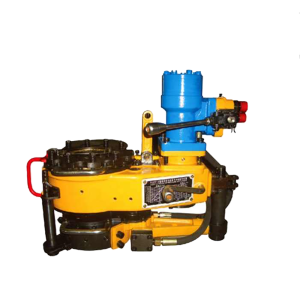
SGPE supplies Tubing Power Tong systems for controlled make-up and break-out of production tubing during oil and gas well workover, well servicing, tubing running, completion, recompletion, artificial lift maintenance, and well intervention.
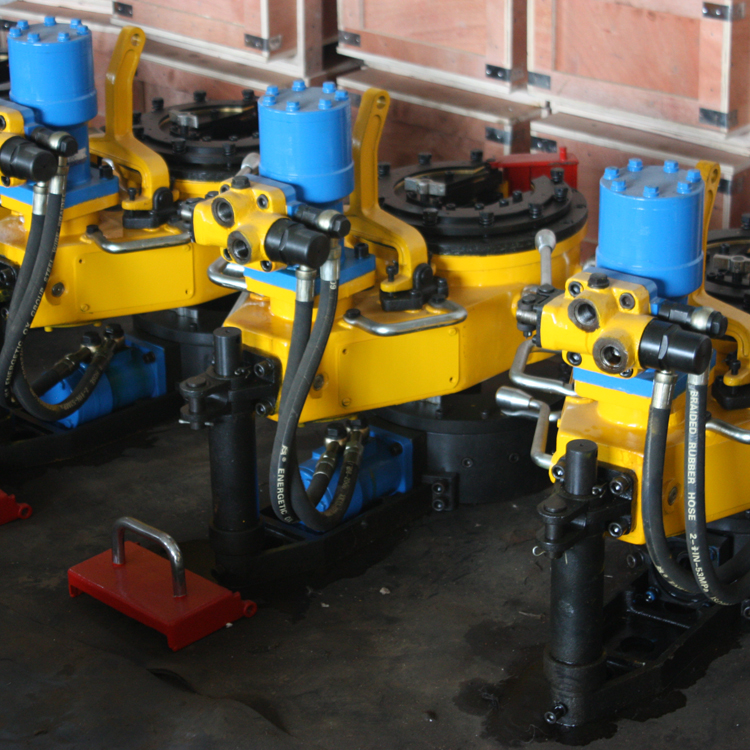
Also known as a Hydraulic Tubing Tong, Hydraulic Power Tong for Tubing, Workover Power Tong, Service Rig Power Tong, or Oilfield Tubing Tong, this equipment grips the tubing and applies hydraulic rotational torque to threaded connections.
A complete Power Tong with Hydraulic Backup Tong allows the main tong to rotate the upper tubing joint while the backup tong holds the lower tubular. The two units work together to control reaction torque, stabilize the connection, and reduce manual backup-tong handling around the well center.
SGPE offers XQ-series hydraulic tubing tongs for common production tubing sizes and selected larger tubular applications. The range covers compact well-service equipment, medium-duty workover tongs, and higher-torque configurations for difficult break-out conditions.
Depending on the project, the package can include the main tong, hydraulic backup tong, interchangeable jaws and dies, torque indication or monitoring equipment, hydraulic hoses, quick couplings, suspension equipment, an independent hydraulic power unit, extended backup guides, and recommended spare parts.
If you need a 2-7/8 in. Tubing Power Tong, 5-1/2 in. Hydraulic Tubing Tong, Hydraulic Power Tong for a Workover Rig, or a complete Tubing Make-Up and Break-Out System, send SGPE the tubing size, coupling OD, connection type, required torque, and available hydraulic data.
Contact Us for a Quote
Email: info@sgpe.com
Tel / WhatsApp: +86 186-1599-5239
Tubing Power Tong Technical Specifications
| Parameter | Typical Supply Range / Configuration |
|---|---|
| Product | Tubing Power Tong |
| Alternative Names | Hydraulic Tubing Tong, Hydraulic Power Tong for Tubing, Workover Power Tong, Service Rig Power Tong, Oilfield Tubing Tong |
| Main Function | Production tubing make-up and break-out |
| Drive | Hydraulic |
| Typical Main Tong Range | Approx. 1.660–7-5/8 in., depending on model |
| Typical Backup Tong Range | Up to approx. 8-1/2 in., depending on model |
| Common Tubing Sizes | 2-3/8, 2-7/8, 3-1/2, 4, 4-1/2, 5 and 5-1/2 in. |
| Typical Maximum Torque | Approx. 3.3–40 kN·m |
| Typical Rotation Speed | Approx. 5.9–90 rpm |
| Typical Hydraulic Pressure | Approx. 10–17.5 MPa |
| Typical Maximum Oil Flow | Approx. 80–140 L/min |
| Rotation | Forward / Reverse |
| Speed Arrangement | High / Low or multi-speed, depending on model |
| Backup System | Hydraulic backup tong available |
| Gripping System | Replaceable jaws, dies and inserts |
| Torque Indication | Available |
| Torque Monitoring | Optional |
| Torque Control | Optional |
| Torque Recording | Available for selected configurations |
| Hydraulic Source | Existing rig hydraulic system or independent HPU |
| Suspension | Mechanical or hydraulic options |
| Installation | Workover rig, service rig, completion unit, land wellsite or offshore platform |
| Connection Applications | EUE, NUE and selected premium tubing connections |
| Main Operations | Tubing running, tubing pulling, workover, well service, completion and intervention |
| Spare Parts | Jaws, dies, seals, gears, hydraulic components and wear parts |
| Project Options | Backup tong, HPU, torque system, suspension, jaw range and documentation |
Technical Note: XQ-series power tongs are available in several configurations. Model suffixes, pipe range, hydraulic settings, speed, dimensions, weight, jaw packages, and accessories may vary. The final SGPE quotation and project datasheet define the equipment supplied.
XQ Series Hydraulic Tubing Power Tong Models
The XQ family covers compact Well Service Power Tongs as well as higher-torque equipment for demanding workover programs.
| Reference Model | Main Tong Range | Backup Tong Range | Max. Torque | Speed | Rated Pressure | Max. Oil Flow |
|---|---|---|---|---|---|---|
| XQ89/3YC | 2-3/8–3-1/2 in. | 2-3/8–4-1/2 in. | 3.3 kN·m | 30–90 rpm | 10 MPa | 80 L/min |
| XQ114/6YB | 2-3/8–4-1/2 in. | Approx. 2-7/8–5-1/8 in. | 6 kN·m | 20–85 rpm | 11 MPa | 100 L/min |
| XQ140/12Y | 2-7/8–5-1/2 in. | Approx. 3-1/2–6-1/8 in. | 12 kN·m | 14–72 rpm | 12 MPa | 120 L/min |
| XQ140/20 | Approx. 1.660–5-1/2 in.* | Approx. 2-3/8–6.05 in.* | 20 kN·m | Approx. 13.5–58 rpm* | Approx. 17.5 MPa* | Approx. 140 L/min* |
| XQ140/30 | Approx. 1.660–5-1/2 in.* | Approx. 2-3/8–6.05 in.* | 30 kN·m | Approx. 9–40 rpm* | Approx. 17.5 MPa* | Approx. 140 L/min* |
| XQ194/40 | Approx. 2-3/8–7-5/8 in.* | Up to approx. 8-1/2 in.* | 40 kN·m | Approx. 5.9–25 rpm* | Approx. 17.5 MPa* | Approx. 140 L/min* |
*Reference configuration. Hydraulic systems, gear arrangements, jaw packages, and operating ranges can differ between versions.
Reference Dimensions and Weight
| Reference Model | Overall Dimensions | Approx. Weight with Backup Tong |
|---|---|---|
| XQ89/3YC | 650 × 430 × 550 mm | 158 kg |
| XQ114/6YB | 750 × 500 × 600 mm | 220 kg |
| XQ140/12Y | 1024 × 582 × 539 mm | 480 kg |
| XQ140/20 | Approx. 1115 × 962 × 1665 mm* | Approx. 840 kg* |
| XQ140/30 | Approx. 1180 × 1000 × 1665 mm* | Approx. 860 kg* |
| XQ194/40 | Approx. 1400 × 1190 × 1935 mm* | Approx. 1180 kg* |
*Reference configuration only.
For installations with limited rig-floor space, provide the available working envelope, well-center position, suspension point, and surrounding equipment layout before final model confirmation.
How to Choose the Right XQ Tubing Power Tong
A suitable Hydraulic Tubing Power Tong must match more than nominal pipe diameter. Coupling size, connection design, required torque, expected break-out condition, hydraulic supply, backup-tong range, and rig layout all affect model selection.
| Operating Requirement | Typical Model Direction | Typical Use |
|---|---|---|
| Compact 2-3/8–3-1/2 in. tubing range | XQ89 Series | Routine well service and mobile workover |
| Tubing up to approx. 4-1/2 in. | XQ114 Series | Multi-size production tubing work |
| Tubing up to approx. 5-1/2 in. | XQ140/12 Series | Medium-duty workover and completion |
| Approx. 20 kN·m torque requirement | XQ140/20 Series | Heavy-wall tubing and difficult break-out |
| Approx. 30 kN·m torque requirement | XQ140/30 Series | Heavy workover and mature wells |
| Larger tubulars and approx. 40 kN·m | XQ194/40 Series | Large tubing and selected small casing |
Common Production Tubing Sizes
| Tubing Size | Approx. OD | Selection Consideration |
|---|---|---|
| 2-3/8 in. | 60.3 mm | Compact XQ89 / XQ114 configurations |
| 2-7/8 in. | 73.0 mm | XQ89, XQ114 or XQ140 depending on torque |
| 3-1/2 in. | 88.9 mm | Compact or medium-duty configurations |
| 4 in. | 101.6 mm | Confirm coupling OD and jaw package |
| 4-1/2 in. | 114.3 mm | XQ114 or larger configurations |
| 5 in. | 127.0 mm | Larger XQ-series tongs |
| 5-1/2 in. | 139.7 mm | Common XQ140-series application |
| 7-5/8 in. | 193.7 mm | Selected larger-tubular applications |
2-7/8 in. Tubing Power Tong
A 2-7/8 in. Tubing Power Tong is one of the most common configurations for oilfield workover, production maintenance, tubing pulling, and tubing running.
Compact XQ89 or XQ114 configurations may suit routine well-service operations. A contractor that also handles 3-1/2, 4-1/2, or 5-1/2 in. production tubing may need a wider-range XQ140 configuration with greater torque and backup capacity.
Before selection, confirm the coupling OD, connection type, required make-up torque, expected break-out torque, hydraulic pressure, oil flow, and backup-tong range.
5-1/2 in. Tubing Power Tong
A 5-1/2 in. Tubing Power Tong generally requires a larger XQ-series configuration.
XQ140-series tongs commonly cover this tubing size. However, heavy-wall tubing, a larger coupling, a premium connection, or difficult break-out conditions can change the required main tong, jaw package, backup tong, and hydraulic demand.
For this reason, 5-1/2 in. tong selection should include connection and hydraulic information rather than relying on nominal OD alone.
XQ Power Tong Applications by Model
XQ89 Series
The XQ89 series provides a compact option for routine production tubing and well-service work.
Reference configurations cover common 2-3/8 to 3-1/2 in. tubing applications with relatively low hydraulic demand. Typical jobs include tubing running, tubing pulling, pump service, and routine production-well maintenance.
XQ114 Series
The XQ114 family provides a wider tubing range and greater torque than smaller XQ89 configurations.
It suits contractors that handle several common tubing sizes during workover, tubing replacement, artificial-lift maintenance, completion repair, and mobile service-rig operations.
XQ140/12 Series
The XQ140/12 class combines a broader tubing range with medium-duty torque.
It fits many production-string installation, completion, recompletion, ESP workover, rod-pump service, PCP maintenance, and well-intervention programs.
XQ140/20 and XQ140/30 Series
These higher-torque configurations suit projects where smaller tubing tongs may not provide enough break-out capacity.
Typical applications include heavy-wall production tubing, long-service strings, mature-well workover, higher-torque connections, production-string recovery, and difficult break-out.
Because several XQ140 versions exist, SGPE confirms the final pressure, oil flow, speed, dimensions, and jaw range on the project datasheet.
XQ194/40 Series
The XQ194/40 class extends the range toward larger tubulars and higher torque.
Potential applications include large production tubing, heavy-duty workover, selected small casing, offshore well servicing, high-torque connections, and large-diameter tubular replacement.
Main Features of a Hydraulic Tubing Tong
| Feature | Function | Practical Benefit |
|---|---|---|
| Hydraulic Drive | Rotates the tong head | Faster connection handling |
| Hydraulic Backup Tong | Holds the lower tubular | Controls reaction torque |
| High / Low Speed | Changes speed-to-torque ratio | Fast spinning with controlled final torque |
| Forward / Reverse | Changes rotation direction | Supports make-up and break-out |
| Replaceable Jaws | Matches tubular OD | Covers multiple tubing sizes |
| Dies / Inserts | Provide gripping surface | Supports stable pipe engagement |
| Torque Indication | Shows torque condition | Helps control connection make-up |
| Torque Monitoring | Measures applied torque | Useful for critical connections |
| Torque Recording | Stores connection data | Supports selected project requirements |
| Extended Backup Guide | Changes backup position | Helps with special coupling layouts |
| Suspension System | Supports the tong at well center | Improves positioning |
| Independent HPU | Supplies hydraulic power | Useful when rig hydraulics do not match |
Power Tong with Hydraulic Backup Tong
A Tubing Power Tong with Hydraulic Backup Tong creates a controlled make-up and break-out system.
The main tong grips and rotates the upper tubing joint. The backup tong holds the lower tubular and reacts against the applied torque. This arrangement stabilizes the connection, manages reaction torque, and reduces manual backup work around the well center.
The correct backup tong depends on tubular OD, coupling position, available gripping area, and required holding capacity.
Some service-rig layouts use an extended backup guide so the backup tong can grip the tubing body instead of the coupling. This can help when coupling geometry or available tong position makes standard backup placement difficult.
How Does a Hydraulic Tubing Power Tong Work?
A hydraulic power tong performs four basic tasks: gripping, rotating, applying torque, and reacting torque.
The crew first positions the tong around the upper tubing joint. The jaws grip the tubular, while the hydraulic backup tong secures the lower section when the package includes one.
The hydraulic motor then drives the tong head.
During make-up, the tong spins the connection and applies the required final torque. During break-out, the operator reverses rotation and applies enough torque to release the existing joint.
Once the connection breaks free, the tong can continue spinning until the joint separates.
Good connection quality also depends on correct thread inspection, cleaning, alignment, thread compound, approved make-up torque, and any connection-specific torque-turn procedure.
Oilfield Tubing Power Tong Applications
| Application | Typical Function | Key Selection Factor |
|---|---|---|
| Tubing Running | Make up production tubing | Speed and make-up torque |
| Tubing Pulling | Break out production tubing | Break-out torque |
| Well Workover | Remove and rerun tubing | Size range and torque |
| Well Servicing | Routine tubing handling | Compact size and hydraulic compatibility |
| Completion | Install production tubing | Connection control |
| Recompletion | Replace or modify completion string | Broad operating range |
| ESP Workover | Pull and rerun tubing during ESP service | Size and rig layout |
| Rod-Pump Service | Support tubing and pump maintenance | Service-rig compatibility |
| PCP Service | Pull tubing during downhole equipment work | Torque and backup tong |
| Gas-Lift Service | Handle completion tubing | Connection compatibility |
| Tubing Leak Repair | Remove damaged tubing | Break-out capacity |
| Well Integrity Work | Pull tubing for inspection or repair | Stable gripping |
| Mature-Well Rehabilitation | Recover long-service tubing | Higher break-out torque |
| Offshore Workover | Handle tubing offshore | Footprint and corrosion protection |
| Land Workover | Support mobile workover units | Size, weight and hydraulics |
Workover and Tubing Pulling
During workover, crews often remove an existing production tubing string from the well. A Workover Rig Power Tong breaks out each connection as the tubing reaches the rig floor.
Older connections can require more break-out torque than their original make-up torque. Long service, corrosion, scale, thread damage, temperature exposure, previous over-torque, and thread-compound condition can all affect break-out.
The expected condition of the existing tubing string should therefore form part of model selection.
Tubing Running and Completion
During tubing running, crews repeatedly connect joints while lowering the production string into the well.
A Tubing Running Power Tong helps spin threaded connections and apply controlled final torque. The same equipment can support initial completion, recompletion, production-string replacement, ESP completion, rod-pump completion, PCP completion, and gas-lift completion when the tong and connection requirements match the program.
Artificial Lift Service
Artificial-lift maintenance often requires production tubing retrieval.
During ESP workover, crews may pull tubing together with the completion equipment before servicing or replacing the pump. Rod-pump and PCP jobs can also require tubing removal during pump repair, tubing replacement, or mature-well rehabilitation.
This makes the hydraulic tubing tong an important part of many artificial lift workover and production-maintenance programs.
Tubing Leak and Well Integrity Repair
When a tubing leak or integrity issue requires production-string removal, the tong can break out each connection during retrieval and make up the repaired or replacement string during rerunning.
Typical jobs include corroded tubing replacement, leaking connection repair, damaged tubing recovery, completion repair, and well-integrity remediation.
Hydraulic Power Tong for Workover Rigs and Service Rigs
A Hydraulic Power Tong for a Workover Rig must provide enough torque while still fitting the available rig-floor space and hydraulic system.
Compact configurations suit mobile workover rigs, well-service units, pump-service rigs, production-maintenance units, and remote wellsites. Larger models support heavier workover programs and broader tubing ranges.
Before installation, confirm the well-center location, suspension point, rig-floor clearance, available hydraulic pressure and oil flow, hose routing, and backup-tong working envelope.
These installation details can matter just as much as nominal tubing size.
Onshore and Offshore Tubing Tong Applications
Onshore hydraulic tubing tongs commonly work on land workover rigs, mobile service rigs, mature oilfields, remote production sites, and well-maintenance units.
For these jobs, contractors often prioritize compact dimensions, straightforward maintenance, hydraulic compatibility, fast jaw changes, and spare-parts availability.
An Offshore Tubing Power Tong requires additional review because deck space, lifting, corrosion exposure, equipment weight, suspension, and documentation can become more important.
| Offshore Requirement | Technical Consideration |
|---|---|
| Corrosion Environment | Coating and corrosion protection |
| Limited Deck Space | Overall dimensions and working envelope |
| Lifting | Lifting and suspension arrangement |
| Equipment Weight | Main tong and backup-tong weight |
| Hydraulic Interface | Pressure, flow and connection compatibility |
| Rig-Up | Well-center and suspension geometry |
| Maintenance | Recommended spare-parts package |
| Documentation | End-user inspection and project documents |
EUE, NUE and Premium Tubing Connections
The correct Power Tong for Tubing must match the connection, not just nominal pipe diameter.
| Connection / Tubular Type | Main Selection Consideration |
|---|---|
| EUE Tubing | Tubing OD, coupling OD and make-up torque |
| NUE Tubing | Tubing body, coupling geometry and gripping position |
| Premium Connection | Torque window and torque-turn requirement |
| Heavy-Wall Tubing | Torque capacity and jaw arrangement |
| CRA / Special Material Tubing | Surface protection and gripping review |
| Selected Small Casing | OD, coupling OD, torque and rated capacity |
Power Tong for EUE and NUE Tubing
For EUE tubing, provide tubing OD, coupling OD, grade, weight, connection size, required make-up torque, and expected break-out torque.
NUE tubing uses a different end and coupling arrangement. This can change both main-tong and backup-tong gripping positions.
The same nominal tubing size can therefore require a different jaw or backup configuration when the connection changes.
Tubing Power Tong for Premium Connections
Premium tubing connections need closer control. They may use proprietary thread profiles, metal-to-metal seals, narrow torque windows, or specific make-up procedures.
| Premium Connection Information | Why It Matters |
|---|---|
| Tubing Manufacturer | Identifies the connection family |
| Connection Name | Confirms the running procedure |
| Tubing OD | Confirms tong range |
| Tubing Weight | Identifies the tubular configuration |
| Material Grade | Supports gripping review |
| Minimum Torque | Defines the lower limit |
| Optimum Torque | Defines the target |
| Maximum Torque | Defines the upper limit |
| Torque-Turn Requirement | Determines monitoring requirements |
Hydraulic Power Unit and HPU Compatibility
A Hydraulic Power Unit for a Tubing Power Tong must provide enough pressure and oil flow for the selected model.
Pressure mainly influences available torque. Oil flow strongly affects rotation speed.
Typical Hydraulic Requirements
| Reference Model | Pressure | Maximum Oil Flow |
|---|---|---|
| XQ89/3YC | 10 MPa / approx. 1450 psi | 80 L/min / approx. 21 gpm |
| XQ114/6YB | 11 MPa / approx. 1595 psi | 100 L/min / approx. 26 gpm |
| XQ140/12Y | 12 MPa / approx. 1740 psi | 120 L/min / approx. 32 gpm |
| XQ140/20 | Approx. 17.5 MPa* | Approx. 140 L/min* |
| XQ140/30 | Approx. 17.5 MPa* | Approx. 140 L/min* |
| XQ194/40 | Approx. 17.5 MPa* | Approx. 140 L/min* |
*Final values depend on the confirmed configuration.
HPU Information Required
| Hydraulic Information | Why It Matters |
|---|---|
| Maximum Pressure | Confirms available torque |
| Normal Working Pressure | Confirms normal operating range |
| Maximum Oil Flow | Confirms tong speed capability |
| Supply Port | Confirms hydraulic connection |
| Return Port | Confirms return-line interface |
| Thread Type | Prevents fitting mismatch |
| Supply Hose Size | Affects pressure loss and flow |
| Return Hose Size | Supports correct oil return |
| Hydraulic Fluid | Confirms system compatibility |
| HPU Model / Datasheet | Allows full technical review |
If the rig already has an HPU, send its nameplate or datasheet with the RFQ.
SGPE can also review a complete Tubing Power Tong with HPU package when the existing hydraulic system does not provide suitable pressure, oil flow, or hydraulic connections.
Torque Control and Torque Monitoring
Correct torque matters during tubing installation, workover, and connection repair.
| Torque Term | Meaning |
|---|---|
| Make-Up Torque | Torque used to tighten the connection |
| Optimum Torque | Preferred target for applicable connections |
| Maximum Connection Torque | Upper permitted torque |
| Break-Out Torque | Torque required to release an existing connection |
| Tong Maximum Torque | Maximum output capability of the tong |
Available options may include hydraulic pressure indication, a torque gauge, digital torque display, torque measurement, torque recording, or a project-specific torque-control system.
A Hydraulic Power Tong with Torque Control can provide closer connection control for premium tubing, higher-grade tubulars, and completion programs with defined torque windows.
Where the connection procedure requires it, power tong torque-turn monitoring can also form part of the project review.
More available tong torque does not mean the operator should exceed the connection limit. The connection manufacturer’s approved running procedure should control final make-up.
Tubing Power Tong vs. Casing Power Tong vs. Drill Pipe Power Tong
| Feature | Tubing Power Tong | Casing Power Tong | Drill Pipe Power Tong |
|---|---|---|---|
| Main Tubular | Production tubing | Casing | Drill pipe / tool joint |
| Main Operation | Workover / well service | Casing running | Drilling |
| Typical Diameter | Smaller | Larger | Tool-joint dependent |
| Torque Requirement | Model-dependent | Generally higher | Connection-specific |
| Backup Tong | Common | Common | System-dependent |
| Typical Product Family | XQ | TQ | ZQ / project-specific |
A tubular that physically fits inside a tong is not automatically suitable for that equipment.
Always review coupling or tool-joint OD, make-up torque, break-out torque, gripping location, backup method, and hydraulic requirements before using one tong for another tubular type.
Main Components and Optional Equipment
| Component / Option | Function |
|---|---|
| Main Power Tong | Grips and rotates the upper tubing joint |
| Hydraulic Backup Tong | Holds the lower tubular |
| Tong Head | Houses the gripping and rotation mechanism |
| Jaw Assembly | Positions gripping components |
| Tubing Jaws | Match the tubular diameter |
| Dies / Inserts | Grip the pipe surface |
| Hydraulic Motor | Converts hydraulic energy into rotation |
| Gear Transmission | Changes speed and torque |
| Hydraulic Control Valve | Controls tong functions |
| Brake Mechanism | Supports tong-head operation |
| Suspension System | Supports and positions the tong |
| Extended Backup Guide | Adjusts backup position |
| Hydraulic Hoses | Connect the tong to the hydraulic source |
| Quick Couplings | Speed up rig-up |
| Independent HPU | Provides hydraulic power |
| Torque Gauge | Provides torque indication |
| Digital Torque System | Supports monitoring or recording |
| Spare-Parts Kit | Supports field maintenance |
Tubing Power Tong Jaws, Dies and Inserts
Power Tong Jaws, Tubing Tong Dies, and Tong Inserts form the gripping interface between the tong and production tubing.
Different jaw packages can cover common sizes such as 2-3/8, 2-7/8, 3-1/2, 4, 4-1/2, 5, and 5-1/2 in., depending on the tong model.
When ordering replacement gripping parts, provide the existing tong manufacturer and model, tubing size, jaw or die markings, key dimensions, and clear photographs.
This information helps identify the correct Tubing Power Tong Jaw Set, Power Tong Die, or Replacement Tong Insert without relying only on nominal tubing size.
Tubing Power Tong Spare Parts
SGPE can support Tubing Power Tong Spare Parts for maintenance, overhaul, and equipment replacement programs.
| Spare-Part Category | Typical Items |
|---|---|
| Gripping Parts | Jaws, dies, inserts and jaw assemblies |
| Moving Parts | Rollers, pins, springs and bearings |
| Transmission Parts | Gears and related components |
| Hydraulic Parts | Hydraulic motors, valves and fittings |
| Sealing Parts | Seal kits and hydraulic seals |
| Hose Components | Hoses and quick couplings |
| Backup Tong Parts | Jaws, guides and hydraulic components |
| Suspension Parts | Hangers and suspension components |
| Torque System Parts | Torque gauges and monitoring components |
For faster identification, send the equipment manufacturer, model, nameplate, part number if available, component photos, key dimensions, tubing size, and required quantity.
Inspection, Testing and Technical Documentation
| Inspection / Document | Typical Purpose / Availability |
|---|---|
| Product Datasheet | Technical configuration |
| General Arrangement Drawing | Dimensions and installation layout |
| O&M Manual | Operation and maintenance |
| Spare-Parts List | Maintenance planning |
| Visual Inspection | Check assembly and finish |
| Dimensional Inspection | Confirm critical dimensions |
| Functional Test | Verify tong operation |
| Forward / Reverse Test | Confirm rotation |
| Hydraulic System Test | Confirm hydraulic functions |
| Jaw Operation Check | Verify gripping mechanism |
| Backup Tong Test | Verify backup operation |
| Torque Verification | When applicable |
| Leakage Check | Check hydraulic connections |
| Certificate of Conformity | When applicable |
| Factory Inspection Records | According to order |
| Third-Party Inspection | Subject to project requirements |
| Packing / Shipping Documents | Available |
If the tender includes an ITP, MR, technical datasheet, document index, end-user specification, or third-party inspection requirement, send it with the RFQ so the documentation scope can be reviewed before quotation.
API Spec 7K and Power Tongs
Some legacy oilfield tenders and older product descriptions still use terms such as API 7K Power Tong or API 7K Tubing Power Tong.
Power Tongs, including Spinning Wrenches, were removed from the API Spec 7K Monogram scope effective December 30, 2016.
For current procurement, buyers should focus on the actual equipment requirements, including tubing range, torque, rotation speed, hydraulic pressure, oil flow, backup configuration, functional testing, inspection, quality documents, and end-user specifications.
If an older RFQ still specifies an “API 7K Tubing Power Tong,” send SGPE the complete technical requirement for review rather than relying on the wording alone.
Tubing Power Tong Selection Checklist
| Selection Item | Information to Confirm |
|---|---|
| Tubing Size | OD and full operating range |
| Coupling | Maximum coupling OD |
| Connection | EUE, NUE, premium or proprietary |
| Tubing Details | Grade and weight |
| Make-Up Torque | Manufacturer’s recommended value |
| Break-Out Requirement | Expected existing-connection condition |
| Hydraulic Pressure | Normal and maximum available pressure |
| Hydraulic Flow | Available L/min or gpm |
| Hydraulic Interface | Ports, threads and hose sizes |
| Backup Tong | Required gripping range |
| Torque System | Indication, monitoring, recording or torque-turn |
| Rig Layout | Well center, floor space and suspension |
| Environment | Onshore or offshore |
| Documentation | Testing, inspection and certification requirements |
Do Not Select a Power Tong by Pipe Diameter Alone
Nominal tubing OD answers only one part of the selection question.
Two tubing strings with the same diameter can use different couplings, wall thicknesses, steel grades, thread forms, or premium connections. Those differences can change the required jaws, backup position, and connection torque.
The correct hydraulic tubing tong must therefore match the complete tubing and connection system.
Why Choose SGPE for Your Tubing Power Tong Project?
Application-Based Model Selection
SGPE reviews tubing and coupling dimensions, connection type, make-up torque, expected break-out torque, available hydraulic power, backup range, and rig layout before final configuration.
XQ-Series Coverage and Hydraulic Matching
The XQ range covers compact well-service applications as well as higher-torque workover programs. Existing rig pressure, oil flow, port, hose, and HPU information can be reviewed before order placement.
Complete Power Tong Package
A project package may include the main tong, hydraulic backup tong, jaw and die sets, hydraulic hoses, suspension equipment, HPU, torque-monitoring equipment, and recommended spare parts.
Technical Documents and Aftermarket Support
Available project support can include drawings, manuals, inspection records, testing documents, export documentation, wear parts, and selected maintenance components according to the confirmed order.
Tubing Power Tong Quote, Price & Supply Information
If you are comparing Tubing Power Tong Manufacturers, Hydraulic Tubing Tong Suppliers, Oilfield Power Tong Suppliers, or equipment available for sale, the lowest quoted price does not necessarily identify the correct system.
The final Tubing Power Tong price depends on the model, tubing range, torque capacity, hydraulic backup tong, jaw sets, HPU, torque-control system, suspension, hose package, spare parts, inspection scope, and technical documentation.
A technically complete quotation should match the actual well-service program.
| RFQ Information | Example / Requirement |
|---|---|
| Tubing OD | 2-7/8 in. |
| Full Tubing Range | 2-3/8–3-1/2 in. |
| Coupling OD | Specify if known |
| Tubing Weight | lb/ft or kg/m |
| Tubing Grade | J55 / N80 / L80 / P110 / other |
| Connection | EUE / NUE / Premium / other |
| Make-Up Torque | kN·m or ft-lb |
| Break-Out Torque | If known |
| Existing Power Tong | Manufacturer and model |
| Requested Model | If specified |
| Hydraulic Pressure | MPa / bar / psi |
| Hydraulic Oil Flow | L/min or gpm |
| Hydraulic Ports | Size and thread |
| Existing HPU | Yes / No |
| Backup Tong | Required / Not Required |
| Backup Range | If known |
| Torque Monitoring | Indicator / Control / Recording / Torque-Turn |
| Suspension | Standard / Hydraulic / Project-specific |
| Well Type | Oil / Gas |
| Operation | Workover / Well Service / Completion / Intervention |
| Installation | Onshore / Offshore |
| Quantity | Required units |
| Destination | Country / port |
| Documents | Datasheet / GA / O&M / inspection / tender requirements |
| Spare Parts | Required / Not Required |
If you do not know the exact model, send the tubing program, connection information, and available hydraulic data. SGPE can review the application and recommend a suitable configuration.
Contact Us for a Quote
Related Power Tong & Tubular Handling Equipment
| Related Equipment | Typical Use |
|---|---|
| XQ89 Hydraulic Tubing Power Tong | Compact workover and service-rig tubing applications |
| XQ114 Hydraulic Tubing Power Tong | Broader production tubing range |
| XQ140 Hydraulic Power Tong | Medium- and higher-torque workover |
| XQB178/8 Closed-Head Power Tong | Tubing and selected small-casing service |
| Hydraulic Casing Power Tong | Casing running, make-up and break-out |
| Drill Pipe Hydraulic Power Tong | Drill pipe and tool-joint connection work |
| Oilfield Manual Tong | Manual tubular make-up and break-out |
| Power Tong Jaws, Dies and Spare Parts | Replacement gripping and maintenance parts |
Frequently Asked Questions About Tubing Power Tongs
1. What is a Tubing Power Tong used for in oilfield workover and well servicing?
A Tubing Power Tong is used to make up and break out threaded production tubing during oil and gas well workover, well servicing, tubing running, tubing pulling, completion, recompletion, and well intervention.
The hydraulic main tong grips and rotates the upper tubing joint, while a hydraulic backup tong can hold the lower tubular and react against the applied torque. This arrangement helps crews handle repeated tubing connections more efficiently and reduces the amount of manual backup-tong work around the well center.
Typical applications include production tubing installation, tubing replacement, ESP workover, rod-pump and PCP maintenance, pump replacement, tubing leak repair, completion repair, artificial-lift service, and mature-well rehabilitation. Compact Workover Power Tong and Service Rig Power Tong configurations are especially useful where rig-floor space and hydraulic capacity are limited.
2. What tubing sizes can a Hydraulic Tubing Power Tong handle?
The working range of a Hydraulic Tubing Power Tong depends on the model, installed jaw package, backup-tong range, and actual connection geometry.
Common XQ-series configurations cover production tubing sizes such as 2-3/8, 2-7/8, 3-1/2, 4, 4-1/2, 5, and 5-1/2 in. Selected larger models can extend toward approximately 7-5/8 in. for larger tubular applications.
Nominal pipe diameter alone is not enough for correct selection. Buyers should also confirm the tubing body OD, coupling OD, tubing grade and weight, EUE, NUE or premium connection, required make-up torque, expected break-out torque, and available hydraulic pressure and oil flow. These details help determine the correct tong, jaws, dies, backup tong, and HPU configuration.
3. Which Tubing Power Tong is suitable for 2-7/8 in. production tubing?
A 2-7/8 in. Tubing Power Tong is one of the most common configurations for production tubing work, well servicing, tubing running, tubing pulling, and oilfield workover.
Several XQ-series configurations can handle 2-7/8 in. tubing. Compact models such as the XQ89 or XQ114 series can suit routine service-rig and mobile workover operations, while wider-range XQ140 configurations may be more suitable when the same contractor also handles 3-1/2, 4-1/2, or 5-1/2 in. tubing or requires greater break-out torque.
Before choosing a model, confirm the coupling OD, connection type, make-up torque, expected break-out torque, hydraulic pressure, oil flow, and backup-tong gripping range. This is especially important when the equipment will handle several tubing sizes on the same workover rig.
4. Why does a Tubing Power Tong need a Hydraulic Backup Tong?
The main power tong rotates the upper tubing joint, but the lower tubular must remain stable while torque is applied. A Hydraulic Backup Tong provides this reaction force by gripping and holding the lower tubing section.
A Tubing Power Tong with Hydraulic Backup Tong therefore creates a more complete make-up and break-out system. The arrangement helps control reaction torque, improves connection stability, and reduces the need for manual backup handling during workover, tubing running, and well-service operations.
The correct backup tong depends on the lower tubular OD, coupling location, gripping area, and required holding capacity. Some rig layouts also use an extended backup guide so the backup tong can grip the tubing body rather than the coupling area.
5. How much torque does an XQ Tubing Power Tong provide?
Reference XQ-series configurations typically provide approximately 3.3 kN·m to 40 kN·m maximum torque, depending on the model and hydraulic system.
Smaller models suit routine production tubing and service-rig work, while higher-torque configurations can support heavy-wall tubing, mature-well workover, long-service tubing strings, difficult break-out, and larger tubular applications.
The highest available tong torque is not automatically the best choice. The selected Workover Power Tong should provide enough capacity for the expected break-out condition while still respecting the tubing connection manufacturer’s permitted make-up torque. Corrosion, scale, thread damage, long downhole service, previous over-torque, and temperature exposure can all increase the torque required to release an existing connection.
6. What hydraulic pressure and oil flow does a Tubing Power Tong require?
Typical XQ-series hydraulic tubing tongs operate within approximately 10–17.5 MPa hydraulic pressure and 80–140 L/min oil flow, depending on the model and configuration.
Hydraulic pressure mainly affects the torque that the tong can develop, while oil flow strongly influences rotation speed. A hydraulic system with insufficient pressure may not provide the required make-up or break-out torque, while insufficient flow can reduce operating speed.
If the workover rig or service rig already has an HPU, provide the working pressure, maximum oil flow, supply and return ports, thread type, hose size, and hydraulic-fluid information. SGPE can review whether the existing power source is suitable or whether the project requires a dedicated Tubing Power Tong with HPU package.
7. Can a Tubing Power Tong handle EUE, NUE and premium tubing connections?
Yes, provided the tong range, jaw package, backup arrangement, and torque capacity match the actual tubing and connection.
For EUE tubing, buyers should confirm the tubing OD, coupling OD, grade, weight, connection size, make-up torque, and expected break-out torque. NUE tubing uses different end and coupling geometry, so the main-tong and backup-tong gripping positions may change even when the nominal tubing size is the same.
A Tubing Power Tong for Premium Connections may require closer torque control because premium threads can use proprietary profiles, metal-to-metal sealing, narrow torque windows, or specific running procedures. For these applications, provide the connection manufacturer, connection name, minimum, optimum and maximum torque values, and any torque-turn requirement before final equipment selection.
8. Can a Tubing Power Tong include torque control, torque monitoring or torque recording?
Yes. Depending on the selected configuration and project requirements, a Tubing Power Tong with Torque Control can use hydraulic pressure indication, a torque gauge, digital torque display, torque measurement, torque recording, or a project-specific control system.
Torque monitoring becomes especially important during completion, recompletion, premium tubing running, high-grade tubular installation, and other operations where the connection must stay within a defined torque window.
Some premium connections may also require power tong torque-turn monitoring. In these projects, the equipment and monitoring system should be reviewed against the connection manufacturer’s approved make-up procedure rather than relying only on the maximum torque rating of the tong.
9. What is the difference between a Tubing Power Tong, Casing Power Tong and Drill Pipe Power Tong?
A Tubing Power Tong mainly handles production tubing during well workover, well servicing, tubing running, and completion operations.
A Casing Power Tong is designed for larger casing strings used during casing-running operations, while a Drill Pipe Power Tong handles drill pipe and tool-joint connections during drilling. These equipment types differ in working diameter, torque capacity, gripping arrangement, backup method, and hydraulic requirements.
A tubular should not be matched to a tong only because its outside diameter falls within the nominal gripping range. The coupling or tool-joint OD, connection torque, gripping position, hydraulic supply, and required backup arrangement should also be reviewed before selecting the equipment.
10. Can a Hydraulic Tubing Power Tong be used on both land workover rigs and offshore platforms?
Yes. A Hydraulic Tubing Power Tong can be configured for both onshore and offshore well-service operations when the equipment matches the rig layout, hydraulic system, and operating environment.
On land, compact configurations commonly work on mobile workover rigs, service rigs, mature oilfields, remote production sites, and pump-service units. Buyers often prioritize compact dimensions, easy jaw replacement, hydraulic compatibility, straightforward maintenance, and spare-parts availability.
An Offshore Tubing Power Tong usually requires additional review of corrosion protection, equipment weight, deck footprint, lifting and suspension arrangements, hydraulic interfaces, rig-up geometry, inspection requirements, and spare-parts planning. These factors can be particularly important on offshore platforms where space and lifting capacity are limited.
11. Is a Tubing Power Tong an API Spec 7K Monogram product?
Power Tongs are no longer within the API Spec 7K Monogram scope. Older tenders and equipment descriptions may still use terms such as API 7K Power Tong or API 7K Tubing Power Tong, but current procurement should focus on the actual technical and project requirements.
Buyers should therefore define the tubing range, maximum torque, rotation speed, hydraulic pressure, oil flow, hydraulic backup tong, functional testing, inspection scope, and required documentation.
If an older RFQ still asks for an “API 7K Tubing Power Tong,” SGPE recommends providing the complete tender specification so the underlying technical, inspection, and documentation requirements can be reviewed before quotation.
12. What affects Tubing Power Tong price, and what information is needed for a quotation?
Tubing Power Tong price depends on the selected XQ model, tubing range, torque capacity, hydraulic backup tong, jaw and die package, HPU, torque-monitoring system, suspension equipment, hydraulic hoses, spare parts, testing, inspection, and documentation requirements.
For an accurate Tubing Power Tong quotation, provide the tubing size and complete operating range, coupling OD, tubing grade and weight, connection type, make-up torque, expected break-out torque, available hydraulic pressure and oil flow, installation environment, and required quantity.
If the project needs a Power Tong with Hydraulic Backup Tong, Tubing Power Tong with HPU, Torque-Control Power Tong, offshore configuration, spare jaws and dies, third-party inspection, or project-specific documents, include those requirements in the RFQ.
For replacement projects, it is also helpful to send the existing equipment manufacturer, model, nameplate, and clear photographs. SGPE can then review the application, recommend a suitable configuration, and provide a quotation based on the confirmed project requirements.
Request a Tubing Power Tong Quote from SGPE
The right Tubing Power Tong should match your complete production tubing program, connection requirements, hydraulic system, and operating conditions.
For technical review, please provide the tubing size and range, coupling OD, connection type, tubing grade and weight, make-up torque, expected break-out torque, available hydraulic pressure and oil flow, and whether you require a hydraulic backup tong, HPU, torque monitoring, spare jaws, dies, or other accessories.
SGPE can support projects for 2-7/8 in. and 5-1/2 in. tubing, workover rigs, service rigs, tubing running, completion, artificial-lift maintenance, and other well-service applications. Configurations can include a Power Tong with Hydraulic Backup Tong, Tubing Power Tong with HPU, Torque-Control Power Tong, and replacement spare parts.
Email: info@sgpe.com
Tel / WhatsApp: +86 186-1599-5239