Description
Tubing Spider for Tubing Running, Pulling and Oilfield Workover
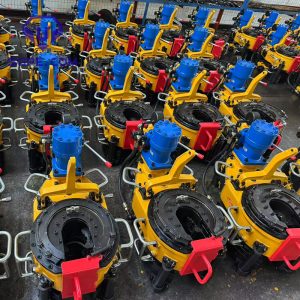
SGPE Tubing Spider, also known as the TS Tubing and Casing Spider, holds production tubing at the rig-floor well center during tubing running, pulling, well completion and workover.
The spider works with matched gripping slips to support the tubular string while the crew handles connections. The tubing elevator lifts or lowers the string, while the spider provides stationary support during the required load-transfer stages.
SGPE manufactures two 100 Ton Tubing Spider models: TS 3-1/2-100 and TS 5-1/2-100. Both have a rated capacity of 100 US short tons (200,000 lb), with different tubular outside diameter ranges.
The TS series uses an alloy-steel body, heat-treated components and machined gripping assemblies. SGPE manufactures these models according to API Spec 7K requirements for drilling and well-servicing equipment.
The range serves production tubing operations on land drilling rigs, completion rigs, workover rigs, pulling units and compatible offshore installations. Applications include tubing installation, tubing string retrieval, recompletion, production well repair and selected casing-related handling.
SGPE also supports equipment selection, matching-slip enquiries, replacement parts, technical drawings and project-specific quotations.
Email: info@sgpe.com
Tel / WhatsApp: +86 186-1599-5239
SGPE Tubing Spider Technical Specifications
TS 3-1/2-100 vs. TS 5-1/2-100
| Technical Parameter | TS 3-1/2-100 | TS 5-1/2-100 |
|---|---|---|
| Product Series | TS Tubing Spider | TS Tubing Spider |
| Rated Capacity | 100 US short tons | 100 US short tons |
| Capacity in Pounds | 200,000 lb | 200,000 lb |
| Published Tubular OD Range | 1.05–3-1/2 in | 2-3/8–5-3/4 in |
| Metric OD Range | 26.7–88.9 mm | 60.3–146.1 mm |
| Spider Body Material | Alloy steel | Alloy steel |
| Slip Material | Alloy steel | Alloy steel |
| Manufacturing Process | Machining and heat treatment | Machining and heat treatment |
| Gripping System | Matched slip assemblies | Matched slip assemblies |
| Main Function | Stationary tubular support | Stationary tubular support |
| Manufacturing Requirements | API Spec 7K | API Spec 7K |
| Typical Applications | Tubing running, pulling and workover | Larger tubing and selected tubular handling |
Both TS models have the same rated capacity. The wider opening of the TS 5-1/2-100 does not increase its load rating.
The published tubular ranges describe each model family’s overall coverage. Individual pipe diameters require compatible slips, and the complete load-bearing arrangement must meet the approved operating requirements.
Request a technical quotation: Send your tubular OD, maximum suspended load, preferred TS model and rig type to info@sgpe.com. For replacement equipment, include the existing spider’s nameplate or installation drawing.
TS Tubing Spider Models and Pipe Size Selection
TS 3-1/2-100 Tubing Spider – 100 Ton
The TS 3-1/2-100 Tubing Spider covers selected tubular outside diameters from 1.05 to 3-1/2 in (26.7–88.9 mm). It is well suited to smaller oilfield tubulars and common production tubing sizes, particularly 2-3/8 in, 2-7/8 in and 3-1/2 in tubing.
This model is a practical option for completion contractors and workover crews handling these tubing sizes during new well completion, tubing retrieval, recompletion and production well repair. It also supports suitable tubing replacement programs where crews repeatedly run or pull joints of the same diameter.
For example, a contractor retrieving 2-7/8 in production tubing for downhole repairs can specify the TS 3-1/2-100 with matching gripping slips. Where a workover unit handles both 2-3/8 in and 2-7/8 in tubing, the required slip configurations should be identified before equipment selection.
Because these common tubing sizes also fall within the published range of the larger TS model, the final choice depends on slip compatibility, existing rig-floor dimensions and project requirements, rather than pipe diameter alone.
TS 5-1/2-100 Tubing Spider – 100 Ton
The TS 5-1/2-100 Tubing Spider accommodates selected tubular outside diameters from 2-3/8 to 5-3/4 in (60.3–146.1 mm). Its wider size range makes it suitable for consideration in larger-diameter production tubing programs and selected oilfield tubular-handling operations.
Common enquiries involve 3-1/2 in, 4 in, 4-1/2 in, 5 in and 5-1/2 in tubulars. The model offers additional size flexibility for completion and workover contractors handling larger tubular strings or different approved pipe sizes across multiple projects.
For operations involving several tubular diameters, buyers can assess the TS 5-1/2-100 alongside the corresponding slip assemblies for each required size. Selected casing-related applications may also be considered when the pipe geometry, gripping arrangement and installation meet the approved requirements.
At the upper end of its published range, particularly 5-1/2 in and 5-3/4 in tubulars, customers should verify the actual gripping diameter, pipe profile, connection clearance and available slip configuration before ordering.
Like the TS 3-1/2-100, this model has a rated capacity of 100 US short tons (200,000 lb). Its main advantage is broader tubular diameter coverage, not a higher load rating.
Tubing Spider Size Chart – Common Tubular Outside Diameters
The following size chart shows which TS model ranges include common production tubing and selected larger tubular diameters.
| Tubular OD | Metric Equivalent | Applicable TS Model Range |
|---|---|---|
| 1.05 in | 26.7 mm | TS 3-1/2-100 |
| 1.315 in | 33.4 mm | TS 3-1/2-100 |
| 1.660 in | 42.2 mm | TS 3-1/2-100 |
| 1.900 in | 48.3 mm | TS 3-1/2-100 |
| 2-3/8 in | 60.3 mm | Both TS models |
| 2-7/8 in | 73.0 mm | Both TS models |
| 3-1/2 in | 88.9 mm | Both TS models |
| 4 in | 101.6 mm | TS 5-1/2-100 |
| 4-1/2 in | 114.3 mm | TS 5-1/2-100 |
| 5 in | 127.0 mm | TS 5-1/2-100 |
| 5-1/2 in | 139.7 mm | TS 5-1/2-100 |
| 5-3/4 in | 146.1 mm | TS 5-1/2-100; confirm matching slips |
Selection Note: This chart shows published model-family coverage, not confirmed availability of individual slip assemblies.
For a 2-3/8 in Tubing Spider, 2-7/8 in Tubing Spider or 3-1/2 in Tubing Spider, provide the actual pipe OD and maximum expected load when requesting a configuration.
How Does a Tubing Spider Work?
A tubing spider supports the tubular string at a fixed position while the rig hoisting system moves it into or out of the well.
During tubing running, the tubing elevator carries the string as the crew lowers it into the wellbore. At the prescribed stage, matched slips engage the pipe body and transfer the suspended load through the spider to its supporting structure.
The crew can then make the next tubing connection. Once the elevator takes the load, the spider releases the string so the operation can continue.
During tubing pulling, the spider supports the string while crews disconnect and remove successive tubing joints.
The Tubing Spider and Tubing Elevator serve complementary purposes. The elevator provides traveling lifting support; the spider provides stationary holding at the well center.
A tubing spider does not replace a traveling elevator, tubing tong or well-control device.
Operating Note: This overview describes the general equipment function. Crews must follow the manufacturer’s instructions, approved load-transfer procedures and site-specific operating requirements.
Key Features of SGPE Tubing Spider
Alloy-Steel Body and Heat-Treated Components
The TS spider uses an alloy-steel body and matching gripping components.
Controlled heat treatment helps develop the mechanical properties required for repeated tubular contact and load-bearing service. Machined components maintain the dimensional fit between the body and slip assemblies.
These construction features support tubing handling during completion, workover and well servicing.
Matched Slips for Production Tubing
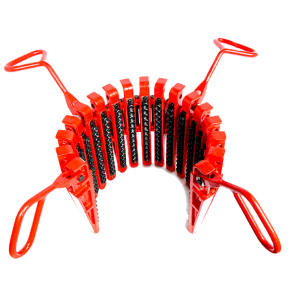
The slip assembly grips the outside surface of the tubular and transfers the load into the supporting structure.
Selecting the right slips requires more than matching a nominal pipe size. The actual OD, material grade, contact surface and gripping geometry all matter.
Corrosion-resistant alloy (CRA) tubing, premium connections, protective coatings and external completion components may require additional gripping or clearance checks.
Rig-Floor Installation and Maintenance
The TS spider provides a compact stationary support arrangement near the well center.
For a new installation or rig retrofit, the overall dimensions, mounting interface and supporting structure must fit the selected equipment.
Regular inspection also matters. Repeated gripping cycles can wear the slips, inserts and retaining hardware. Maintenance personnel should follow the manufacturer’s inspection requirements and replace components that no longer meet the applicable criteria.
SGPE supports enquiries for compatible replacement slips, gripping inserts, mechanical parts and complete spider assemblies.
Tubing Spider Applications in Oil and Gas Operations
Production tubing requires reliable stationary support during installation, retrieval and connection handling. The same basic function applies across different completion and workover programs.
1. Production Tubing Running and Well Completion
During new well completion, crews install production tubing to create the flow path for produced oil or gas.
The process involves repeated tubing pickup, connection makeup and lowering. The tubing elevator moves the string, while the spider holds it during the required load-transfer stages.
Common completion programs involve 2-3/8 in, 2-7/8 in and 3-1/2 in production tubing.
A suitable Tubing Running Spider must match the tubular dimensions, gripping requirements and anticipated string load.
2. Tubing Pulling During Oilfield Workover
Workover contractors retrieve tubing to repair leaks, replace damaged joints, inspect corrosion or gain access to downhole equipment.
As the hoisting system raises the string, the spider provides stationary support while crews disconnect and remove tubing joints.
Workover rigs, pulling units and well-service rigs commonly perform this work.
Long tubing strings require repeated lifting and holding cycles, making correct slip fit and regular equipment inspection particularly important.
3. Well Recompletion and Tubing Replacement
Recompletion may involve removing an existing string, replacing downhole equipment or installing a new tubing arrangement.
Tubing leaks, erosion and mechanical damage can also require partial or complete replacement.
The spider supports the string during the relevant pulling and rerunning stages. The same equipment may serve both operations when the tubular dimensions and approved load requirements remain compatible.
Applications include oil well tubing replacement, gas well tubing repair, tubing-string inspection and production well servicing.
4. ESP Workover and Artificial Lift Maintenance
Electric Submersible Pump (ESP) maintenance often requires crews to retrieve production tubing to reach the downhole assembly.
A compatible spider provides stationary tubing support during these handling operations.
However, ESP power cables, cable protectors, control lines and other external completion components can restrict available clearance or gripping locations.
Tubing drawings and details of the completion assembly help identify a suitable configuration.
Other artificial lift maintenance programs may also involve tubing removal, inspection and reinstallation.
5. Gas Well Workover and Rod-Pump Servicing
Gas well workover may require production tubing retrieval for inspection, completion changes or downhole repair.
The spider supports the tubing string during handling. Pressure-control equipment and well-control procedures remain separate requirements.
Rod-pumped oil wells may also require tubing removal during pump maintenance. In these operations, the spider holds compatible tubing while dedicated sucker rod equipment handles the rod string.
6. Workover Rigs, Pulling Units and Land Drilling Rigs
A suitable Rig Floor Tubing Spider can support tubing operations on conventional workover rigs, mobile pulling units, completion units, well-service rigs and compatible land drilling rigs.
For example, a pulling unit retrieving tubing during a downhole pump repair needs stationary string support while the crew handles connections.
The equipment must fit the available well-center opening and approved rig-floor support arrangement.
7. Offshore Completion and Platform Workover
Suitable spider configurations may support tubing running, pulling, recompletion and well servicing on compatible offshore platforms, jack-up rigs and platform-based workover units.
Offshore installations may require additional assessment of mounting dimensions, corrosion protection, inspection records and operator-specific requirements.
A standard TS model does not automatically meet every offshore project specification.
8. Selected Casing and Other Oilfield Tubulars
SGPE also identifies selected casing, drill pipe, drill collars and slick pipe among the tubular types associated with the TS Tubing and Casing Spider family.
These applications require separate technical verification because pipe geometry, gripping surfaces and load conditions differ from production tubing.
Tubing slips should not be treated as interchangeable with gripping components for casing or drill collars.
For larger casing programs, buyers can review SGPE’s Casing Spiders and Insert Bowls range.
How to Select the Right 100 Ton Tubing Spider
Choosing the right spider starts with the actual tubing string and the rig where the equipment will operate.
Tubular OD, Grade and Connection Profile
Identify the pipe body OD, material grade, wall thickness and intended gripping surface.
Production tubing may use non-upset (NU), external-upset (EU), integral-joint or premium connections. Coupling and upset dimensions can affect clearance, even when the slips grip the pipe body.
CRA tubing and coated pipe may also have restrictions on surface marking or gripping contact. Include these requirements with the tubing drawing.
Maximum Suspended Load
Determine the greatest suspended load expected during the approved operating sequence.
The assessment should consider tubing-string weight, attached completion equipment and relevant load cases.
Both TS models have a rated capacity of 100 US short tons. The complete spider-and-slip assembly and its supporting structure must meet the applicable load requirements.
For higher loads, select equipment with a suitable approved rating.
Rig-Floor Fit and Replacement Equipment
Replacing an existing spider involves more than matching the pipe size.
Check the well-center opening, mounting dimensions, equipment height, available clearance, operating method and support arrangement.
For Replacement Tubing Spider enquiries, provide the original model, nameplate photographs and installation drawings.
These records help identify suitable dimensional alternatives and reduce the risk of ordering incompatible equipment.
Technical Drawings and Engineering Data
The published model size ranges do not cover every installation detail.
Depending on the rig and project, the buyer may need the equipment’s overall dimensions, net weight, mounting drawing, slip assembly part numbers and operating arrangement.
These details must come from the selected equipment’s technical documentation rather than estimates based on similar products.
SGPE can assess requests for available model-specific drawings and engineering information during procurement.
Tubing Spider Technical Selection and RFQ Checklist
| Selection Item | Information to Provide |
|---|---|
| Tubular Type | Production tubing or another approved tubular |
| Tubular OD | Actual outside diameter |
| Tubing Material | Grade, wall thickness and surface requirements |
| Connection Profile | NU, EU, premium or integral-joint |
| Coupling Dimensions | Relevant coupling or upset OD |
| Maximum Suspended Load | Anticipated operating load |
| Preferred Model | TS 3-1/2-100 or TS 5-1/2-100 |
| Matching Slips | Required pipe size or existing part number |
| Rig Type | Completion, workover, pulling, drilling or offshore unit |
| Installation Details | Well-center opening and mounting dimensions |
| Technical Documents | Drawings, inspection and testing requirements |
| Order Information | Quantity, spare parts and delivery destination |
These details provide the basis for technical model selection and a project-specific equipment quotation.
Tubing Spider Slips, Gripping Inserts and Spare Parts
Matching the correct replacement slips is essential when servicing an existing tubing spider.
Slip geometry, pipe contact surfaces, attachment details and load-bearing characteristics determine compatibility. Two components that look similar may not be interchangeable.
SGPE handles enquiries for Tubing Spider Slip Assemblies, Slip Bodies, Gripping Inserts, Replacement Slip Dies, Pins, Retaining Components and compatible mechanical hardware.
For Tubing Spider Slips for 2-3/8 in, 2-7/8 in or 3-1/2 in tubing, identify the original spider model and actual pipe OD.
If the part number is missing, clear photographs, component markings, measured dimensions and available drawings can help establish the correct requirement.
Replacement parts must match the approved equipment configuration and intended tubular.
Tubing Spider vs. Pneumatic Spider
SGPE supplies the TS series alongside separate C, CHD, HD, E and QQP Pneumatic Spider models.
Both equipment types provide stationary tubular support, but pneumatic spiders use compressed air to operate their gripping mechanisms.
Pneumatic models may suit workover rigs that require powered slip actuation. The specific opening and slip-actuation arrangement of the TS series should be confirmed from its own technical documentation.
Common Pneumatic Spider Models
| Model | Rated Capacity | Published Tubular OD Range |
|---|---|---|
| C | 80 short tons | 1.315–5-1/2 in |
| CHD | 120 short tons | 1.315–5-1/2 in |
| HD | 125 short tons | 1.315–5-1/2 in |
| E | 175 short tons | 2-3/8–7-5/8 in |
| QQP/60 | 60 short tons | 2-3/8–3-1/2 in |
| QQP/75 | 75 short tons | 2-3/8–3-1/2 in |
| QQP/100 | 100 short tons | 2-3/8–5 in |
All capacities refer to US short tons. Individual models require the correct slip assemblies for their approved tubular ranges.
For detailed specifications, visit SGPE’s Pneumatic Spider product page, which covers the C, CHD, HD, E and QQP series.
For lifting and lowering tubing strings rather than stationary holding, SGPE also supplies Tubing Elevators.
API Spec 7K Manufacturing and Inspection Requirements
SGPE states that it manufactures the TS Tubing Spider range according to API Spec 7K requirements for drilling and well-servicing equipment.
The series uses alloy-steel construction, machining and controlled heat treatment.
Manufacturing according to API Spec 7K does not automatically establish API Monogram certification for an individual unit.
Buyers should specify their inspection and documentation requirements before ordering.
Depending on the selected equipment and agreed scope, relevant records may include material test reports, dimensional inspection, applicable load-test documentation, non-destructive examination, manufacturing traceability and third-party inspection.
SGPE can confirm which documents are available for the proposed equipment configuration.
Why Choose SGPE as Your Tubing Spider Manufacturer and Supplier?
SGPE supplies tubular-handling equipment for oil and gas drilling, well completion, workover and well servicing.
Its product range includes TS Tubing Spiders, Pneumatic Spiders, Tubing Elevators and Casing Spiders for different oilfield applications.
For TS projects, the company supports technical model selection, matched-slip enquiries, replacement equipment and procurement documentation.
Customers can submit tubing specifications, operating loads and existing installation drawings to establish the required configuration.
SGPE also considers OEM Tubing Spider and project-specific enquiries involving special dimensions, gripping components or documentation requirements, subject to engineering feasibility.
International buyers can request information about export packing, inspection scope, spare-parts supply and delivery arrangements.
100 Ton Tubing Spider Price, Availability and Quotations
The price of a 100 Ton Tubing Spider depends on the complete equipment package rather than the model number alone.
A quotation may include the spider body, matching slips, replacement parts, inspection requirements and export packing. Order quantity and delivery destination can also affect the final cost.
For example, two contractors may order a TS 3-1/2-100 body but require different slip assemblies for their tubing programs.
A buyer searching for a Tubing Spider for Sale should compare the required pipe sizes, approved capacity, gripping arrangement and installation compatibility before comparing prices.
Replacement projects may also require dimensional cross-reference. New installations may need mounting drawings or additional engineering information.
SGPE provides project-specific quotations based on these requirements.
Buyers can enquire about Tubing Spider availability, production lead time, technical drawings, replacement slips, inspection documentation and international delivery.
Frequently Asked Questions About Tubing Spiders
1. What is the difference between a Tubing Spider and a Tubing Elevator?
A Tubing Spider provides stationary support for the tubing string at the rig-floor well center, while a Tubing Elevator travels with the hoisting system to lift, lower and position the pipe.
During production tubing running, tubing pulling and oilfield workover, crews use these tools together to manage tubular movement and load transfers. The spider holds the string during connection handling, while the elevator carries it during lifting or lowering. Both serve essential but different functions in well completion and tubing-handling operations.
2. Which TS Tubing Spider is suitable for 2-3/8 in, 2-7/8 in or 3-1/2 in production tubing?
Both TS 3-1/2-100 and TS 5-1/2-100 Tubing Spiders have published diameter ranges that include 2-3/8 in, 2-7/8 in and 3-1/2 in production tubing.
The TS 3-1/2-100 covers smaller tubulars, while the TS 5-1/2-100 offers additional diameter coverage for larger pipe sizes. For example, a workover contractor pulling 2-7/8 in tubing may consider either model with the appropriate gripping slips. The final selection depends on slip compatibility, suspended load, rig-floor dimensions and installation requirements.
3. Can the TS 5-1/2-100 Tubing Spider handle 5-1/2 in and 5-3/4 in tubulars?
The TS 5-1/2-100 Tubing Spider has a published tubular outside diameter range of 2-3/8 to 5-3/4 in (60.3–146.1 mm), which includes both 5-1/2 in and 5-3/4 in sizes.
However, the published range does not guarantee a matching slip assembly for every tubular configuration. Larger-diameter tubing and selected casing-handling applications require verification of the actual pipe OD, gripping surface, connection clearance and available slips. The model retains a rated capacity of 100 US short tons (200,000 lb) regardless of its wider diameter coverage.
4. How much does a 100 Ton Tubing Spider cost?
The 100 Ton Tubing Spider price depends on the selected TS model, tubular diameter, matching slip assemblies, spare parts, inspection requirements, order quantity and delivery destination.
For example, a contractor purchasing a complete spider for a new completion rig may require a different equipment package from a workover company replacing an existing unit. Export packing and project-specific documentation can also affect the quotation. SGPE provides pricing based on the actual technical configuration and purchasing requirements rather than a single standard price for every application.
5. Does the SGPE TS Tubing Spider use pneumatic controls?
SGPE offers the TS Tubing Spider as a separate product family from its C, CHD, HD, E and QQP Pneumatic Spiders. The specific opening mechanism and slip-actuation arrangement of a TS model should be confirmed through its technical documentation.
Pneumatic spiders use compressed air to operate their gripping mechanisms and may suit workover rigs, pulling units and tubing-handling operations that require powered slip control. Buyers comparing a TS Spider with an Air-Operated Tubing Spider should consider the rig’s operating requirements, available utilities, tubular sizes and rated capacity before choosing equipment.
6. How can I order replacement Tubing Spider slips, gripping inserts or spare parts?
To order replacement Tubing Spider slips, identify the existing spider model, actual tubular outside diameter and original slip or insert part number, if available.
For 2-3/8 in, 2-7/8 in or 3-1/2 in production tubing, the replacement gripping components must match the spider body and intended pipe size. When part numbers are missing, nameplate photographs, component markings, measured dimensions and technical drawings can help identify suitable alternatives. SGPE handles enquiries for compatible slip assemblies, gripping inserts, slip bodies and related mechanical spare parts used in oilfield tubing-handling equipment.
7. Can a Tubing Spider handle NU, EU, premium-connection or CRA production tubing?
A suitable Tubing Spider and matching slip assembly may support compatible non-upset (NU), external-upset (EU), premium-connection and corrosion-resistant alloy (CRA) tubing during well completion, recompletion and workover.
However, connection profiles, coupling dimensions, protective coatings and pipe surface requirements can affect gripping and clearance. This is particularly important when handling premium or CRA tubing, where unwanted surface damage may compromise the pipe’s intended service. Buyers should provide the relevant tubing specifications and drawings so the gripping arrangement can be assessed before use.
8. What should I check when replacing an existing Tubing Spider on a workover rig?
When selecting a Replacement Tubing Spider, check the existing equipment’s model, rated capacity, well-center opening, overall dimensions, mounting arrangement and operating method.
The replacement must also accommodate the required tubular sizes and matching slip assemblies. For a workover rig retrofit or equipment upgrade, differences in spider height, installation interfaces and supporting structure can affect compatibility. Original nameplate details, photographs and general arrangement drawings provide useful references for comparing the existing unit with a proposed TS Tubing Spider.
9. Can a Tubing Spider support ESP workover and artificial lift maintenance?
A compatible Tubing Spider can provide stationary tubing-string support during the handling stages of Electric Submersible Pump (ESP) retrieval, replacement and reinstallation.
During ESP workover, crews may pull production tubing to access the downhole pump assembly. However, ESP power cables, cable protectors, control lines and other external components can restrict available gripping locations or affect clearance through the spider. The tubing size, completion layout and cable arrangement should therefore be reviewed when selecting equipment for ESP workover or artificial lift maintenance.
10. Can the SGPE TS Tubing Spider be used on offshore platforms and jack-up rigs?
Suitable TS Tubing Spider configurations may support offshore well completion, production tubing running, tubing pulling and platform workover on compatible fixed offshore platforms, jack-up rigs and workover units.
Offshore installations may impose additional requirements for equipment dimensions, mounting compatibility, corrosion protection, inspection records and operator approval. The spider and its supporting structure must also suit the intended load and handling procedures. Buyers should confirm these project-specific conditions rather than assume that a standard land-based configuration automatically meets every offshore requirement.
11. Can the TS Tubing Spider also handle casing, drill pipe or drill collars?
SGPE identifies selected casing, drill pipe, drill collars and slick pipe among the tubular types associated with its TS Tubing and Casing Spider range.
However, these applications differ from conventional production tubing running and may require different gripping components, operating arrangements and load assessments. Tubing slips should not be used for other tubulars without confirming compatibility. For larger casing-running programs or applications requiring dedicated casing support, SGPE also supplies Casing Spiders and Insert Bowls designed for appropriate casing-handling requirements.
12. Is the SGPE Tubing Spider manufactured according to API Spec 7K, and what inspection documents are available?
SGPE states that its TS Tubing Spider range is manufactured according to API Spec 7K requirements for drilling and well-servicing equipment.
For oilfield drilling, completion, workover and offshore procurement projects, customers may request applicable material records, dimensional inspection reports, load-test documentation, non-destructive examination records or third-party inspection, depending on the agreed scope.
Manufacturing according to API Spec 7K does not automatically establish API Monogram certification for an individual unit. Buyers should specify any mandatory certification or inspection requirements in their enquiry so SGPE can confirm the documentation available for the proposed equipment.
Request a Tubing Spider Quote from SGPE
Looking for a reliable Tubing Spider manufacturer or supplier for tubing running, tubing pulling, well completion or oilfield workover?
SGPE supplies 100 Ton TS 3-1/2-100 and TS 5-1/2-100 Tubing Spiders, matching slips and replacement parts for new rig installations, workover projects and equipment replacements.
To request a quote, please provide your tubular outside diameter (OD), maximum suspended load, preferred model, quantity, rig type and delivery destination. If you need help selecting a model, share your tubing specifications and operating conditions.
For replacement equipment, include the existing model, nameplate photographs and installation drawings. For spare slips, provide available part numbers or component photos. Please also specify any special inspection, documentation or shipping requirements.
Email: info@sgpe.com
Tel / WhatsApp: +86 186-1599-5239