Description
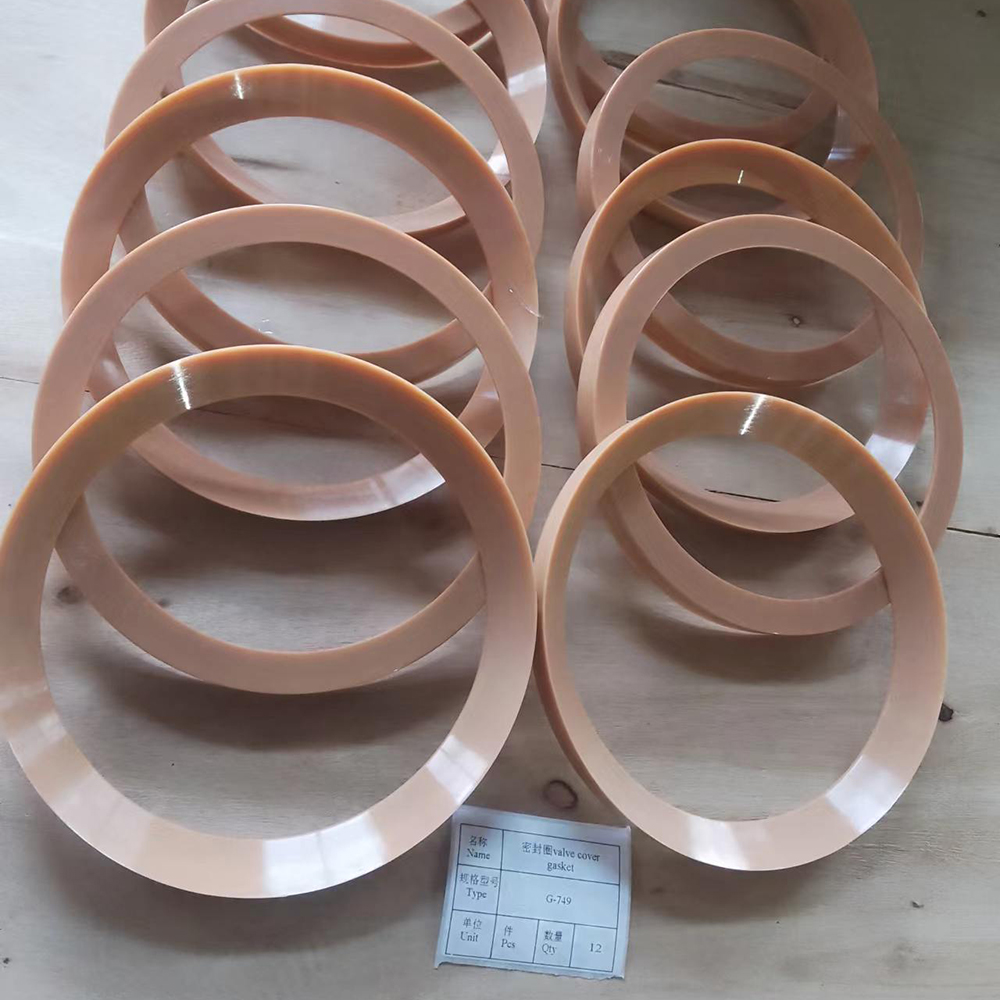
Replacement Drilling Mud Pump Liner Seal and Liner Gasket
SGPE supplies Mud Pump Liner Seal Rings for the fluid ends of triplex drilling mud pumps used on land drilling rigs, offshore drilling units, workover rigs and well servicing equipment.
The circular gasket fits around the outside diameter of the mud pump cylinder liner. It normally sits inside a circumferential groove or liner mounting recess, where it contacts the liner and the surrounding cylinder block, liner cage, liner retainer or another mating fluid end component.
Depending on the mud pump design, the seal helps retain liner cooling water and limit leakage around the mounting area. At the same time, it protects the groove and nearby metal surfaces from scale, contamination, corrosion and washout.
Oilfield buyers may use several names for this component, including mud pump liner seal, mud pump liner gasket, cylinder liner gasket, fluid end liner seal, liner packing ring, liner rubber seal, liner coolant seal and mud pump cooling-water seal.
Although these terms often describe the same general product category, mud pump manufacturers may use different liner outside diameters, groove dimensions, cross-sectional profiles, lip directions and elastomer compounds. Therefore, the replacement gasket must match the installed pump, cylinder liner and fluid end arrangement rather than only the nominal liner bore.
SGPE supplies model-matched replacements for National 7-P-50, Gardner Denver PZ-7, F 500- F2200, Weatherford MP-5 and selected F-Series and 3NB-Series mud pumps. In addition, we review liner gasket requirements for BOMCO, Honghua, Rongsheng, Rongli, RG, Lanzhou, Qingzhou, EMSCO, IDECO, National Oilwell, Gardner Denver and Oilwell equipment.
Customers can order one emergency replacement, routine maintenance quantities, complete gasket sets or combined packages with matching mud pump liners and other fluid end spare parts.
Product Short Description
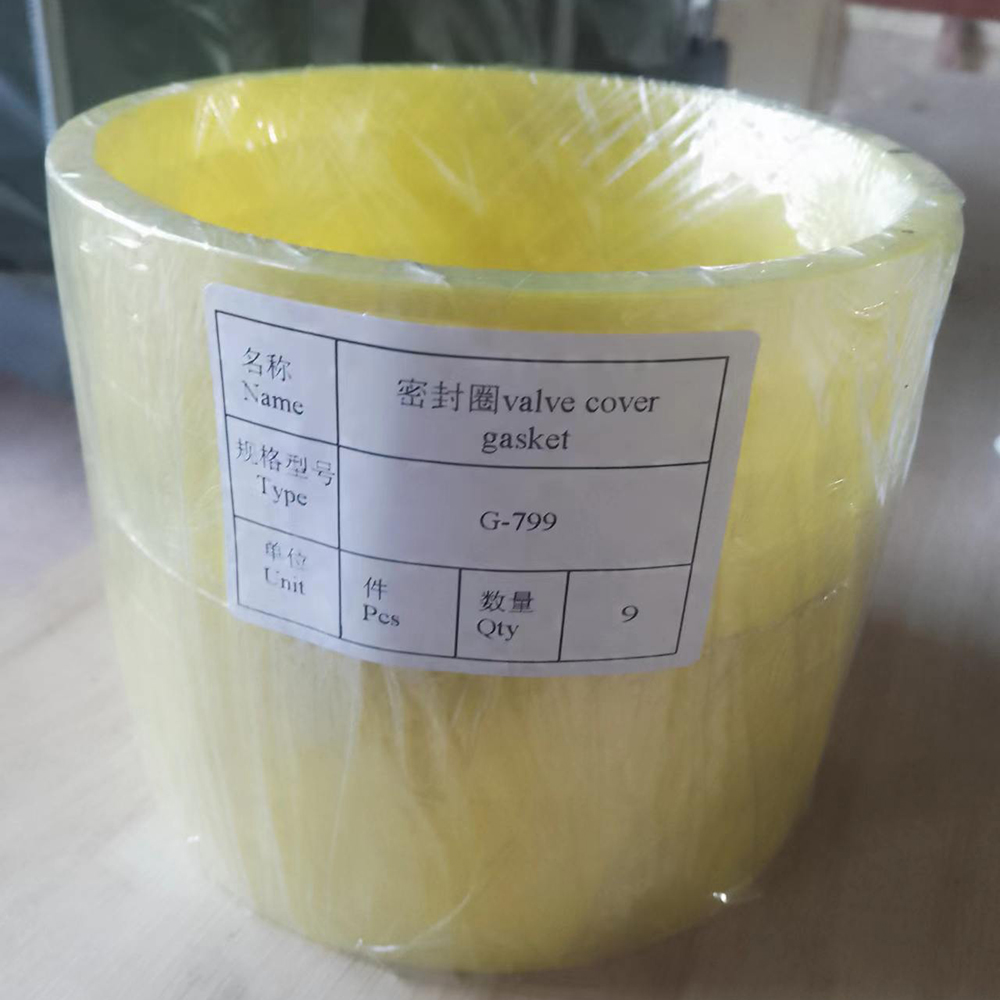
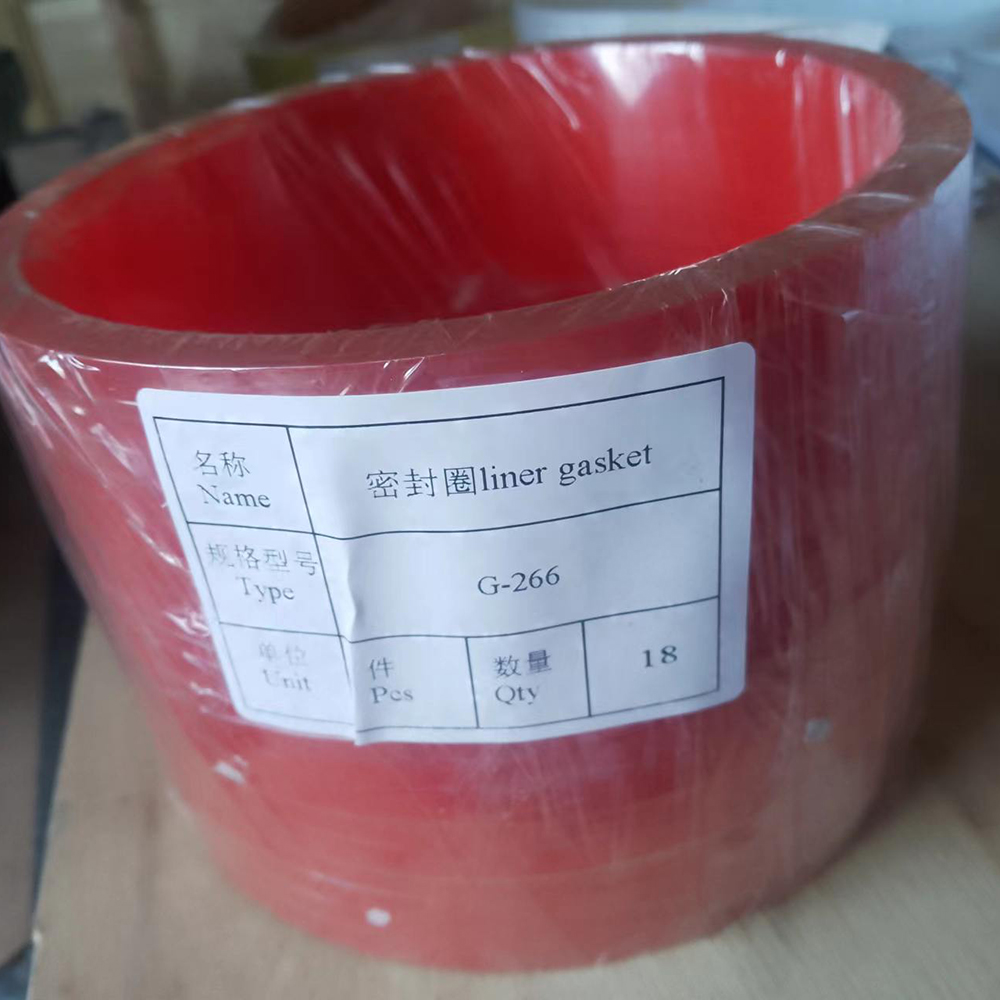
Also called a mud pump liner gasket, cylinder liner seal, fluid end liner seal, liner packing ring, liner rubber seal or liner coolant seal, this static elastomeric gasket fits around the outside diameter of the cylinder liner. Once installed, it helps retain cooling water, limit leakage and protect the liner mounting groove.
Each replacement liner seal is selected according to the mud pump manufacturer, model, liner size, liner outside diameter, groove dimensions, lip direction and original cross-sectional profile. Available options cover common 4 inch, 4-1/2 inch, 5 inch and 5-1/2 inch liner configurations for National 7-P-50, Gardner Denver PZ-7, F-500, Weatherford MP-5 and selected F-Series and 3NB mud pumps.
Customers can order individual replacement seals, model-specific gasket sets, liner-and-seal packages or combined fluid end spare parts for routine maintenance, emergency repairs, rig refurbishment and distributor inventory. For accurate identification and quotation, provide the pump model, liner part number, gasket dimensions, photographs, drawing or physical sample.
Mud Pump Liner Seal Ring Specifications
| Item | Available Options or Requirements |
|---|---|
| Product Name | Mud Pump Liner Seal Ring |
| Alternative Names | Liner seal, liner gasket, liner packing, cylinder liner seal, coolant seal |
| Equipment Type | Triplex drilling mud pump |
| Installation Area | Liner mounting and cooling area of the fluid end |
| Sealing Position | Between the liner outside diameter and surrounding fluid end component |
| Main Function | Helps retain cooling water and limit leakage, depending on pump design |
| Additional Function | Protects the liner cage, cylinder block and seal groove |
| Typical Liner Sizes | 4″, 4-1/2″, 5″ and 5-1/2″ |
| Seal Construction | Circular elastomeric ring with a model-specific cross-section |
| Profile Options | Raised-lip, ribbed, tapered, multi-edge or sample-matched profile |
| Identification Method | Pump model, liner size, part number, drawing, dimensions or sample |
| Supply Form | Individual gasket, seal set, liner package or fluid end repair kit |
| Replacement Type | Model-matched or compatible aftermarket replacement |
| Custom Replacement | Available after drawing, dimensional or sample review |
| Typical Brands | National, Gardner Denver, Weatherford, BOMCO, Honghua and others |
| Inspection Scope | Dimensions, profile, surface condition, quantity and identification |
| Documentation | Available according to agreed order requirements |
| Packing | Clean protective packing for export and warehouse storage |
Final dimensions, material, hardness and cross-sectional profile depend on the mud pump model, fluid end arrangement and original equipment specification.
How a Mud Pump Liner Seal Works
A Mud Pump Liner Seal Ring is a static elastomeric gasket installed around the outside of the cylinder liner.
The ring usually rests inside an annular groove or circumferential recess. As technicians install the liner, the gasket compresses between the liner outside diameter and the surrounding metal component. As a result, the controlled compression closes the mounting area and limits liquid movement through the joint.
Mud pump manufacturers may use raised sealing lips, circumferential ribs, tapered surfaces or multiple sealing edges. These features concentrate contact pressure at selected points and help the gasket maintain an even seal during vibration, temperature changes and repeated operating cycles.
However, the liner gasket performs a different function from the mud pump piston rubber. The gasket remains stationary around the outside of the cylinder liner. By contrast, the piston rubber moves inside the liner and creates the dynamic seal that displaces drilling fluid through the suction and discharge valves.
Therefore, a liner gasket and piston rubber cannot replace one another, even though both components operate around the same cylinder liner assembly.
Key Features and Operating Benefits
Model-Matched Cross-Section
Mud pumps use different groove shapes, liner outside diameters and sealing directions. For this reason, SGPE compares the required gasket profile with the original part number, drawing or physical sample before confirming a replacement.
This review is especially important for older pumps, modified fluid ends and equipment assembled with aftermarket liners. Two gaskets may have similar overall diameters but still use different lip heights, rib arrangements or cross-sectional widths.
Controlled Seal Dimensions
The technical review covers the inside diameter, outside diameter, cross-section width, profile height, rib arrangement and lip direction.
These details matter because two seals with similar overall diameters may still create different compression after installation. In addition, the nominal liner bore does not always indicate the liner outside diameter or gasket size.
Stable Groove Fit
A correctly sized liner packing ring sits evenly inside the groove and remains in position during liner installation.
Consequently, proper fit reduces twisting, buckling, rolling and local loss of contact. It also lowers the risk of cutting the sealing lip as the cylinder liner enters the mounting area.
Cooling-Area Protection
Many triplex mud pump designs circulate water around the liner and piston area for cooling and lubrication.
In these arrangements, the liner coolant seal helps retain water and limit leakage around the mounting surfaces. Therefore, a correctly fitted gasket supports the intended cooling path and keeps the surrounding fluid end area cleaner.
Reduced Corrosion and Washout
Persistent leakage can carry scale, mud and other contaminants into the liner mounting gap.
Over time, the trapped moisture and deposits may damage the seal groove, liner cage or cylinder block. Moreover, high-velocity leakage can erode the adjacent metal surface.
A properly fitted cylinder liner gasket reduces this leakage path and helps protect these components.
Easier Maintenance Planning
A model-matched seal reduces the risk of removing the liner again after installation.
Furthermore, drilling contractors and repair workshops can stock the correct gasket together with each liner size or pump model. This approach is particularly useful for offshore rigs, remote drilling sites and older pumps where replacement parts may not be locally available.
Supply Options
SGPE can supply one liner gasket for an urgent repair or prepare a complete spare parts package for scheduled mud pump maintenance.
Customers may combine mud pump liner gaskets with cylinder liners, pistons, valves, valve seats, cylinder head parts and other fluid end components in one shipment. As a result, the complete supply package can simplify purchasing, reduce compatibility risks and support planned maintenance programs.
Applications in Oil and Gas Drilling
SGPE supplies mud pump cylinder liner seals for land and offshore drilling equipment.
Maintenance teams install these gaskets during routine liner changes, fluid end servicing and complete mud pump overhauls. Offshore operators, in particular, often keep model-matched seals in planned spare parts packages because an incorrect or unavailable gasket can delay liner replacement.
Mud pump repair workshops also use liner packing rings during inspection and rebuilding projects. Meanwhile, oilfield equipment distributors stock common gasket references for emergency repairs, annual purchasing programs and older pumps with incomplete part records.
Typical applications include:
- Land drilling rig mud pump maintenance
- Offshore drilling unit fluid end repair
- Jack-up and semi-submersible rig spare parts
- Workover and well servicing pump maintenance
- Routine cylinder liner replacement
- Mud pump fluid end overhaul
- Rig refurbishment projects
- Emergency liner gasket replacement
In each case, reliable liner sealing helps reduce cooling-water leakage and contamination around the fluid end while supporting planned maintenance intervals.
Compatible Mud Pump Brands and Models
| Manufacturer or Brand | Supported Series or Models | Identification Basis |
| National / National Oilwell | National 7-P-50 and selected models | Pump model, liner size and part number |
| Gardner Denver | PZ-7, PAH-8 and selected models | Part number, profile, drawing or sample |
| Weatherford | MP-5 and related configurations | Model, liner reference and seal profile |
| BOMCO | F-Series mud pumps | Pump model and fluid end configuration |
| Honghua | F-Series mud pumps | Pump model, liner size and sample |
| Rongsheng | Selected drilling mud pumps | Part number or dimensional review |
| Rongli | Selected drilling mud pumps | Pump model and gasket profile |
| RG | Selected F-Series mud pumps | Pump and liner information |
| Lanzhou | 3NB-Series mud pumps | Model, liner size and seal dimensions |
| Qingzhou | 3NB-Series mud pumps | Equipment details and sample review |
| EMSCO | Selected triplex mud pumps | Original part number or drawing |
| IDECO | Selected triplex mud pumps | Model and dimensional information |
| Oilwell | Selected drilling mud pumps | Part number, liner size or sample |
SGPE can also review seals for additional mud pump models when customers provide an equipment nameplate, original part number, dimensional drawing or physical sample.
Because compatibility depends on the installed fluid end design, SGPE confirms the pump model, liner size, gasket reference and cross-sectional profile before production or shipment.
Mud Pump Liner Gasket Models and Part Numbers
| Manufacturer / Model | Liner Size | Liner Part Number | Gasket Reference | Confirmation Notes |
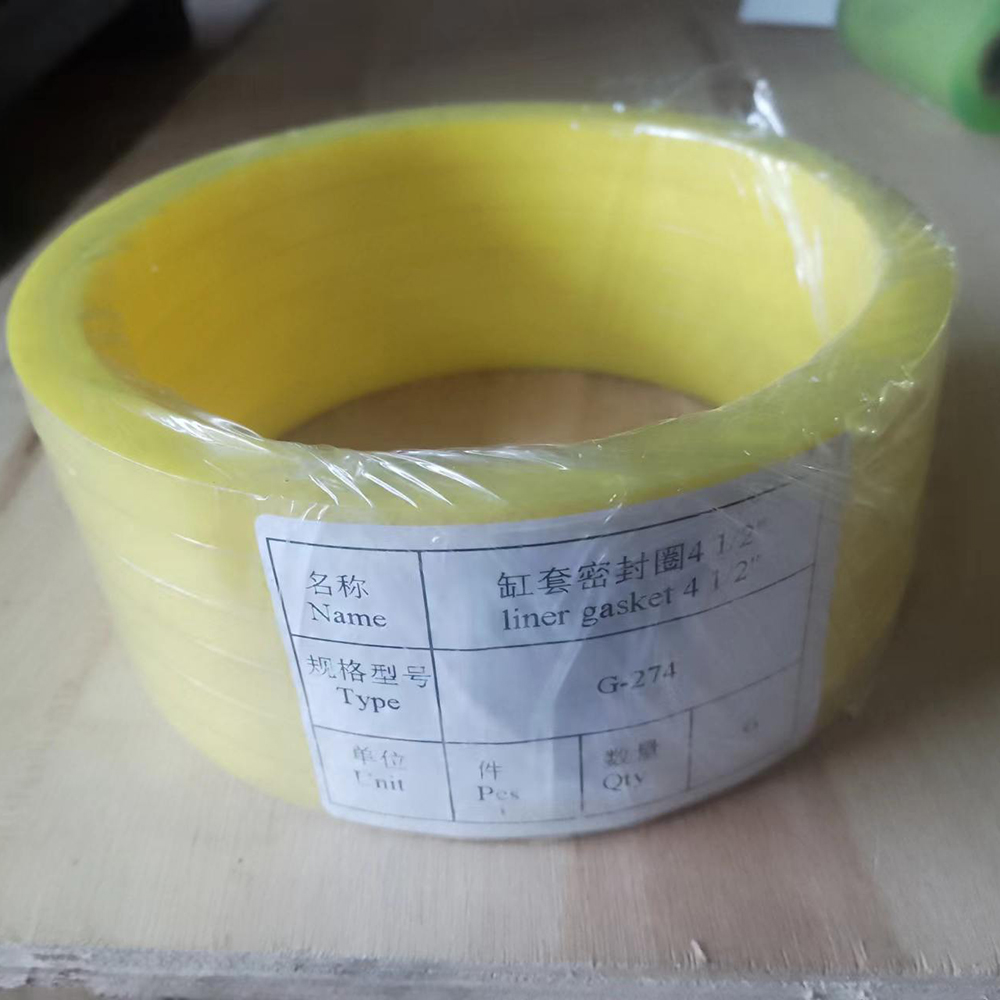
| National 7-P-50 | 4-1/2 inch | Confirm from installed liner | G-274 | Confirm liner and gasket dimensions |
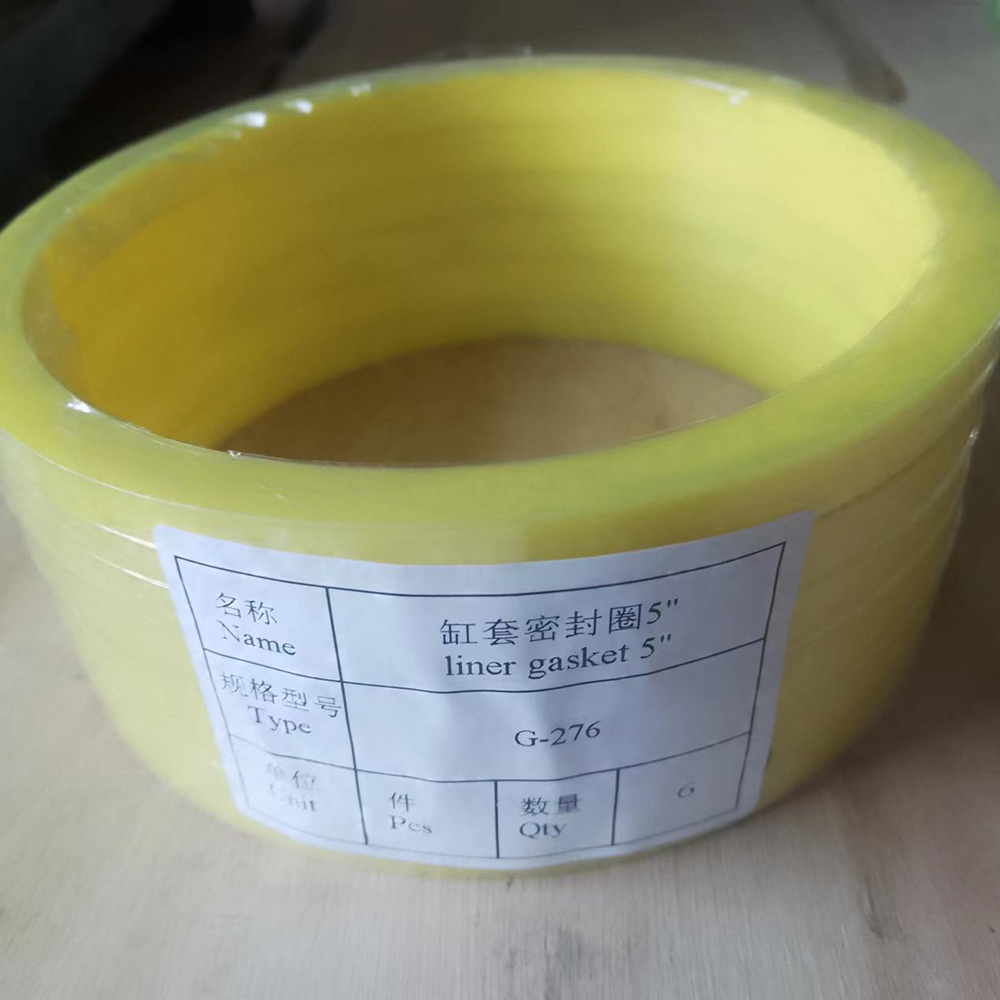
| National 7-P-50 | 5 inch | TS-0257-50HP | G-276 | Model-specific replacement |
| National 7-P-50 | 5-1/2 inch | TS-0257-54HP | G-278 | Model-specific replacement |
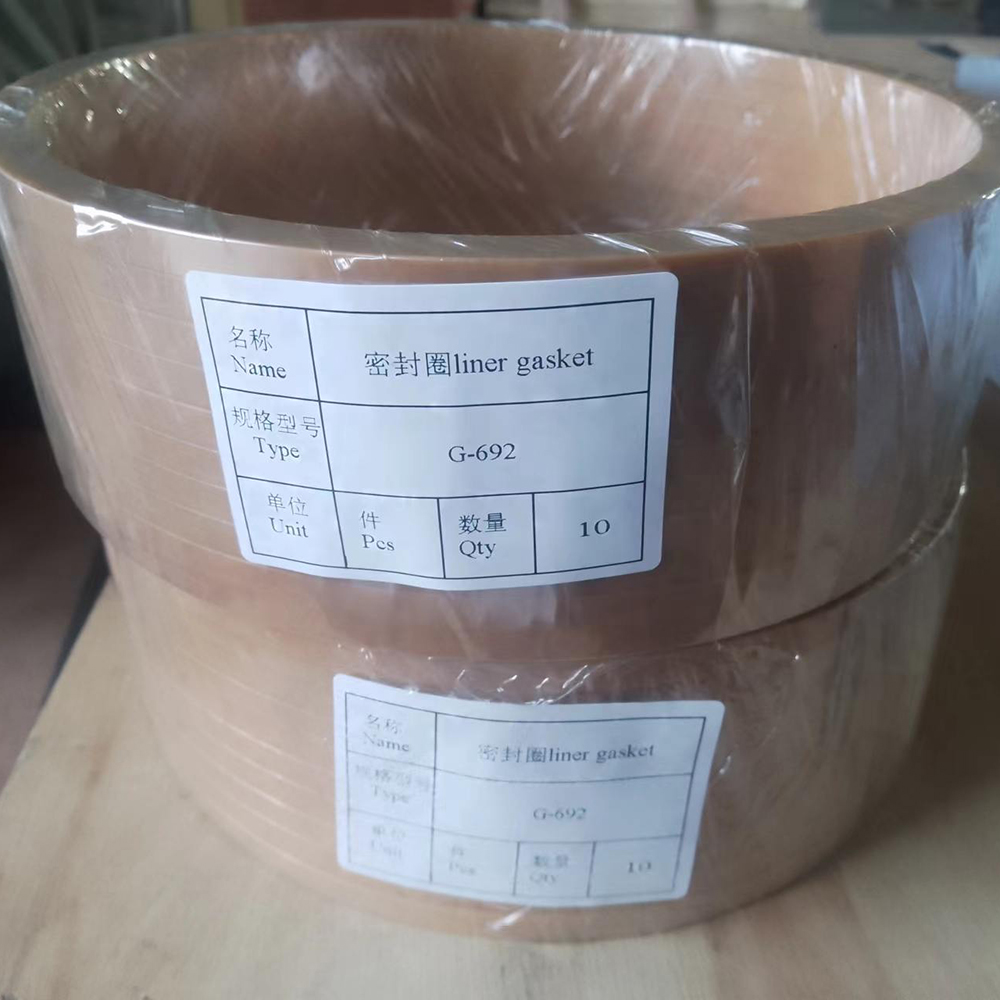
| Gardner Denver PZ-7 | 4-1/2 inch | TS-1192-44HP | G-692 reference | Confirm existing gasket profile |
| Gardner Denver PZ-7 | 5 inch | TS-1192-50HP | G-692 reference | Confirm existing gasket profile |
| Gardner Denver PZ-7 | 5-1/2 inch | TS-1192-54HP | G-692 reference | Confirm existing gasket profile |
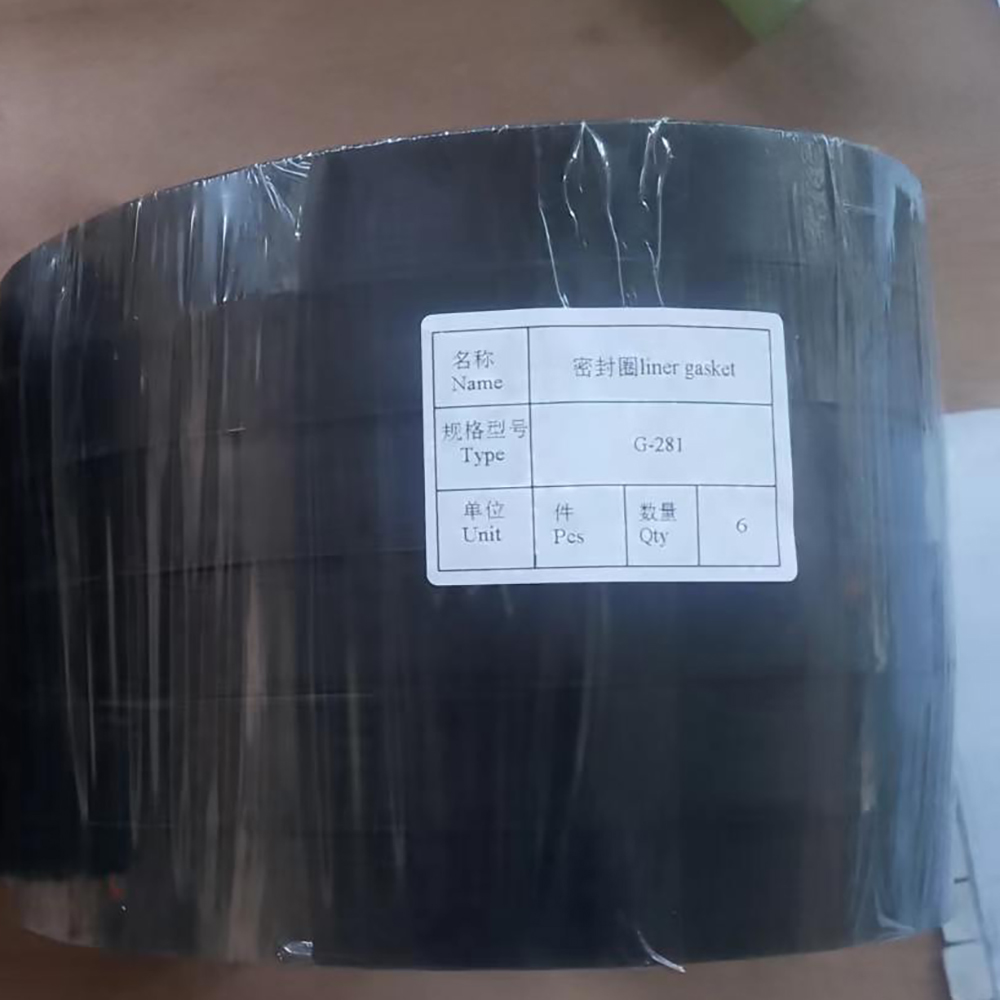
| F-500 / Weatherford MP-5 | 4-1/2 inch | TS-0146-44HP | G-281 reference | Confirm dimensions and profile |
| F-500 / Weatherford MP-5 | 5 inch | TS-0146-50HP | G-281 reference | Confirm dimensions and profile |
| F-500 / Weatherford MP-5 | 5-1/2 inch | TS-0146-54HP | G-281 reference | Confirm dimensions and profile |
| Gardner Denver PAH-8 | 4 inch | TS-0189-40HP | Requires confirmation | Send original gasket data or sample |
| Gardner Denver PAH-8 | 4-1/2 inch | TS-0189-44Cr | Requires confirmation | Send original gasket data or sample |
National 7-P-50 uses a different gasket reference for each listed liner size. Therefore, G-274, G-276 and G-278 are not interchangeable.
G-692 is commonly referenced for Gardner Denver PZ-7 liner gasket applications. Nevertheless, customers should confirm the installed liner size, gasket cross-section and fluid end arrangement before ordering.
Similarly, G-281 is commonly referenced for F-500 or Weatherford MP-5 applications. However, the liner size and original seal profile should still be verified.
A confirmed gasket reference is not available for the listed Gardner Denver PAH-8 liners. Therefore, customers should provide the original gasket number, dimensions, drawing, cross-sectional photographs or physical sample for identification.
F-Series and 3NB Mud Pump Liner Seals
SGPE supports replacement liner gaskets for Chinese F-Series and 3NB-Series drilling mud pumps.
Common requirements include BOMCO F-Series liner seals, Honghua mud pump liner gaskets, Rongsheng liner packing rings, Rongli and RG replacement seals, as well as Lanzhou and Qingzhou 3NB mud pump cylinder liner gaskets.
However, a seal from one F-Series pump may not fit another model, even when both pumps use the same nominal liner bore. Manufacturers may use different liner outside diameters, grooves and cross-sectional profiles.
Therefore, before ordering, confirm the pump manufacturer, model, fluid end arrangement, liner outside diameter and original gasket profile.
Need Help Identifying a Liner Gasket?
Send SGPE the mud pump model, liner size, original part number or a clear photograph of the gasket cross-section.
When no part number remains visible, include the seal inside diameter, outside diameter, width, height, lip direction, groove dimensions and liner outside diameter.
In addition, a dimensional drawing or physical sample can provide valuable confirmation. After receiving the information, SGPE will compare the gasket profile and application details before preparing the quotation.
Material and Seal Profile Selection
The correct elastomer compound, hardness and cross-sectional profile depend on the mud pump design and operating environment.
Important selection factors include the original equipment specification, cooling-water system, operating temperature, groove design, required compression, exposure to oil or drilling fluid additives and expected maintenance interval.
However, customers should not select a replacement gasket by color alone. Different elastomer compounds may look similar but provide different resistance to heat, oil, chemicals, swelling, hardening and permanent compression.
For example, an unsuitable material may soften and move inside the groove. Alternatively, it may harden and lose contact after repeated temperature cycles.
When the original material specification is unavailable, SGPE can review the used sample and operating conditions. The final material and hardness will then follow the confirmed original specification or an approved replacement sample.
How to Identify the Correct Replacement Seal
The original part number provides the fastest and most reliable identification.
However, when the marking has worn away, SGPE can compare the pump details, liner dimensions, gasket profile and installation groove.
| Information Group | Details to Provide |
| Mud Pump | Manufacturer, model, serial number, fluid end model and nameplate photo |
| Liner | Size, inside diameter, outside diameter, part number and manufacturer |
| Existing Gasket | Part number, ID, OD, width, height, lip direction and rib count |
| Seal Groove | Width, depth and visible condition |
| Visual References | Overall photo, cross-sectional photo and installed position |
| Technical References | Drawing, manual page or physical sample |
| Operating Conditions | Cooling liquid, temperature and rig environment |
| Commercial Details | Quantity, documentation and delivery destination |
A close-up image of the seal cross-section usually provides more useful information than a photograph of the complete ring.
Therefore, place a ruler or vernier caliper beside the gasket and clearly show the sealing lips, ribs and overall profile height. If the used seal is distorted, measure several points and include the groove dimensions for comparison.
Quality Control and Documentation
SGPE checks the dimensions, sealing profile and visible condition of each replacement liner gasket before shipment.
The inspection covers product identification, liner size, inside and outside diameters, cross-section dimensions, lip shape, rib arrangement and sealing direction.
In addition, SGPE checks the gasket for cracks, cuts, bubbles, foreign material, severe deformation and damaged sealing lips.
When the customer supplies a drawing or approved sample, SGPE compares the replacement gasket with that technical reference. The final inspection also confirms quantity, product identification and protective packing.
Installation and Maintenance Guidelines
Mud Pump Liner Seal Installation Procedure
Correct installation directly affects sealing performance and service life. First, stop the mud pump according to the approved maintenance procedure. Then isolate all energy sources and release any remaining fluid pressure.
Next, remove the cylinder liner and old gasket carefully. Clean the seal groove, liner mounting area and surrounding fluid end surfaces. In particular, remove drilling mud, cooling-water deposits, scale, corrosion and old sealing material.
After cleaning, inspect the groove for scratches, sharp edges, washout and dimensional damage. At the same time, check the liner outside diameter for scoring, burrs or other surface defects that could damage the new gasket.
Before installation, compare the replacement seal with the original part. Confirm the part number, dimensions, cross-sectional profile, rib arrangement and lip direction. Afterward, apply only a lubricant that is compatible with the elastomer and mud pump application.
Fit the ring evenly into the groove without twisting, folding or overstretching it. Then insert the cylinder liner slowly so its edge does not cut, roll or displace the gasket. If unusual resistance occurs, stop and inspect the seal rather than forcing the liner into position.
Once the liner is correctly seated, tighten the retention components according to the mud pump manufacturer’s instructions. Finally, start the pump at a controlled rate and inspect the liner mounting area for leakage. Always follow the OEM maintenance manual and the drilling contractor’s lockout and rig-site safety procedures.
Liner Gasket Inspection, Replacement and Storage
Inspect the mud pump liner gasket whenever technicians remove the cylinder liner or service the fluid end. Replace the seal if it shows cracks, cuts, permanent flattening, damaged lips, swelling, softening, hardening, extrusion or loss of elasticity.
Although a used gasket may appear serviceable, it may no longer recover after long-term compression. In addition, removing the liner can stretch, roll or damage the sealing profile. Consequently, many drilling contractors install a new cylinder liner seal whenever they remove or replace the liner.
During maintenance, also inspect the liner cage, mounting groove and liner outside diameter. A damaged groove, sharp edge or worn liner surface may cause a new gasket to leak again. Therefore, repeated leakage should not be treated as a gasket problem alone.
Unused mud pump liner seals should remain inside clean, closed and clearly identified packaging. Store them away from direct sunlight, heat, ozone-producing equipment, oils, solvents, chemical vapors, sharp objects and heavy loads.
Moreover, do not fold, hang, compress or overstretch the rings during storage. Similar-looking seals for different mud pump models or liner sizes should be stored separately to prevent incorrect installation. Before use, inspect the gasket again for deformation, surface damage or loss of flexibility.
Common Causes of Mud Pump Liner Seal Leakage
| Leakage Cause | Typical Result | Recommended Check |
| Incorrect Part Number | Insufficient or excessive compression | Confirm the pump model and liner size |
| Wrong Cross-Section | Uneven sealing contact | Compare the profile with the original sample |
| Damaged Seal Groove | Leakage along the metal surface | Inspect for washout, corrosion and scratches |
| Twisted Gasket | Local loss of contact | Reinstall the gasket in the correct orientation |
| Installation Damage | Cut or rolled sealing lip | Inspect the liner edge and installation tools |
| Reused or Aged Gasket | Poor elastic recovery | Install a new gasket |
| Incorrect Material | Swelling, softening or hardening | Review liquid and temperature exposure |
| Damaged Liner OD | Leakage path or gasket damage | Inspect and measure the liner surface |
| Incorrect Liner Alignment | Displaced or uneven gasket | Check liner installation and retention |
| Foreign Material in Groove | Incomplete gasket seating | Clean the groove before assembly |
When leakage occurs, inspect the complete mounting area instead of replacing only the gasket.
For example, a damaged liner cage, washed-out groove or scratched liner outside diameter can cause the new seal to leak again. Therefore, the gasket, liner and mounting groove should be checked as one sealing system.
Mud Pump Liner Seal vs. Other Mud Pump Seals
| Component | Installation Position | Main Function | Seal Type |
| Mud Pump Liner Seal Ring | Around the liner outside diameter | Seals the liner cooling and mounting area | Static |
| Mud Pump Piston Rubber | Inside the cylinder liner | Pumps and seals drilling fluid during piston movement | Dynamic |
| Rod Seal | Around a piston rod or extension rod | Controls leakage along a moving rod | Dynamic |
| Cylinder Head Seal | Cylinder head or plug connection | Seals the cylinder head area | Static |
| Stuffing Box Seal | Around the rod or stuffing box assembly | Limits leakage around moving components | Dynamic |
| Valve Insert | Inside the mud pump valve assembly | Seals during valve opening and closing | Dynamic |
Although these components may all be described as mud pump seals, they perform different functions and cannot replace one another.
Therefore, when requesting a quotation, identify the installation position and provide a photograph whenever the exact product name is uncertain.
Related Mud Pump Spare Parts
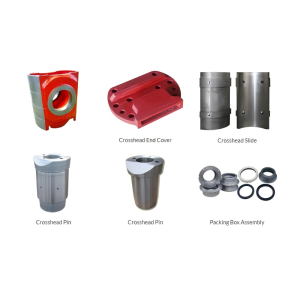
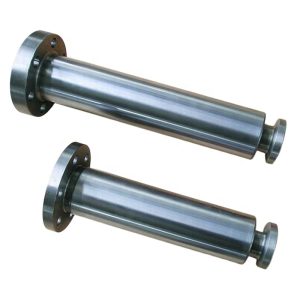
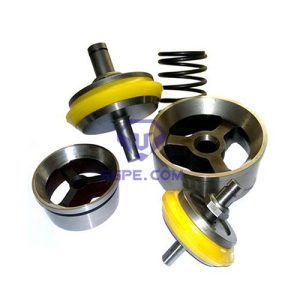
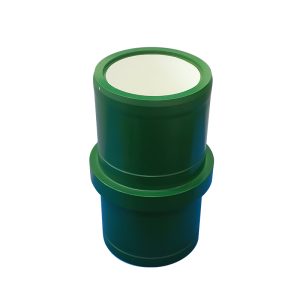
Available products include bimetal, high-chrome and ceramic mud pump liners; piston rubbers and piston assemblies; valve bodies, valve inserts and valve seats; fluid end modules; cylinder heads and plugs; liner cages; wear plates; rod seals; oil seals; stuffing box seals; pulsation dampener bladders; safety valves; crossheads; extension rods and complete mud pump repair kits.
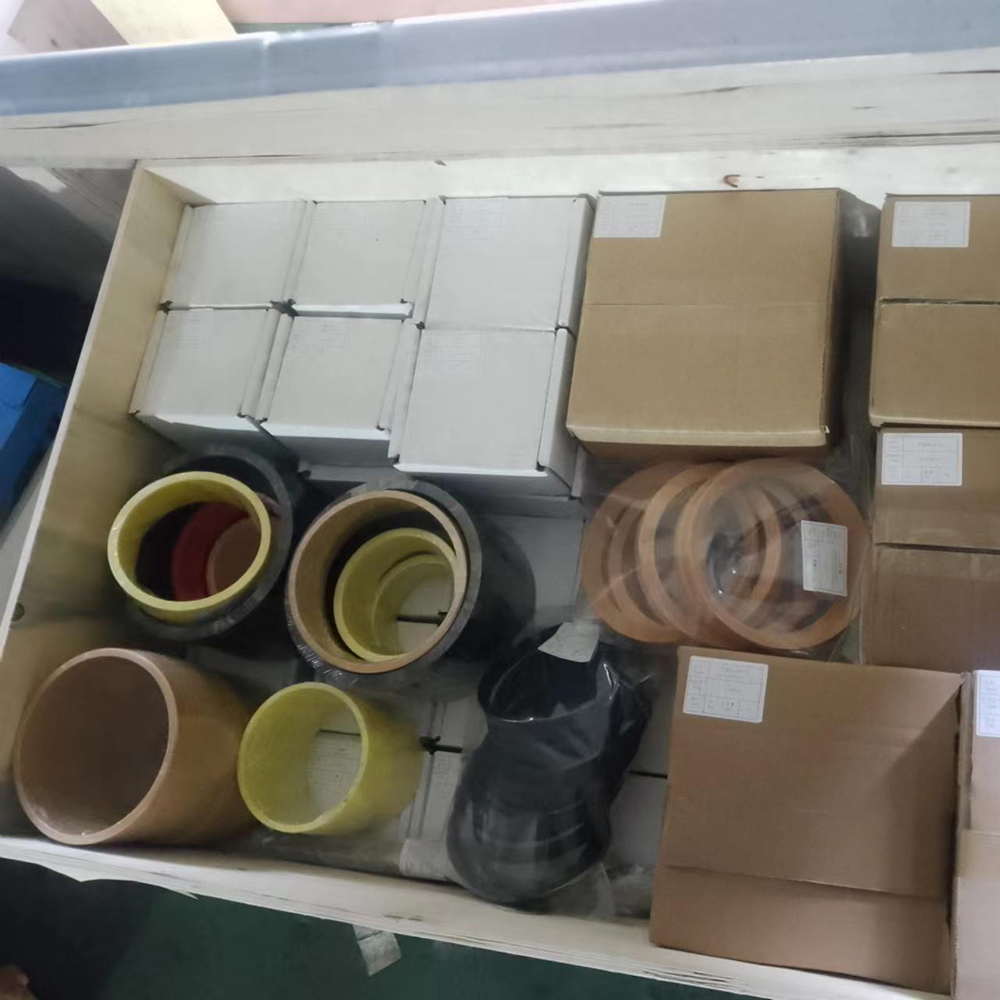
Customers can combine liners, liner gaskets, pistons, valves and other spare parts in one shipment. As a result, consolidated supply can simplify purchasing, reduce freight coordination and support complete mud pump maintenance programs.
Frequently Asked Questions About Mud Pump Liner Seal Rings
1. What is a Mud Pump Liner Seal Ring?
A Mud Pump Liner Seal Ring is a circular static gasket installed around the outside diameter of a mud pump cylinder liner. It normally sits inside a circumferential groove in the liner cage, cylinder block, liner retainer or another fluid end component.
After the cylinder liner enters the mounting area, the gasket compresses against the mating surfaces and helps close the joint around the liner. Buyers may also refer to this component as a mud pump liner gasket, cylinder liner seal, fluid end liner seal, liner packing ring or liner coolant seal.
2. What area does a mud pump liner gasket seal?
A mud pump liner gasket seals the joint between the cylinder liner outside diameter and the surrounding fluid end component.
Depending on the mud pump design, it may help retain cooling water around the liner and piston area while reducing the entry of mud, scale and other contaminants into the mounting groove. In addition, correct sealing helps protect the liner cage, cylinder block and nearby metal surfaces from corrosion, deposits and washout.
3. Is a liner seal the same as a mud pump piston rubber?
No. A mud pump liner seal and a piston rubber operate in different positions and perform different sealing functions.
The liner gasket remains stationary around the outside of the cylinder liner and forms a static seal in the mounting or cooling area. By contrast, the mud pump piston rubber moves inside the liner during each pump stroke and creates the dynamic seal that displaces drilling fluid through the suction and discharge valves.
Therefore, these two mud pump spare parts are not interchangeable.
4. Does the liner gasket hold the main pumping pressure?
The mud pump liner gasket normally does not form the primary high-pressure drilling fluid seal. Instead, the piston assembly, mud pump valves and valve seats perform the main pumping and pressure-sealing functions.
However, a damaged, incorrectly sized or poorly installed cylinder liner gasket can still cause cooling-water leakage, contamination and damage around the fluid end. Therefore, correct gasket selection remains important for reliable mud pump maintenance and operation.
5. Can one liner gasket fit several liner sizes?
Not always. Different cylinder liner sizes may require different gasket diameters, cross-sectional profiles and part numbers.
For example, National 7-P-50 commonly uses G-274 for a 4-1/2 inch liner, G-276 for a 5 inch liner and G-278 for a 5-1/2 inch liner.
Although these references fit the same pump model, they should not be considered interchangeable. The liner outside diameter, mounting groove and sealing profile must also match.
6. Can the same liner seal fit different mud pump brands?
Not automatically. Mud pump manufacturers may use different liner outside diameters, groove widths, groove depths, lip directions and cross-sectional profiles, even when the nominal liner bore is the same.
Therefore, a Gardner Denver liner gasket may not fit a National, Weatherford, BOMCO, Honghua, F-Series or 3NB mud pump without technical confirmation.
SGPE reviews the complete pump model, cylinder liner data and existing seal profile before confirming compatibility.
7. Which liner gasket part numbers does SGPE support?
SGPE supplies and reviews several common mud pump liner gasket references.
These include G-274, G-276 and G-278 for National 7-P-50 applications. In addition, SGPE reviews G-692 for Gardner Denver PZ-7 and G-281 for F-500 or Weatherford MP-5 mud pumps.
Replacement liner seals for selected F-Series, 3NB-Series, Gardner Denver PAH-8 and other triplex drilling mud pumps can also be evaluated from original part numbers, drawings, dimensions or physical samples.
8. How can SGPE identify a seal without the original part number?
When the original gasket part number is missing or no longer visible, SGPE can compare the mud pump model, cylinder liner information and seal cross-section.
Customers should provide the liner outside diameter, gasket inside diameter, outside diameter, profile width, overall height, lip direction, rib arrangement and groove dimensions.
Moreover, clear photographs of the complete ring, cross-section and installed position are helpful. A technical drawing or physical sample provides additional confirmation, especially for obsolete or modified mud pump fluid ends.
9. What causes a mud pump liner gasket to leak?
Common causes include an incorrect part number, wrong gasket cross-section, damaged seal groove, twisted ring, cut sealing lip, poor cylinder liner alignment and foreign material inside the mounting area.
Leakage may also result from corrosion, groove washout, a scratched liner outside diameter or an aged elastomer that has hardened, softened or lost elasticity.
Therefore, when leakage occurs, technicians should inspect the complete liner mounting area instead of replacing only the mud pump liner seal.
10. Should technicians replace the gasket whenever they remove the liner?
Technicians should replace the liner gasket whenever it shows permanent flattening, cuts, torn lips, swelling, hardening, softening or loss of elasticity.
A used cylinder liner seal may still look serviceable but may no longer recover after long-term compression. In addition, removing the liner can stretch, roll or damage the gasket.
For this reason, many drilling contractors install a new mud pump liner gasket whenever they remove or replace the cylinder liner.
11. Can SGPE supply the liner and matching gasket together?
Yes. SGPE can supply the mud pump cylinder liner, matching liner seal ring and related mounting components as one replacement package.
Customers may also combine piston rubbers, piston rods, mud pump valves, valve seats, cylinder head seals, wear plates and other fluid end spare parts in the same order.
Consequently, purchasing the liner and model-matched gasket together helps reduce the risk of dimensional mismatch between components sourced separately.
12. What information should I send for a quotation?
For an accurate quotation, provide the mud pump manufacturer, complete model, fluid end reference, cylinder liner size, liner part number and existing gasket reference.
When the original part number is unavailable, send the gasket ID, OD, cross-sectional width, profile height, lip direction, groove dimensions and clear photographs.
Please also confirm the required quantity, documentation requirements, delivery destination and requested delivery schedule.
After reviewing the information, SGPE will confirm the suitable mud pump liner seal, liner compatibility, supply scope and commercial quotation.
Why Choose SGPE?
SGPE supports drilling contractors, offshore operators, workover companies, rig maintenance teams, mud pump repair workshops and oilfield equipment distributors.
Before confirming a replacement, our team reviews the mud pump model, liner size, original part number and gasket profile. As a result, this technical review reduces incorrect-fit risks and unnecessary maintenance delays.
SGPE can supply one emergency gasket, a complete liner-and-seal package or batch quantities for distributor inventory. In addition, we can combine liner seals with other fluid end and power end parts to simplify purchasing and shipping.
Before shipment, SGPE checks product identification, dimensions, profile, surface condition, quantity and packing. Project-specific inspection records and certificates are also available when customers state these requirements before quotation.
Technical Review and Commercial Quotation
After receiving the RFQ information, SGPE will review the mud pump model, cylinder liner dimensions, seal profile and fluid end arrangement.
The technical team will then confirm the suitable replacement gasket, liner compatibility, recommended material, sealing direction and supply scope.
Depending on the project, SGPE can supply individual liner seals, model-specific gasket sets, liner-and-seal packages or combined mud pump fluid end spare parts.
Available documentation may include dimensional inspection records, product identification information, certificates of conformity and inspection photographs, subject to the agreed order requirements.
After completing the technical review, SGPE will provide the production lead time, packing arrangement, delivery terms and commercial quotation for land drilling rigs, offshore drilling units, workover rigs, well servicing equipment and mud pump repair projects.
Request a Mud Pump Liner Seal Ring Price
For accurate identification, please provide the mud pump manufacturer, model and serial number together with the fluid end model or assembly number when available.
In addition, state the liner size, ID, OD and part number, as well as the existing gasket reference and visible markings.
When the original part number is unavailable, include the seal ID, OD, width, height, lip profile and groove dimensions. Clear photographs of the pump nameplate, cylinder liner, installation groove and gasket cross-section are also useful.
Finally, please confirm the required order quantity, spare quantity, cooling liquid, operating temperature, documentation requirements, delivery destination and requested schedule.
E-Mail:
info@sgpe.com