Description
Floating Rubber Hose
Reliable Floating Hose for Offshore and Marine Petroleum Transfer
SGPE supplies high-performance floating rubber hose solutions for offshore and marine fluid transfer. This hose fits offshore oilfields, marine terminals, floating loading systems, and coastal transfer projects. It combines reliable sealing, stable buoyancy, strong structural support, and corrosion resistance in one integrated hose system. As a result, it helps operators improve transfer safety, reduce maintenance pressure, and support long-term field performance.
When buyers source a marine floating hose, an offshore floating hose, or an oil transfer floating hose, they look beyond size alone. They also review load capacity, media compatibility, service life, and connection reliability. SGPE addresses these needs through a multilayer hose body, reinforced end structures, and carefully selected materials.
Why Choose SGPE Floating Rubber Hose
SGPE keeps the product focus clear: stable transfer performance, long service life, and practical value for offshore projects. This hose is built for buyers who need dependable performance in harsh marine conditions, not just a basic transfer line.
Key Benefits
- Reliable sealing for safer external fluid transfer
- Stable buoyancy with 25% floating performance
- Multilayer construction for strength, flexibility, and durability
- Strong resistance to oil, weather, ageing, and seawater exposure
- Reinforced structure for design loads and coupled loads
- Good media compatibility, including fluids with up to 60% aromatic hydrocarbon content
- Long 5-year design life
- Strong end structure for secure connection and load transfer
Because of this design, the hose works well for buyers looking for a dependable floating hose manufacturer, offshore hose supplier, or marine oil transfer hose solution for demanding service conditions.
Technical Specifications
| Item | Specification |
|---|---|
| Inner Diameter (ID) | 16 in |
| Hose Length | 10.67 m |
| Design Pressure | 1.5 MPa |
| Bursting Pressure | 7.5 MPa |
| Environmental Temperature | -29°C to 52°C |
| Transferred Fluid Temperature | -20°C to 82°C |
| Maximum Design Flow Rate | 21 m/s |
| Maximum Aromatic Hydrocarbon Content | 60% |
| Bending Radius | 4 × nominal ID |
| Floating Performance | 25% |
| Design Life | 5 years |
Note: The maximum design flow rate of 21 m/s applies to testing requirements only.
Built for Real Offshore Conditions
A transfer hose must do more than move fluid. It must seal well, float steadily, resist corrosion, and keep its shape under pressure and pull. SGPE uses a multilayer structure to meet these demands in real offshore and marine environments.
This hose performs well in conditions that involve seawater exposure, weathering, daylight exposure, abrasion during handling, coupled loads, and negative pressure. Therefore, it suits projects that need a reliable floating hose for offshore loading or petroleum transfer hose for long-term service.
Hose Structure and Material Requirements
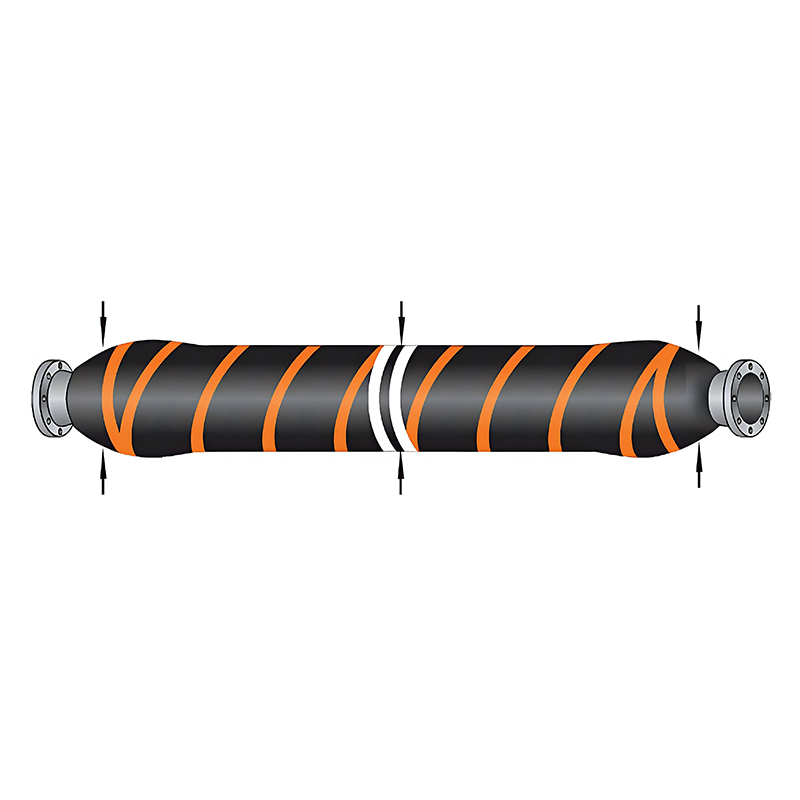
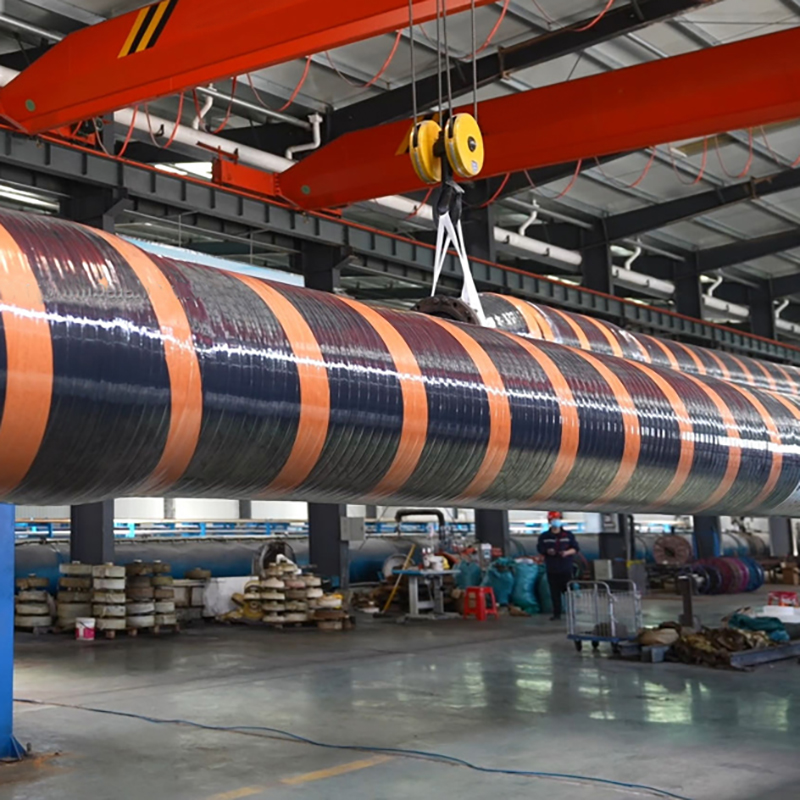
The hose uses a layered design to balance containment, strength, buoyancy, and protection. The main hose includes five key parts: liner, reinforcement layer, braided steel wire reinforcement layer, floating layer, and outer layer. In addition, intermediate rubber layers and extra outer layers may support the manufacturing process, while metal end structures complete the full hose assembly.
Main Structure Table
| Part | Main Function | Material / Option |
|---|---|---|
| Liner | Keeps fluid inside the hose and helps prevent leakage | HNBR, PVDF |
| Reinforcement Layer | Carries weight and end loads, improves tensile strength | Nylon cord thread, polyester resin cord thread, steel wire cord thread |
| Braided Steel Wire Reinforcement Layer | Helps the hose keep its shape under pull and negative pressure | High-strength carbon steel, other alloy steels |
| Floating Layer | Provides buoyancy and keeps the hose afloat | PE |
| Outer Layer | Protects the hose during handling and environmental exposure | CR, CSM, CPE rubber layer, polyurethane, SBR |
| End Structure | Supports sealing, connection, and load transfer | Stainless steel, Duplex stainless steel |
1. Liner
The liner keeps the transferred medium inside the hose and helps prevent overflow or leakage.
Materials:
HNBR, PVDF
These materials support fluid containment and chemical compatibility in demanding transfer conditions.
2. Reinforcement Layer
The reinforcement layer carries the hose’s own weight and end loads. It also improves tensile strength during offshore handling and connected transfer service.
Possible materials:
Nylon cord thread, polyester resin cord thread, steel wire cord thread
3. Braided Steel Wire Reinforcement Layer
This layer strengthens the overall hose structure. When the hose faces pull force or negative pressure of 0.085 MPa, it helps the hose keep its shape and size.
Material options:
High-strength carbon steel, other alloy steels
The braided screw lead and section diameter can change with hose diameter, so the hose can match different size requirements more effectively.
4. Floating Layer
The floating layer provides buoyancy and keeps the hose afloat during service.
Material:
PE
Main features:
Non-absorbent, resistant to breakage during bending, good elongation properties, and stable floating performance
Specific gravity:
0.1 to 0.108 for PE
0.15 if natural rubber sponge is used
5. Outer Layer
The outer layer protects both the floating material and the internal hose structure during handling, operation, and environmental exposure.
Performance features:
Ageing resistance, wear resistance, weather resistance, daylight resistance, oil resistance, and seawater corrosion resistance
Material options:
CR, CSM, CPE rubber layer, polyurethane, SBR
Together, these layers help the hose deliver better safety, better durability, and more stable offshore transfer performance.
Reinforced End Structure
The hose end plays a critical role in sealing, load transfer, and connection stability. It connects the main hose through the flange and sub, and it helps transfer loads from the reinforcement layer to the full assembly.
End Structure Advantages
- Secure connection to the main hose
- Reliable sealing performance
- Effective load transfer
- Better integrity for the complete floating hose assembly
End Structure Materials and Standards
| Item | Details |
|---|---|
| End Structure Materials | Stainless steel, Duplex stainless steel |
| Flange / Sub Standard | ASTM A105M |
| Maximum Carbon Content | 0.25% |
| Flange / Sub Standard | ASTM A-285C / BS 1501-151-400A |
| Maximum Carbon Content | 0.23% |
This structure improves connection security and supports long-term offshore service.
Typical Applications
SGPE floating rubber hose supports a wide range of offshore and marine transfer work, including:
- Offshore fluid transfer
- Marine oil transfer
- Petroleum loading and unloading systems
- Floating transfer systems
- Coastal terminal transfer lines
- Offshore platform connection systems
- Ship-to-facility transfer operations
- Floating unit transfer operations
- Harsh-environment liquid transfer projects
Because of this broad application range, the product works well for buyers looking for an industrial floating rubber hose or a project-based offshore hose solution.
Why Work With SGPE
SGPE does not stop at basic product data. We focus on practical project needs and clear technical communication.
What Buyers Value
Clear technical information
Engineers and procurement teams need data they can review quickly. SGPE presents core specifications, structure, and material details in a direct and practical way.
Application-focused design
This hose matches offshore and marine transfer needs, not generic low-demand service.
Transparent structure and material logic
Many suppliers list only hose size and pressure. SGPE also explains the liner, reinforcement system, floating layer, outer layer, and end structure, so buyers can evaluate the product more confidently.
Project-oriented support
During the inquiry stage, SGPE can review working pressure, media type, temperature range, hose length, and end connection details to help buyers identify a more suitable hose solution.
FAQ
1. What is a floating rubber hose used for?
A floating rubber hose transfers fluid in offshore and marine environments. It stays afloat on the water surface and helps move fluids safely between connected systems.
2. What is the difference between a floating hose and a standard transfer hose?
A floating hose includes a buoyant layer, so it stays afloat during service. That makes it suitable for offshore and marine transfer work where hose position and surface stability matter.
3. Why is this hose suitable for offshore transfer?
It combines reliable sealing, structural reinforcement, stable buoyancy, corrosion-resistant materials, and a protective outer layer. In addition, the reinforced end structure supports both sealing and load transfer.
4. How do I choose the right floating hose for my project?
Start with the working pressure, fluid type, temperature range, hose length, end connection details, and operating environment. Then match these requirements with the hose structure and material combination.
5. What information should I provide before requesting a quotation?
Provide the required hose size, working pressure, fluid type, temperature range, hose length, end connection details, operating environment, project application, and quantity needed. This helps SGPE review your project requirements more efficiently.
6. Can this hose handle aromatic hydrocarbon media?
Yes. This hose supports transfer applications with a maximum aromatic hydrocarbon content of 60%.
7. What is the design pressure and burst pressure?
The design pressure is 1.5 MPa, and the bursting pressure is 7.5 MPa. These values help buyers evaluate operating margin and basic project suitability.
8. What size is this hose?
This hose has an inner diameter of 16 inches and a length of 10.67 meters.
9. What temperature range can this hose handle?
The environmental temperature range is -29°C to 52°C, while the transferred fluid temperature range is -20°C to 82°C.
10. What is the floating performance and design life?
The hose offers 25% floating performance and a 5-year design life. These values support stable service in demanding offshore and marine conditions.
11. What materials are used in the liner and outer layer?
The liner uses HNBR and PVDF for fluid containment and chemical compatibility. The outer layer can use CR, CSM, CPE rubber layer, polyurethane, or SBR to help resist ageing, wear, oil, weather, and seawater exposure.
12. Why do buyers review hose structure instead of pressure only?
Pressure rating is important, but it is not enough on its own. Offshore buyers also review liner material, reinforcement design, buoyancy performance, outer protection, and end structure because these factors affect safety, durability, and field reliability. This product page presents those details to support better technical evaluation.
Request a Quote
Need a Reliable Floating Hose Supplier for Your Offshore Project?
SGPE supports buyers who need a dependable floating rubber hose manufacturer for marine and offshore transfer service. If you are comparing suppliers, evaluating project requirements, or sourcing for a specific transfer system, we can help you review the right hose configuration based on your working conditions.
Please include the following in your inquiry:
- Required hose size
- Working pressure
- Fluid type
- Temperature range
- Required hose length
- End connection details
- Operating environment
- Project application
- Quantity needed